Tuesday, January 31, 2023

UKHSA Risk Assessment on Avian H5N1 (4th Update)


APHA Interactive Avian Influenza Disease Map


#17,265

Over the past several months - following increased reports of HPAI H5N1 spilling over into mammals and confirmation that this avian virus (clade 2.3.4.4b) can infect, and even kill, humans - we've seen a steady stream of risk assessments and guidance documents from the CDC, ECDC, UKHSA, and WHO.

WHO Update & Risk Assessment On Human H5N1 Infection - Ecuador

WHO Rapid Risk Assessment on A(H5N1) clade 2.3.4.4b viruses (Includes 2 Severe/Fatal Human Infections)

UK HSA Technical Briefing: Risk Assessment On HPAI H5N1 & Human Infection

UK APHA: Technical risk assessment for avian influenza (human health): influenza A H5N1 2.3.4.4b

ECDC Guidance For Testing & Identification Of Zoonotic Influenza Infections In Humans In The EU/EAA

CDC On Preventive Measures to Protect Against Bird Flu Viruses

The upshot of all of these assessments is that the risks to the general public are currently quite low, as the virus has not yet demonstrated the ability to spread from human-to-human, but that could change over time.

Today the UK Health Security Agency (UKHSA) has published their 4th Risk Assessment on HPAI H5N1, which includes updated guidance for health care professionals and the public. 

Guidance

Updated 31 January 2023

Background

From 2003 until 25 November 2022, 868 confirmed human cases and 457 deaths due to avian influenza A(H5N1) had been reported to the World Health Organization (WHO) from 21 countries.[footnote 1]

Highly pathogenic avian influenza (HPAI) A(H5N1) was first reported in the Far East, but is now enzootic in poultry across Asia and Africa. Although there have been very few human cases of A(H5N1) reported since 2015, outbreaks of HPAI A(H5N1) have occurred among poultry in several countries across Africa, America, Europe and Asia.[footnote 2]

The vast majority of human cases have reported contact with poultry and there is no reported evidence of sustained human-to-human transmission. No major changes have been detected in recently characterised viruses from human cases.

Risk assessment

The risk of influenza A(H5N1) infection to UK residents within the UK is very low.

The risk of influenza A(H5N1) infection to UK residents who are travelling to affected areas is very low, but may be higher in those with exposure to specific risk factors within the region, such as poultry.

The level of risk of influenza A(H5N1) infection in those who arrive in the UK from affected areas and meet the case definition is low, but warrants testing.

The probability that a cluster of cases of severe respiratory illness in the UK is due to influenza A(H5N1) is very low, but warrants testing. A history of travel to affected areas would increase the likelihood of influenza A(H5N1).

If there is good compliance with guidance on infection control measures, the risk to healthcare workers caring for cases of influenza A(H5N1) in the UK is very low. However, febrile or respiratory illness in healthcare workers caring for cases of influenza A(H5N1) warrants testing.

The risk to contacts of confirmed cases of influenza A(H5N1) infection is low, but warrants follow-up in the 7 days following exposure and urgent investigation of any new febrile or respiratory illness.

Advice for travellers

No specific restrictions to travel are advised. However, to help reduce the risk of infection, NaTHNaC advises that travellers:
  • avoid close or direct contact with live poultry
  • avoid visiting live bird and animal markets (including ‘wet’ markets) and poultry farms
  • avoid contact with surfaces contaminated with animal faeces
  • avoid untreated bird feathers and other animal and bird waste
  • do not eat or handle undercooked or raw poultry, egg or duck dishes
  • do not pick up or touch dead or dying birds
  • do not attempt to bring any poultry products back to the UK
  • maintain good personal hygiene with regular hand washing with soap and use of alcohol-based hand rubs
Travellers to affected areas should be alert to the development of signs and symptoms of influenza for 7 days following their return. It is most likely that anyone developing a mild respiratory tract illness during this time is suffering from seasonal influenza or other commonly circulating respiratory infection. However, if they become concerned about the severity of their symptoms, they should seek appropriate medical advice and inform the treating clinician of their travel history.

Advice for clinicians and health professionals

Clinicians should retain a high level of suspicion of influenza A(H5N1) when managing patients with confirmed or suspected influenza A and a history of travel to affected areas in the 7 days before the onset of symptoms.

Guidance on the public health management of possible cases and their contacts is available. Contact the local health protection team to discuss possible cases and testing criteria.

The local UK Health Security Agency (UKHSA) Public Health Laboratory can provide advice on arranging testing for influenza A due to H5/H7.

Case definition for possible cases of A(H5N1)

  • Clinical criteria fever ≥ 38°C
or 
  • acute respiratory symptoms (cough, hoarseness, nasal discharge or congestion, shortness of breath, sore throat, wheezing or sneezing)
or
  • other severe or life-threatening illness suggestive of an infectious process

Additionally, patients must fulfil a condition in either category 1 or 2 of the exposure criteria below.

Exposure criteria

  • close contact (within 1 metre) with live, dying or dead domestic poultry or wild birds, including live bird markets, in an area of the world affected by avian influenza** or with any confirmed infected animal, in the 10 days before the onset of symptoms

or
  • in the 10 days before the onset of symptoms, close contact* with:
    • a confirmed human case of avian influenza
    • human case(s) of unexplained illness resulting in death from affected areas**
    • human cases of severe unexplained respiratory illness from affected areas**

*This includes handling laboratory specimens from cases without appropriate precautions, or was within 1 metre distance, directly providing care, touching a case or within close vicinity of an aerosol generating procedure, from 1 day prior to symptom onset and for duration of symptoms or positive virological detection.

**See the HCID country list. If unsure, discuss with UKHSA Clinical and Public Health (CPH).

Further reading


Update: Rosselkhoznadzor Unable To Confirm Bird Flu In Dead Seals - Russia


#17,264

A week ago, in Russia: Mass Mortality Event (Seals) In Caspian Sea Linked To Avian Flu we looked at the mass die off of (reportedly) 2,500 seals last December in the Caspian Sea, and a report from Dagestan State University stating that an (as yet unsubtyped) avian influenza A virus was detected in the carcasses of the seals they tested.

While H5N1 was not confirmed, it was mentioned in their statement as a likely cause. 

In contrast, yesterday Russia's Federal Service for Veterinary and Phytosanitary Surveillance (Rosselkhoznadzor) announced they were unable to confirm those test results, and have asked the Dagestan State University to provide biological samples of what they tested. 

First the (translated) statement from the Russian agency, then I'll return with a postscript.

Rosselkhoznadzor did not detect avian influenza and other infectious diseases in seals killed on the coast of the Caspian Sea

The main thing January 30, 2023
In early December 2022, dead seals (Caspian seal, lat. Pusa caspica ) were found in the coastal strip of the Caspian Sea in the Republic of Dagestan.

In order to conduct a survey, assess the epizootic situation and find out the causes of the case, experts from the FGBI “Federal Center for Animal Health” (FGBI “ARRIAH”) were sent to the Republic of Dagestan on an expeditious basis.

The samples taken by them together with the inspectors of the Rosselkhoznadzor from the dead individuals were delivered to the FGBI "ARRIAH" and subjected to comprehensive studies.

The pathological material was tested by PCR for the presence of influenza viruses type A and subtype H5, rabies, adeno-, parvo-, morbili-, capripox- and orthopoxviruses, SARS-CoV-2, as well as bacteria that cause pasteurellosis, mycoplasmosis, clostridiosis, chlamydia and brucellosis.

As a result of the research, the listed diseases that can occur in the form of epizootics and cause the death of animals and birds are completely excluded.

At the same time, on January 24, the Dagestan State University, citing the Institute of Ecology and Sustainable Development , reported that bird flu could be the preliminary cause of the death of the seals.

Rosselkhoznadzor does not confirm this information. In order to clarify the circumstances that led to such conclusions, an appeal was sent to the indicated institute with a request to organize the sending of samples of pathological material to the reference laboratory for viral diseases of birds of the FGBI “ARRIAH” to confirm the diagnosis.

So far, no response has been received from the Institute of Ecology and Sustainable Development of DSU.


Missing from this report are the collection dates for the samples tested by the Rosselkhoznadzor lab (Dagestan University reportedly collected their samples sometime in December).  It is possible that the samples collected by the Federal agency had simply degraded over time, and were therefore unable to yield a positive result. 

It is notable that the results for all of the `usual suspects' for an epizootic outbreak came back negative as well.  Admittedly, an environmental cause is also possible.  

While we've seen HPAI H5N1 avian flu infection in seals before, outbreaks have never been anywhere near this magnitude. After the concerning mink-to-mink transmission event last fall on a mink farm in Spain, there is understandably a lot of interest in this case. 

Hopefully we'll get some definitive answers soon.  

Monday, January 30, 2023

Pathogens: Zoonotic Mutation of Highly Pathogenic Avian Influenza H5N1 Virus Identified in the Brain of Multiple Wild Carnivore Species

Flu Virus binding to Receptor Cells – Credit CDC

#17,263

Unlike in mammals, where influenza viruses generally produce a respiratory infection, influenza in birds is predominantly a gastrointestinal malady. The virus attaches to - and replicates in – the avian gut, and is spread mostly via infected droppings.
Avian flu viruses are well adapted to attack the kind of cells commonly found within the avian intestinal tract; α2,3-linked sialic acid avian receptor cells and to replicate efficiently at the higher temperatures found in the avian gut. 

In order to infect and transmit among mammals, avian viruses need to be able to attach to the α2,6-linked receptor cells commonly found in their respiratory tract, and to replicate at the lower temperatures found there. 

Many avian viruses have an affinity for both avian and mammalian receptor cells, which is why they are occasionally able to jump species. Once in a mammalian host, however, further `host adaptations' are needed for the virus to flourish.  

One of the mutations that we know to look for is PB2-E627K; the swapping out of Glutamic acid (E) for Lysine (K) at position 627 in the PB2 protein, which allows the virus to replicate at a lower temperature. 

Additional adaptations are needed to make an avian virus a genuine pandemic threat (some we know about, while others we may not), but PB2-E627K is believed to be an important stepping stone. 

Last week, in ASM J.: HPAI H5N1 Virus Infections in Wild Red Foxes (Vulpes vulpes) Show Neurotropism and Adaptive Virus Mutations, we looked at a report from the Netherlands on 3 red foxes with severe neurological manifestations, who were found to be infected with HPAI H5N1. 

The report stated virus was ` . . . mainly present in the brain, with limited or no detection in the respiratory tract or other organs' and they reported finding a mixture of the avian (PB2-627E) and the mammalian (PB2-627K) variants in each host. 

Today many of the same authors are back with another report, published this time in the journal Pathogens, which describes additional findings in a large array of small mammals (fox, polecat, otter and badger) in the Netherlands. 

Once again, these 11 infected animals displayed severe neurological symptoms, and testing showed the virus was primarily detected in their brain tissue.  As before, the PB2-E627K mutation was identified in most of the samples.

Since these all appear to be unrelated events, the finding of the same mutation across a wide selection of non-avian hosts suggests the virus quickly adapts to mammals. 

That, along with the frequently reported unusual neurological involvement (see also here, here, and here) - and the recently reported mink-to-mink transmission of the virus in Spain - has helped elevate concerns over the potential public health threat from H5N1. 

I've only posted the Abstract and some excerpts from a much longer report. Follow the link to read it in its entirety. 

Zoonotic Mutation of Highly Pathogenic Avian Influenza H5N1 Virus Identified in the Brain of Multiple Wild Carnivore Species

Sandra Vreman 1,*,†,Marja Kik 2,3,†,Evelien Germeraad 1,Rene Heutink 1,Frank Harders 1,Marcel Spierenburg 4,Marc Engelsma 1,Jolianne Rijks 2,Judith van den Brand 2,3,‡ and Nancy Beerens 1,*,‡

The authors contributed equally to the manuscript.
Pathogens 2023, 12(2), 168; https://doi.org/10.3390/pathogens12020168
Received: 23 December 2022 / Revised: 11 January 2023 / Accepted: 13 January 2023 / Published: 20 January 2023

Abstract

Wild carnivore species infected with highly pathogenic avian influenza (HPAI) virus subtype H5N1 during the 2021–2022 outbreak in the Netherlands included red fox (Vulpes vulpes), polecat (Mustela putorius), otter (Lutra lutra), and badger (Meles meles). Most of the animals were submitted for testing because they showed neurological signs. 

In this study, the HPAI H5N1 virus was detected by PCR and/or immunohistochemistry in 11 animals and was primarily present in brain tissue, often associated with a (meningo) encephalitis in the cerebrum. In contrast, the virus was rarely detected in the respiratory tract and intestinal tract and associated lesions were minimal. 

Full genome sequencing followed by phylogenetic analysis demonstrated that these carnivore viruses were related to viruses detected in wild birds in the Netherlands. The carnivore viruses themselves were not closely related, and the infected carnivores did not cluster geographically, suggesting that they were infected separately. The mutation PB2-E627K was identified in most carnivore virus genomes, providing evidence for mammalian adaptation. This study showed that brain samples should be included in wild life surveillance programs for the reliable detection of the HPAI H5N1 virus in mammals. Surveillance of the wild carnivore population and notification to the Veterinary Authority are important from a one-heath perspective, and instrumental to pandemic preparedness.

(SNIP)

Genetic analysis of the carnivore viruses in this study identified the zoonotic mutation PB2-E627K in 8 out of 11 cases. The fact that this mutation was not detected in any of the wild bird sequences during the 2021–2022 epizootic in the Netherlands suggests this mutation quickly arises upon infection of mammals. In one fox (nr. 2), the avian E627-variant was still present in the viral genome as a minority population, further supporting the emergence of the mutation within this mammal. A previous analysis of two fox viruses also supported that the mutation arose after infection of the mammals, as minority variants were detected at position PB2-627 [8].
Mutation E627K is likely an adaptation to the lower body temperature in the mammalian upper respiratory tract compared to that of avian species. We previously showed that this mutation increases the replication of the HPAI H5N1 virus in mammalian cell lines at lower temperatures [8]. The fact that the mammalian adaptation marker E627K was found in many of the carnivore viruses suggests that this virus can rapidly adapt to replication in mammals.
However, previous research has indicated that a combination of viral adaptations is required for efficient air-borne transmission of HPAI viruses between mammals [13]. Although the chance that such mutations will arise in an infected animal is very small, the impact of the emergence of a zoonotic virus with potentially pandemic characteristics may be large.

In this observational wildlife study, carnivore carcasses were sampled for different surveillance purposes and therefore carcasses showed variation in degree of autolysis and also different sampling strategies were applied. In the future, a more universal wildlife sampling approach within different institutes will enable structural analysis with more reliable results. Another important caveat of sampling found dead or euthanized wild animals compared to an experimental infection is the unknown time point of infection, which hampers the evaluation of the HPAI H5N1 pathogenesis. Finally, many of the wild carnivores were infested with lung parasites [33]. Especially in red foxes, the presence of A. vasorum larvae in the lungs was a common finding [34] and may have overshadowed changes due to HPAI lung pathology. Furthermore, the lung pathology and the clinical relevance of these parasites is variable in wildlife and it is unclear if these co-infections influenced susceptibility to HPAI. Besides these limitations, our results can be used to improve HPAI wildlife surveillance.

          (Continue . . . )


While H5N1 has been knocking at our door for the past 20 years - and was the reason I started this blog 17 years ago - it hasn't managed to find the right combination of mutations to turn it into a viable pandemic threat, at least, not yet.

And perhaps, as some have suggested, there is some sort `species barrier' that protect us. 

But H5N1 has never been as well entrenched around the world (in birds) as it is today, it is reassorting and churning out new genotypes at a record pace, and it appears to be expanding its host range (including to humans), and has shown the ability to produce severe (even fatal) illness in mammals. 

All reasons why we can't afford to ignore the insistent tapping at our door.

Preprint: Incident Autoimmune Diseases in Association with a SARS-CoV-2 Infection: A matched Cohort Study


#17,262

Although the possibility that some COVID patients might develop prolonged, and even permanent, health conditions following infection and `recovery' was broached very early in the pandemic (see here, here, and here), what was once a trickle of studies and reports on `Long COVID' has become a steady stream. 

While I don't blog every study that comes out, over the past 10 days alone we've looked at:

EID Journal: Postacute Sequelae of SARS-CoV-2 in University Setting

Neuron: Virus Exposure and Neurodegenerative Disease Risk Across National Biobanks

JAMA: Persistent COVID-19 Symptoms at 6 Months After Onset and the Role of Vaccination Before or After SARS-CoV-2 Infection

I admittedly could have blogged any of a half dozen more that have been published since the first of the year.  The question is no longer whether `Long COVID' exists, it is simply how big of an impact is it going to have going forward. 

While we've seen a number of studies on the pulmonary, neurological and cardiovascular impacts of COVID infection, we haven't seen much published on its impact on autoimmune diseases like Hashimoto thyroiditis, rheumatoid arthritis, or Sjögren syndrome.

That is, until today, where we look at the preprint of a very large German matched cohort study that finds a strong association between past COVID infection and the development of a wide variety of autoimmune conditions. 

The irony is that a lot of people have avoided the COVID vaccines over (unproven) fears it might adversely affect their immune systems, while here we have pretty strong evidence that `natural infection' may be linked to that very outcome.

I've only reproduced the Abstract, and the Conclusion from the full report, so you'll want to follow the link to read it in its entirety. 


Incident autoimmune diseases in association with a SARS-CoV-2 infection: A matched cohort study

Falko Tesch, Franz Ehm, Annika Vivirito,Danny Wende, Manuel Batram, Friedrich Loser, Simone Menzer, Josephine Jacob, Martin Roessler, Martin Seifert, Barbara Kind, Christina König, Claudia Schulte, Tilo Buschmann, Dagmar Hertle, Pedro Ballesteros, Stefan Baßler, Barbara Bertele, Thomas Bitterer, Cordula Riederer, Franziska Sobik, Lukas Reitzle, Christa Scheidt-Nave, Jochen Schmitt
doi: https://doi.org/10.1101/2023.01.25.23285014


Abstract

Objectives 

To investigate whether the risk of developing an incident autoimmune disease is increased in patients with previous COVID-19 disease compared to people without COVID-19.

Method 

A cohort was selected from German routine health care data covering 38.9 million individuals. Based on documented diagnoses, we identified individuals with polymerase chain reaction (PCR)-confirmed COVID-19 through December 31, 2020. Patients were matched 1:3 to control patients without COVID-19. Both groups were followed up until June 30, 2021. We used the four quarters preceding the index date until the end of follow-up to analyze the onset of autoimmune diseases during the post-acute period. Incidence rates (IR) per 1000 person-years were calculated for each outcome and patient group. Poisson models were deployed to estimate the incidence rate ratios (IRRs) of developing an autoimmune disease conditional on a preceding diagnosis of COVID-19.

Results 

In total, 641,704 patients with COVID-19 were included. Comparing the incidence rates in the COVID-19 (IR=15.05, 95% CI: 14.69-15.42) and matched control groups (IR=10.55, 95% CI: 10.25-10.86), we found a 42.63% higher likelihood of acquiring autoimmunity for patients who had suffered from COVID-19. This estimate was similar for common autoimmune diseases, such as Hashimoto thyroiditis, rheumatoid arthritis, or Sjögren syndrome. The highest IRR was observed for autoimmune disease of the vasculitis group. Patients with a more severe course of COVID-19 were at a greater risk for incident autoimmune diseases.

Conclusions

SARS-CoV-2 infection is associated with an increased risk of developing new-onset autoimmune diseases after the acute phase of infection.

          (SNIP)

Conclusion 

In this large matched cohort study, COVID-19 was associated with an increased risk of being newly diagnosed with autoimmune disease 3-15 months after SARS-CoV-2 infection. The strength of the association with SARS-CoV-2 infection was most pronounced for autoimmune diseases in the vasculitis group. A more severe course of COVID-19 was associated with a higher likelihood of being newly diagnosed with autoimmune disease. Incident autoimmune diseases were significantly more common in the post-COVID-19 period in all age and sex groups.

The autoimmunity hypothesis is supported by a body of evidence linking viral infections to the pathogenesis of autoimmune diseases as well as results from recent clinical and basic research demonstrating persisting autoantibodies and serological autoreactivity following SARS-CoV-2 infection in a subset of patients. Further epidemiologic, clinical and basic science research is warranted to determine whether SARS-CoV-2 infection triggers the onset of autoimmune disease, to identify the underlying mechanisms and persons at risk, and to investigate effective means of prevention or early treatment 

         (Continue . . . ) 

WHO: COVID Pandemic Remains A Public Health Emergency Of International Concern (PHEIC)


#17,261


Although global surveillance reports (see chart below) would suggest the COVID pandemic has stabilized (roughly 1.9 million new cases and >12 000 deaths last week), we've seen a huge decline in the number of nations reporting COVID hospitalizations and deaths to the WHO (see WHO: Countries Reporting COVID Data Continues To Decline).


The above data does not include any reliable data from China - which is currently seeing millions of new cases a week - while testing has plummeted around the world and fewer than 15% of nations routinely report weekly hospitalization and ICU admission data to the WHO.  

The number of infections and deaths tracked by this chart are so skewed by this lack of reporting, the WHO provides the following caveat:

Current trends in reported COVID-19 cases are underestimates of the true number of global infections and reinfections as shown by prevalence surveys. 1–4 The data should be interpreted with caution as several countries have progressively changed COVID-19 testing strategies, resulting in lower numbers of tests performed and consequently lower numbers of cases detected. Additionally, data from previous weeks are continuously updated to retrospectively incorporate changes in reported COVID-19 cases and deaths made by countries. 

It is against this backdrop of `Don't test, don't tell' that the WHO (and the world) must gauge the intensity and trajectory of the COVID pandemic.  While there are some hopeful signs (increased community immunity, continued relatively low severity of Omicron, etc.), the virus continues to mutate unpredictably. 

On Friday the WHO's IHR (2005) Emergency Committee met for the 14th time since early 2020 in order to consider whether the COVID pandemic still constitutes a PHEIC (Public Health Emergency of International Concern). 

As the tweet at the top of this blog indicates, the Emergency Committee elected to continue COVID's status as a PHEIC.  Some excerpts from a much longer WHO statement follow.


Statement on the fourteenth meeting of the International Health Regulations (2005) Emergency Committee regarding the coronavirus disease (COVID-19) pandemic
30 January 2023
Statement
Reading time: 8 min (2093 words)

The WHO Director-General has the pleasure of transmitting the Report of the fourteenth meeting of the International Health Regulations (2005) (IHR) Emergency Committee regarding the coronavirus 2019 disease (COVID-19) pandemic, held on Friday 27 January 2023, from 14:00 to 17:00 CET.

The WHO Director-General concurs with the advice offered by the Committee regarding the ongoing COVID-19 pandemic and determines that the event continues to constitute a public health emergency of international concern (PHEIC). The Director-General acknowledges the Committee’s views that the COVID-19 pandemic is probably at a transition point and appreciates the advice of the Committee to navigate this transition carefully and mitigate the potential negative consequences.

The WHO Director-General considered the advice provided by the Committee regarding the proposed Temporary Recommendations. The set of Temporary Recommendations issued by the WHO Director-General is presented at the end of this statement.

The WHO Director-General expresses his sincere gratitude to the Chair and Members of the Committee, as well as to the Committee’s Advisors.

          (SNIP)

Status of the Public Health Emergency of International Concern

The Committee noted a clear decoupling of case incidence from severe disease, and the high seroprevalence estimates resulting from combined infection and/or vaccination across all WHO regions. Seroprevalence data may not necessarily reflect true immune protection but seems to reflect protection against severe disease, and such studies continue to be important to monitor immune response over time.

In assessing the criteria for a public health emergency of international concern, the Committee agreed that, although the public perception is that the pandemic is over in some parts of the world, it remains a public health event that continues to adversely and strongly affect the health of the world’s population, that there remains a risk of new variants exacerbating the ongoing health impact, particularly as winter approaches in the Northern hemisphere (and learning from the Southern Hemisphere), and there is still a need for a coordinated international response to address the inequalities in access to life-saving tools.

In advising the WHO Director-General that the event still constitutes a PHEIC, the Committee developed the following arguments underpinning its advice.

First, the clear decoupling in incident cases and severe disease has led to a perception in communities that the emergency may be over and that measures to reduce transmission are no longer warranted. Although the number of weekly deaths reported to WHO is near the lowest since the pandemic began, it remains high compared with other respiratory viruses, and the added burden of COVID-19 related complications and Post COVID-19 Condition is also high and its full impact not completely understood. The evolution of the outbreak during the upcoming winter season in the Northern hemisphere must also be considered.

Second, although ongoing evolution of the virus is expected to continue, the genetic and antigenic characteristics of future variants cannot yet be reliably predicted, partly due to the current gaps in global surveillance that hinder identifying and evaluating these changes early. In addition, the ongoing virus evolution, with potentially increased properties of immune escape, may pose challenges to current vaccines and therapeutics.

Finally, inequities in access to COVID-19 vaccines and therapeutics persist between and within countries, such that the highest priority groups do not currently have access to safe and effective vaccine and therapeutics everywhere.

Given the above considerations, the Committee concurred that continued coordination of the international response is necessary to reliably evaluate the health impact of the pandemic, monitor and assess the evolution of the virus and the impact of future variants, to intensify efforts to ensure access to safe and effective countermeasures, and to enhance tailored risk communication and community engagement activities.

(SNIP)

The Committee anticipates that meaningful progress with implementing these measures would create a situation compatible with terminating the PHEIC related to the COVID-19 pandemic at a future meeting, and that the situation could continue to be characterized as pandemic even if the PHEIC is terminated. The Committee further believes that these recommendations will support appropriate public health messaging on the evolving risk of COVID-19, despite community and political “pandemic fatigue.”

         (Continue . . . )


The regrettable lack of reporting from member nations may serve short-term goals like boosting their economies and restoring faith in their governments, but in the long term may be about as useful as touching up a patient's X-rays to make them feel better about their prognosis. 

Sunday, January 29, 2023

EID Journal: Postacute Sequelae of SARS-CoV-2 in University Setting


#17,260

While politicians and pundits argue over whether the COVID emergency has ended, we continue to see a steady stream of studies showing that COVID infection - and particularly reinfection - even when the resulting illness is mild, can lead to serious, even debilitating, sequelae. 

While many of these `Long COVID' symptoms are relatively mild, and often resolve over a period of weeks or months, Post-COVID sequelae can also include far more serious cardiovascular, renal, pulmonary, neurological, and endocrine disorders

As we discussed at some length on Friday in Neuron: Virus Exposure and Neurodegenerative Disease Risk Across National Biobanks, there is growing evidence linking viral illnesses (including COVID) to neurological manifestations and neurodegenerative diseases like Parkinson's and dementia. 

And nearly a year ago, in Nature: Long-term Cardiovascular Outcomes of COVID-19 by Yan Xie, Evan Xu, Benjamin Bowe & Ziyad Al-Aly we looked at a study that described long-term cardiac damage among COVID survivors. 

A few (of many) additional studies we've looked at over the past year include:


The Lancet: Neurological and Psychiatric Risk Trajectories After SARS-CoV-2 Infection

MMWR: Post–COVID-19 Symptoms and Conditions Among Children and Adolescents

Nature: Long COVID After Breakthrough SARS-CoV-2 Infection

BMJ: Elevated Risk Of Blood Clots Up To 6 Months After COVID Infection

Diabetologia: Incidence of Newly Diagnosed Diabetes After Covid-19

Beyond the individual impact of each of these post-COVID conditions is the collective cost to society as literally millions of people are disabled (either partially or fully), unable to work, and in dire need of medical and financial support. 

Our response in the past - most recently with ME/CFS and Chronic Lyme Disease - has been to ignore the problem, and even ridicule and marginalize the patient. But that becomes harder to do as the number of cases increases. 

While most people who are infected (or reinfected) with COVID won't develop serious sequelae, right now we don't know how big the impact will become over time.  

A little over a week ago, the AMA released a statement (see What doctors wish patients knew about COVID-19 reinfection) calling reinfection `problematicand equating it to `. . . playing Russian roulette" with the virus.

All of which brings us to a new research article, published this week in the CDC's EID Journal, that looks at the incidence of `Long COVID' in a university setting (faculty and students), and finds that more than 1/3rd (36%) of those who tested positive for COVID reported some post-acute sequelae. 

Strikingly, this study cohort was quite young (median age 23), with most reporting no underlying health problems, and had never smoked.   

While follow-up surveys were limited to 30-days post-infection, not everyone could be contacted, and recall bias may have impacted the results, the incidence of self-reported sequelae in such a young and reportedly healthy cohort is concerning.  

I've only posted some excerpts from a much longer report, so follow the link to read it in its entirety.  I'll have a postscript after the break. 

Research
Postacute Sequelae of SARS-CoV-2 in University Setting

Megan Landry , Sydney Bornstein, Nitasha Nagaraj, Gary A. Sardon, Amanda Castel, Amita Vyas, Karen McDonnell, Mira Agneshwar, Alyson Wilkinson, and Lynn Goldman
Author affiliation: The George Washington University Milliken Institute School of Public Health, Washington DC, USA

Abstract

Postacute sequelae of SARS-CoV-2 infection, commonly known as long COVID, is estimated to affect 10% to 80% of COVID-19 survivors. We examined the prevalence and predictors of long COVID from a sample of 1,338 COVID-19 cases among university members in Washington, DC, USA, during July 2021‒March 2022. 

Cases were followed up after 30 days of the initial positive result with confidential electronic surveys including questions about long COVID. The prevalence of long COVID was 36%. 

Long COVID was more prevalent among those who had underlying conditions, who were not fully vaccinated, who were female, who were former/current smokers, who experienced acute COVID-19 symptoms, who reported higher symptom counts, who sought medical care, or who received antibody treatment. 

Understanding long COVID among university members is imperative to support persons who have ongoing symptoms and to strengthen existing services or make referrals to other services, such as mental health, exercise programs, or long-term health studies.


It is estimated that 1 in 3 Americans who have SARS-CoV-2 infection will experience symptoms related to postacute sequelae of SARS-CoV-2 (1), also referred to as long COVID (other terms include long-haul coronavirus disease, post–-COVID-19 conditions, or chronic COVID-19) (2). The length of time that a person must experience symptoms to be considered to have long COVID is not universally accepted; definitions range from 28 days to 6 months after acute SARS-CoV-2 infection (37). A recent World Health Organization working group used a Delphi process to conclude that “a post-COVID-19 condition occurs in individuals with a history of probable or confirmed SARS-CoV-2 infection, usually 3 months from the onset of COVID-19 with symptoms that last for at least 2 months and cannot be explained by an alternative diagnosis” (8).

Regardless of a universally agreed upon length of time a person must experience symptoms to be characterized as long COVID, this sequela has been suggested to be the “next national health disaster” (9), and because of discrepancies in symptoms and long-term effects on quality of life, there seem to be more questions than answers. Although long COVID manifests differently in each person, nearly 50 signs and symptoms have been linked to the condition (10).

The most common signs and symptoms are fatigue, shortness of breath, muscle pain, joint pain, headache, cough, chest pain, altered smell, altered taste, and diarrhea (11). Other reported signs and symptoms include cognitive impairment (known as brain fog), memory loss, palpitations, anxiety, sore throat, sleep disorders, runny nose, sneezing, hoarseness, ear pain, thoughts of self-harm and suicide, seizures, and bladder incontinence (8,11), as well as cardiac effects, such as myocardial inflammation (12).

Although some investigators have reported that long COVID occurs at rates that are independent of symptom severity (1113), others have found long COVID is more common among patients hospitalized for COVID-19 or those who experienced moderate-to-severe symptoms (6,11,1420). However, long COVID has been observed in patients who were asymptomatic (2) or only experienced mild symptoms, and it has been reported that symptoms can fluctuate or relapse (78,2123). Furthermore, little is known about long COVID signs and symptoms and predictors on a college campus, where most of the population is young and healthy, but among whom potential complications of long COVID could be detrimental to academic learning and overall quality of life.

(SNIP)
Discussion

This study aimed to examine the prevalence and predictors of long COVID in a university community. This sample was unique in that it consisted of primarily young adults who had few underlying health conditions and otherwise were considered healthy. Regardless of initial symptoms, nearly 36% of COVID-19 survivors in this study reported experiencing symptoms consistent with long COVID.

That result is within ranges found in other studies reporting a prevalence of long COVID of anywhere from 10% to 80% among COVID-19 survivors (35,7,21,2931). Our study also found an increased odds of reporting symptoms consistent with long COVID for each additional symptom reported during the initial infection. This finding is consistent with recent studies conducted with a high proportion of young adults that also found a higher number of acute symptoms during a COVID-19 infection predicted >1 long COVID symptom (32). Monitoring symptoms of initial cases could help identify persons at risk for long COVID.

Our study also found that persons who had the fewest previous COVID-19 vaccines and boosters were at higher risk for development of symptoms consistent with long COVID, supporting other investigations suggesting that vaccination is associated with reduced risk for long COVID (3336). Many colleges and universities required the COVID-19 vaccine before the fall 2021 semester but offered reasonable medical/religious exemptions. Our results further highlight the need for routine short- and long-term follow-up for persons who test positive for COVID-19 while continuing to advocate and monitor for vaccine and booster adherence to published recommendations.

Although prevention efforts are needed for long COVID, the findings from this study support the need to ameliorate consequences of long COVID. Based on symptomatology, recovery strategies for long COVID include physical rehabilitation, management of preexisting conditions, mental health support, social services support, and exercise programs scaled to the ability of the patient (11,37). Because long COVID can greatly interfere with the ability to learn or work, classroom or job accommodations, such as modifying academic and workplace policies, flexible scheduling, changing workplace environment, enabling remote or alternative learning, and modifying job responsibilities, are recommended for those having long COVID.

(SNIP)

Future research avenues should consider following up with long COVID survivors/patients to assess long-term or long-lasting symptoms. Such analysis could explore the consequences of long COVID for 5‒10 years after the initial infection, especially to gain a better understanding of its effect on young, healthy populations. Follow-up could also occur with older populations to assess whether symptoms progress into retirement and to determine the cost of long-term care resulting from long COVID. Furthermore, research should continue to examine the effect vaccine booster doses have on long COVID symptoms. Such research is vital to clarifying long-term effects of long COVID and how universities can support those dealing with long COVID to promote health and wellness across campus communities.

Dr. Landry is the project director for the Campus COVID-19 Support Team at the George Washington University, Washington, DC. Her primary research interests are public health surveillance and maternal and child health.
          (Continue . . . )


There is little doubt that Post-COVID syndrome is real, and for a significant number of people, it can prove severe enough to cause permanent disability and even premature death.

The $64 question is how big of a problem this is going to become. And frankly, we don't know, and may not know for 5 or 10 years. 

But the early warning signs are there, and while everyone wants to move beyond the COVID emergency and treat COVID like `seasonal flu', we ignore them at our own peril. 

Saturday, January 28, 2023

CDC MMWR: Prevention and Treatment of SARS-CoV-2 Infection For Those Who Have Weakened Immune Systems


#17,259

Yesterday, in FDA Revokes EUA For Evusheld (tm) COVID Pre-Exposure Prophylactic, we looked at the demise of the last monoclonal antibody for COVID, as successive iterations of Omicron over the past 12 months have rendered them ineffective (see FDA Removes Authorization For Two Monoclonal Antibody Therapies Due To Omicron).

While there are still several antiviral treatments (Paxlovid, Veklury (remdesivir) and Lagevrio (molnupiravir) that remain effective, they are not all effective or appropriate for everyone.  And nobody can really say when, or even if, they will lose their effectiveness. 

Although we were warned about the potential loss of effective therapeutics (and the decline in vaccine effectiveness) 18 months ago (see UK SAGE: Can We Predict the Limits of SARS-CoV-2 Variants and their Phenotypic Consequences?), the rapid decline in our armamentarium over the past year has been sobering. 

The good news is, the bivalent COVID booster released last fall appears to provide additional protection (compared to the old vaccine) against newer Omicron variants (see here, here, and here), but relatively few Americans (< 20%) have elected to get boosted. 


Faced with a disengaged public, mounting costs, and frankly - limited new options - most governments around the world are moving towards treating COVID as an endemic flu-like illness; at least until a much more virulent variant appears. 

Unpopular mask mandates are gone, along with social distancing requirements. COVID testing, self-protection, and self-isolation when sick are now left to the discretion of the individual. 

With fewer treatment options available, and increasing evidence that repeated infections put you at risk for severe, often chronic, complications (see Nature: Acute and Postacute Sequelae Associated with SARS-CoV-2 Reinfection), the decisions that people make regarding COVID could be life-changing. 

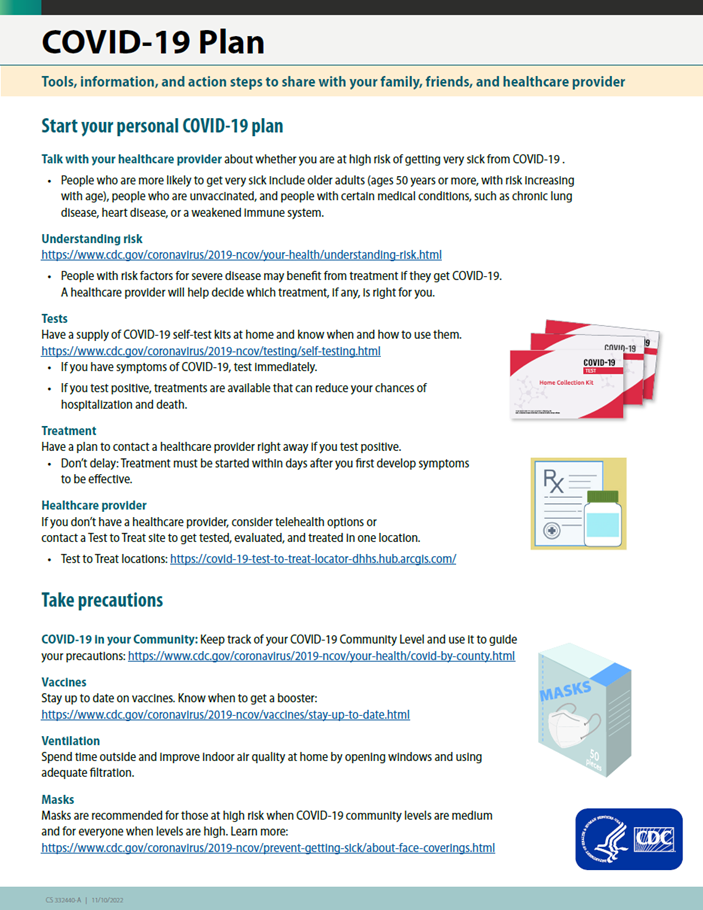
Yesterday the CDC released a `COVID Action Plan' for those who are immunocompromised in their MMWR. While directed primarily towards those who are are immunocompromised, they also include those who are aged ≥50 years or have an underlying health condition as being at higher risk. 

First some excerpts from the MMWR report (follow the link to read it in its entirety), then I'll return with more from the CDC on creating a personal COVID plan. 


Information for Persons Who Are Immunocompromised Regarding Prevention and Treatment of SARS-CoV-2 Infection in the Context of Currently Circulating Omicron Sublineages — United States, January 2023

Early Release / January 27, 2023 / 72

Pragna Patel, MD1; Evelyn Twentyman, MD1; Emily Koumans, MD1; Hannah Rosenblum, MD1; Shannon Griffin-Blake, PhD1; Brendan Jackson, MD1; Sara Vagi, PhD1 (VIEW AUTHOR AFFILIATIONS)


As of January 20, 2023, >90% of circulating SARS-CoV-2 variants in the United States, specifically Omicron BQ.1, BQ.1.1, XBB, and XBB.1.5 sublineages, are unlikely to be susceptible to the combined monoclonal antibodies, tixagevimab and cilgavimab (Evusheld) used for preexposure prophylaxis against SARS-CoV-2 infection (1). The Food and Drug Administration announced on January 26, 2023, that Evusheld is not currently authorized for preexposure prophylaxis against SARS-CoV-2 infection in the United States (2). 

It is important that persons who are moderately to severely immunocompromised,* those who might have an inadequate immune response to COVID-19 vaccination, and those with contraindications to receipt of COVID-19 vaccines, exercise caution and recognize the need for additional preventive measures (Box). In addition, persons should have a care plan that includes prompt testing at the onset of COVID-19 symptoms and rapid access to antivirals if SARS-CoV-2 infection is detected.

COVID-19 vaccination remains the most effective way to prevent SARS-CoV-2–associated serious illness, hospitalization, and death. All persons, including those who are immunocompromised and their household members and close contacts, should stay up to date with COVID-19 vaccination, and receive the updated (bivalent) booster dose, when eligible.† Although persons who are moderately to severely immunocompromised might not mount a strong vaccine-mediated immune response, staying up to date with COVID-19 vaccination§ does provide some protection (3,4). A recent CDC study of preliminary data showed that a bivalent booster dose provided additional protection against symptomatic SARS-CoV-2 infection among immunocompetent persons who had previously received 2, 3, or 4 monovalent vaccine doses (4).

Despite evidence of vaccine effectiveness, coverage with the bivalent booster dose across the United States remains low. As of January 18, 2023, 15.3% of persons aged ≥5 years had received a bivalent booster dose (5). CDC recommends that all eligible persons aged ≥6 months receive 1 bivalent booster dose. Persons are eligible for a bivalent booster dose if they are aged 6 months–5 years and have completed a Moderna COVID-19 primary series ≥2 months earlier. Persons aged 6 months–4 years and who received a 2-dose Pfizer COVID-19 primary series ≥8 weeks earlier can receive the bivalent booster as their third dose.

Among persons with immunocompromise and their household members and close contacts, prevention measures¶ including wearing a high-quality and well-fitting mask,** maintaining physical distance from others (≥6 ft [1.8 m]), improving indoor ventilation,†† practicing frequent handwashing, and developing a careCOVID-19 Community Levels.  plan,§§ should be considered in addition to receipt of a bivalent booster dose.

It is important to wear a mask and maintain physical distance from others if it is not possible to avoid crowded indoor spaces. In addition, simple interventions should be used to improve ventilation in buildings and decrease SARS-CoV-2 transmission by improving air flow. CDC has developed interactive tools¶¶ to help identify ways to improve ventilation in the home. In-duct ultraviolet germicidal irradiation lights can also be added to home heating ventilation and air conditioning systems to inactivate SARS-CoV-2 as air passes through the system.*** Frequent handwashing with soap and water is the best way to eliminate germs in most situations. If soap and water are not readily available, an alcohol-based hand sanitizer containing ≥60% alcohol is a good alternative. Also, it is important for persons who are immunocompromised to develop a care plan in consultation with their physician, in the event that they develop COVID-19.

Persons with mild to moderate symptoms of COVID-19 who 1) are aged ≥50 years, 2) have an underlying health condition††† (especially moderate to severe immunosuppression), or 3) are unvaccinated are at risk for severe COVID-19–associated outcomes. Irrespective of vaccination status, symptomatic persons who are immunocompromised, their household members, and their close contacts should be tested for SARS-CoV-2 infection as soon as possible and receive treatment within 5–7 days of symptom onset.

Early outpatient treatment of mild to moderate COVID-19 with a recommended first-line therapy, ritonavir-boosted nirmatrelvir (Paxlovid) or remdesivir (Veklury), or the second-line therapy, molnupiravir (Lagevrio), have been shown to reduce the risk for severe COVID-19, including hospitalization and death.§§§ These medications are expected to retain activity against the currently circulating Omicron sublineages (6) and are widely available.¶¶¶ Available COVID-19 treatment does not supplant the need for persons to stay up to date on their COVID-19 vaccinations, which are highly effective at preventing COVID-19–related morbidity and mortality.

          (Continue . . . )


Some generic advice from the CDC follows. 


In addition to basic health and hygiene practices, like handwashing, CDC recommends some prevention actions at all COVID-19 Community Levels, which include:

Build Your Personal COVID-19 Plan


Put together your COVID-19 plan so you have all the information you need on hand if you get sick with COVID-19. Download, edit and save, and share your plan with your family, friends, and healthcare provider.

File Details: 561 KB, 3 pages  View PDF

(SNIP)

Prevention Actions to Add as Needed

There are some additional prevention actions that may be done at any level, but CDC especially recommends considering in certain circumstances or at medium or highCOVID-19 Community Levels. 

Wearing Masks or Respirators

Masks are made to contain droplets and particles that you breathe, cough, or sneeze out. A variety of masks are available. Some masks provide a higher level of protection than others.

Respirators (for example, N95) are made to protect you by fitting closely on the face to filter out particles, including the virus that causes COVID-19. They can also block droplets and particles you breathe, cough, or sneeze out so you do not spread them to others. Respirators (for example, N95) provide higher protection than masks.

When wearing a mask or respirator (for example, N95), it is most important to choose one that you can wear correctly, that fits closely to your face over your mouth and nose, that provides good protection, and that is comfortable for you.

Increasing Space and Distance

Small particles that people breathe out can contain virus particles. The closer you are to a greater number of people, the more likely you are to be exposed to the virus that causes COVID-19. To avoid this possible exposure, you may want to avoid crowded areas, or keep distance between yourself and others. These actions also protect people who are at high risk for getting very sick from COVID-19 in settings where there are multiple risks for exposure.

          (Continue . . . )


While the government's emergency response to COVID may be receding, the virus remains very much with us, and its health impacts - including `Long COVID' - continue to exact a heavy toll.  

Since there is no `one-size-fits-all' approach to COVID, going forward each individual will have to make their own risk assessment (which may change from day to day), and act accordingly. 

Luckily, there are proactive steps you can take to reduce your risks of infection, or of severe illness. But how willing the public will be to embrace these steps - and for how long - remains to be seen.