Showing posts sorted by date for query Maine Seals H5N1. Sort by relevance Show all posts

Friday, November 14, 2025

Washington State DOH: H5N5 Avian influenza confirmed in Grays Harbor County resident


#18,846


In a `the plot thickens' moment, this afternoon the Washington State Department of Health has announced their presumptive H5 case announced yesterday has tested positive - not for H5N1 - but for H5N5. 

Regular readers know we've been following this relatively rare subtype for several years, mostly seen in Northern Europe, Iceland, and Eastern Canada.  Two months ago I wrote:

Another thing we are watching is the slow incursion of HPAI H5N5 - which has been reported in both Canada and Northern Europe (see Svalbard: HPAI H5N5 Detected In Arctic Foxes) - into the United States.

The USDA currently only lists 23 detections (in wild birds) across 4 states (primarily Massachusetts, along with Connecticut, Maine, and Michigan), but given the limits of surveillance and testing, this likely underrepresents its range and impact. 

The USDA's most recent update lists 29 (out of 15,709) wild bird samples as H5N5, all reported on the Eastern Seaboard of the United States.   That it has turned up on the west coast is noteworthy, and of course, this is the first known human infection with this subtype. 

The gist of the emailed announcement from WA DOH follows:


For immediate release: November 14, 2025                                           (25-138)

Contact: DOH Communications

H5N5 Avian influenza confirmed in Grays Harbor County resident

First detection of this strain in a human, risk to the public remains low

OLYMPIA – A Grays Harbor resident who was hospitalized with influenza symptoms in early November has been confirmed to have influenza A H5, a type of avian influenza. Additional testing shows the virus to be H5N5, an avian influenza virus that has previously been reported in animals but never before in humans. The Centers for Disease Control and Prevention (CDC) and DOH currently considers the risk to the public from avian influenza to be low.

The person is an older adult with underlying health conditions and remains hospitalized. The affected person has a mixed backyard flock of domestic poultry at home that had exposure to wild birds. The domestic poultry or wild birds are the most likely source of virus exposure; however, public health investigation is ongoing. The Washington State Department of Health is working with the local health department and the Washington State Department of Agriculture to complete exposure and animal health investigations.  

Public health disease experts have not identified any increased risk to the public.  

        (Continue . . . )

As of this posting, the WA DOH website has not been updated. 

For more on HPAI H5N5, you may wish to revisit:

Svalbard: HPAI H5N5 Detected In Arctic Foxes


Icelandic Food and Veterinary Authority (MAST) : H5N5 Infection In Domestic Cat


Cell Reports: Multiple Transatlantic Incursions of HPAI clade 2.3.4.4b A(H5N5) Virus into North America and Spillover to Mammals

Saturday, September 09, 2023

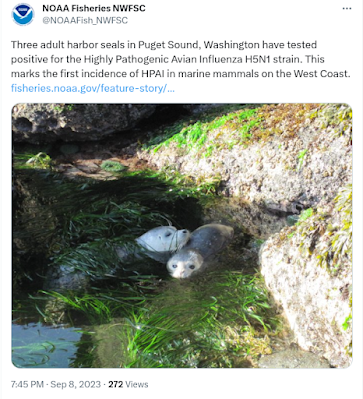
NOAA Fisheries NWFSC: Three Harbor Seals In Puget Sound Test Positive For HPAI H5N1


#17,664

A little over a year ago we followed reports of unusual mortality events in New England (see Maine: Seal Deaths Linked To Avian H5N1) and Canada (see Quebec: Seal Deaths Linked To Avian H5N1involving hundreds of marine mammals killed by the recently arrived HPAI H5 virus. 

Since then, we've seen much larger (> 20,000 animal) die-offs of seals, sea lions, dolphins, and other animals from HPAI H5 up and down the South American Coast (see Chile: SERNAPESCA Reports > 3500 Marine Animal Deaths In July), as well as scattered reports in Europe and Russia.

We've known for decades that marine mammals are susceptible to influenza A viruses (see here, here, and here), but HPAI H5 has become unusually widespread - and has proven particularly deadly - in these sea creatures over the past year. 

Up until now, HPAI has not been confirmed in marine mammals from the west coast of the United States, but yesterday we got confirmation of 3 infected seals recovered from Puget Sound in August. 

Highly Pathogenic Avian Influenza Found in Seals on Marrowstone Island in Puget Sound

September 08, 2023

Test results confirm H5N1; officials urge beachgoers to avoid contact with wildlife.

The U.S. Department of Agriculture’s National Veterinary Services Laboratories has confirmed that three adult harbor seals in Puget Sound have tested positive for the Highly Pathogenic Avian Influenza H5N1 strain. The seals stranded on Marrowstone Island on August 18 and 25. This confirms initial testing by the Washington Animal Disease Diagnostic Laboratory, which indicated the presence of H5N1 in these seals. No seal pups have tested positive.

This marks the first incidence of HPAI in marine mammals on the West Coast. This discovery follows an ongoing HPAI outbreak affecting seabirds on Rat Island and Marrowstone Island since mid-summer. The outbreak resulted in the death of approximately 1,700 birds. The Islands are next to each other in the northern portion of Puget Sound, Washington. Fort Flagler State Park is on the northern tip of Marrowstone Island.

Avoid Contact with Wildlife

People and their pets should avoid all contact with sick or dead wildlife. HPAI is a “zoonotic disease” that has the potential to spread between animals and people (and their pets). Although the risk of infection to the general public remains low, beachgoers should not touch live or dead seals or allow pets to approach seals. They should maintain a safe distance of 100 yards.

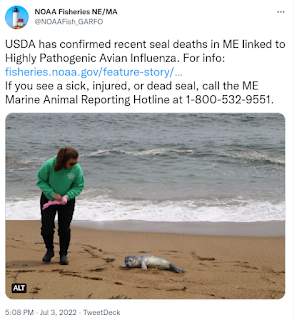
The emergence of avian influenza in harbor seals and gray seals in Maine last year caused a spike in deaths over a short time period. That led NOAA Fisheries to declare an unusual mortality event to investigate the incident.

Avian Influenza and Seals

Puget Sound harbor seal populations number in the many thousands and are considered healthy. The disease is not expected to affect the species at a population level.

“The discovery of HPAI H5N1 in seals brings to light the potential for cross-species transmission and highlights the complexity of managing infectious diseases in wildlife populations,” says Kristin Wilkinson, NOAA Fisheries’ Regional Stranding and Entanglement Coordinator. “As the investigation continues, the collaboration among agencies remains essential to understanding and addressing this situation.”

Seals have been diagnosed with influenza before. In the late 1970s, the virus was detected in harbor seals in the Northeast United States, and again in the early 1980s. In the early 1990s, several seals died of pneumonia in Cape Cod, Massachusetts. Outside of the United States, the disease has been found in dead seals in Canada, Russia, the United Kingdom and several countries in South America.

Report Sick Animals

If you encounter sick, injured, or dead seals, call the West Coast Region Stranding Hotline: (866) 767-6114. Do not attempt to move sick wild animals as this can spread the disease. The Washington Department of Fish and Wildlife asks members of the public to report sick or dead wild birds using this online form.

As resources are available, biologists may respond to collect data and samples from carcasses. Stranding network personnel are taking precautions and wearing personal protective equipment when collecting samples from dead or live animals to ensure the safety of staff and other species.

NOAA Fisheries, in collaboration with marine mammal stranding network partners and governmental agencies, continues to investigate the incidents, and monitor the progress of the virus. The investigation provides an opportunity to learn more about the potential spillover of influenza viruses from avian species to marine mammals and the implications for the broader ecosystem.


Beyond the tragic loss of so many mammals - and its unpredictable impacts on the ecosystem - each mammalian infection provides the virus with another opportunity to better adapt to - and potentially transmit among - mammalian hosts.

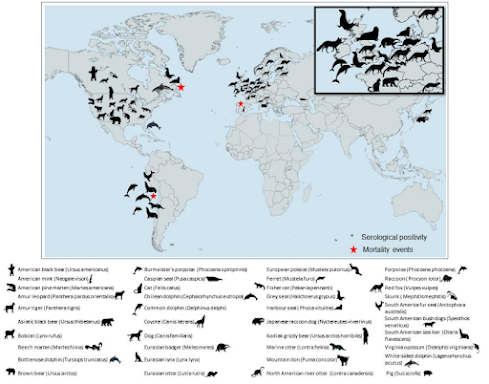
Although H5N1 has been around (and a pandemic concern) for more than 2 decades, it has only been over the past couple of years that we've seen it spill over so aggressively into so many mammalian species (see ECDC/EFSA Chart below).

While we could get lucky, and there may be some (as yet, unidentified) species barrier that prevents HPAI H5 from ever becoming a human pandemic (see Are Influenza Pandemic Viruses Members Of An Exclusive Club?), scientists and researchers around the world are increasingly concerned. 

Last July, in WHO Statement: Ongoing Avian Influenza Outbreaks in Animals Pose Risk to Humans, the heads of WHO, FAO, and WOAH issued a statement on the changing risks from avian flu, and stressed the need for international cooperation in preventing what could become the next global health crisis.

Unfortunately - for a variety of economic, political, and societal reasons - many countries continue to hold avian flu information close to the vest (see Flying Blind In The Viral Storm), leaving the world all too vulnerable to being blindsided by the next global health threat. 

Again. 


Thursday, March 16, 2023

UK Reports 2 Dolphins With HPAI H5N1 & EID Report On Infected Harbor Porpoise in Sweden


#17,352

While we've seen hundreds of reports of terrestrial mammals infected with HPAI H5N1, thousands of sea lions and seals have been killed by this emerging strain of avian flu.  Earlier today we saw a report on 330 seals in Maine affected, and Peru (at last count) had lost nearly 3,500 sea lions to the virus. 

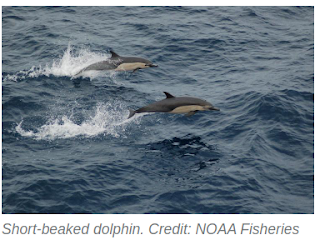
While far less common, we've also seen reports of H5N1 infections in dolphins and porpoises (both cetaceans)  in North America and in Europe (see reports from Florida, Canada, and Sweden).  

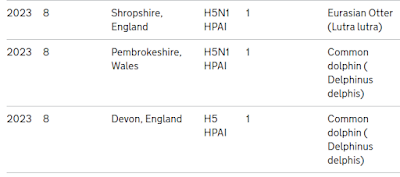
The UK's APHA (Animal & Plant Health Agency), along with DEFRA (Department for Environment Food & Rural Affairs) maintains a list of mammals that have tested positive for HPAI H5N1.  

For week 8 of 2023, they are reporting that two dolphins and an otter have tested positive for the virus.  


Previously the UK has reported on 9 seals, and 4 otters infected with H5N1, but these are the first two dolphins on record.  It is likely, however, that many marine (and terrestrial) mammals get infected, and died or recovered, without being detected. 

This week we also have an EID report on the porpoise infected with H5N1 from Sweden, which we covered in some detail last August in Sweden: First Known Infection of A Porpoise With Avian H5N1.

As we've seen in so many other reports (see here, here, here, and here) on severe neurological damage in mammals, histological findings suggest that H5N1 is neurotropic in cetaceans as well. 

I've only posted some excerpts from a longer report, so follow the link to read it in its entirety.  

Research Letter

Elina Thorsson, Siamak Zohari, Anna Roos, Fereshteh Banihashem, Caroline Bröjer, and Aleksija Neimanis 

Abstract

We found highly pathogenic avian influenza A(H5N1) virus clade 2.3.4.4b associated with meningoencephalitis in a stranded harbor porpoise (Phocoena phocoena). The virus was closely related to strains responsible for a concurrent avian influenza outbreak in wild birds. This case highlights the potential risk for virus spillover to mammalian hosts.


Europe and, more recently, North America are experiencing unprecedented mortality in wild and domestic birds because of the highly pathogenic avian influenza virus (HPAI) A(H5N1) virus clade 2.3.4.4b (1). Infections in tens of thousands of wild birds representing at least 112 species, including large numbers of seabirds, have been documented (1,2). Since December 2021, HPAI H5N1 has dominated infections in wild birds in Sweden, other countries in Europe, and North America, and it has occasionally spilled over into wild mammals, such as red foxes and mustelids (1). 

Recently, increased mortality in harbor seals (Phoca vitulina) and gray seals (Halichoerus grypus) in eastern North America has been associated with HPAI H5N1 infection (3). Although influenza A virus (IAV) infections in seals have been repeatedly documented, reports in cetaceans are scarce (4). We are aware of only 2 cases where IAV in a cetacean might have been associated with disease (4,5). We report HPAI H5N1 infection in a harbor porpoise (Phocoena phocoena) in Sweden.

In late June 2022, an immature male harbor porpoise became stranded in shallow water off the west coast of Sweden (58.64817 N, 11.28973 E). It swam in circles, was unable to right itself, and drowned shortly after discovery. The carcass was stored frozen until necropsy examination at the National Veterinary Institute (Uppsala, Sweden). Macroscopic findings were minimal and included pulmonary edema consistent with drowning. 

Microscopically, we detected moderate lymphoplasmacytic meningoencephalitis with neuronal necrosis, gliosis, perivascular cuffing, and vasculitis in the brain (Figure 1, panel A). The lung contained few areas of mild, mononuclear septal thickening and increased numbers of alveolar macrophages.

(SNIP)

Although the genome of the detected HPAI H5N1 virus did not contain any known genetic marker of mammal adaptation, the clinical manifestations and presence of virus in diverse organs, including the brain, indicate the potential risk of HPAI viruses to mammalian hosts even without adaptation. This risk is a consideration for persons in close contact with infected animals. In addition, extensive circulation of the HPAI H5Nx virus clade 2.3.4.4b in wild and domestic bird populations and sporadic transmission to humans and other mammals enables the virus to evolve, increasing the risk of it becoming more transmissible or pathogenic for mammals. 

Understanding the epidemiology and host–pathogen environmental ecology of IAVs among wildlife, coupled with continuous surveillance, developing better tools for risk assessments, and updating public and animal health countermeasures and intervention strategies, are essential for reducing the threats of zoonotic influenza.

Dr. Thorsson is a wildlife pathologist at the National Veterinary Institute and a resident of the European College of Veterinary Medicine, Wildlife Population Health. Her primary research interests are veterinary pathology, infectious diseases of wildlife, and wildlife population health.

CDC EID Journal: HPAI A(H5N1) Virus Outbreak in New England Seals, United States


#17,351

Last summer we began following reports of scores of harbor seals dying due to H5N1 infection both along the Atlantic coast of Maine and 1,000 miles away in Quebec's St. Lawrence Estuary. 

Maine: Seal Deaths Linked To Avian H5N1


We've known for decades that marine mammals are susceptible to influenza (see below).

And over the past decade - as avian influenza has increased it geographic range - we've seen an increasing number of seal die offs from the virus. 

Last August, in Preprint: Outbreak of Highly Pathogenic Avian Influenza H5N1 in New England Seals, we looked at an early draft of today's report which described two genetically distinct waves of infection in birds and seals in Maine, with one of the one of eight seal-derived sequences carrying the mammalian adaptation PB2 E627K.

While most terrestrial and marine mammal infections have been linked to the consumption of infected animals (usually birds), harbor seals normally prefer a seafood diet (fish, cephalopods, and crustations). 

According to the authors, it isn't clear whether or not mammal-to-mammal transmission occurred in this event. 
 
“It's not surprising that you might have transmission between the seals, because it has happened with low pathogenic avian influenza,” said Puryear. “However, we can't say definitively whether or not there has been mammal-to-mammal transmission of HPAI.”

Researchers have not detected avian flu in a New England seal since the end of last summer, but they will on the alert for any new signals this summer. 

I've posted the link, abstract, and conclusion from the EID report, but you'll want to follow the link to read it in its entirety.  I've also posted a link to a press release from Tufts University, where you'll find a plain-language summary of their findings and quotes from the two lead authors (Puryear & Sawatzki).  


Dispatch
Highly Pathogenic Avian Influenza A(H5N1) Virus Outbreak in New England Seals, United States

Wendy Puryear , Kaitlin Sawatzki, Nichola Hill, Alexa Foss, Jonathon J. Stone, Lynda Doughty, Dominique Walk, Katie Gilbert, Maureen Murray, Elena Cox, Priya Patel, Zak Mertz, Stephanie Ellis, Jennifer Taylor, Deborah Fauquier, Ainsley Smith, Robert A. DiGiovanni, Adriana van de Guchte, Ana Silvia Gonzalez-Reiche, Zain Khalil, Harm van Bakel, Mia K. Torchetti, Kristina Lantz, Julianna B. Lenoch, and Jonathan Runstadler

Abstract

We report the spillover of highly pathogenic avian influenza A(H5N1) into marine mammals in the northeastern United States, coincident with H5N1 in sympatric wild birds. Our data indicate monitoring both wild coastal birds and marine mammals will be critical to determine pandemic potential of influenza A viruses.

Highly pathogenic avian influenza (HPAI) viruses are of concern because of their pandemic potential, socioeconomic impact during agricultural outbreaks, and risks to wildlife conservation. Since October 2020, HPAI A(H5N1) virus, belonging to the goose/Guangdong H5 2.3.4.4b clade, has been responsible for >70 million poultry deaths and >100 discrete infections in many wild mesocarnivore species (1). As of January 2023, H5N1 infections in mammals have been primarily attributed to consuming infected prey, without evidence of further transmission among mammals.

We report an HPAI A(H5N1) virus outbreak among New England harbor and gray seals that was concurrent with a wave of avian infections in the region, resulting in a seal unusual mortality event (UME); evidence of mammal adaptation existed in a small subset of seals. Harbor (Phoca vitulina) and gray (Halichoerus grypus) seals in the North Atlantic are known to be affected by avian influenza A virus and have experienced previous outbreaks involving seal-to-seal transmission (27). Those seal species represent a pathway for adaptation of avian influenza A virus to mammal hosts that is a recurring event in nature and has implications for human health.

          (SNIP)

          Conclusions

Transmission from wild birds to seals was evident for >2 distinct HPAI H5N1 lineages in this investigation and likely occurred through environmental transmission of shed virus. Viruses were not likely acquired by seals through predation or scavenging of infected animals, because birds are not a typical food source for harbor or gray seals (13). Data do not support seal-to-seal transmission as a primary route of infection. If individual bird–seal spillover events represent the primary transmission route, the associated seal UME suggests that transmission occurred frequently and had a low seal species barrier. We observed novel amino acid changes throughout the virus genome in seals, including amino acid substitutions associated with mammal adaptation.

In contrast to outbreaks in agricultural settings, outbreaks of HPAI in wild populations can rarely be managed well through biosecurity measures or depopulation, which is particularly true for large, mobile marine species such as seals. Avian and mammalian colonial wildlife might be particularly affected by influenza A viruses, which could enable ongoing circulation between and within species, providing opportunities for reassortments of novel strains and study of mammalian virus adaptation. Migratory animals might further disseminate the viruses over broad geographic regions. Therefore, the interface of wild coastal birds and marine mammals is critical for monitoring the pandemic potential of influenza A viruses.

Dr. Puryear is a virologist at The Cummings School of Veterinary Medicine at Tufts University in the Department of Infectious Disease and Global Health. Her research interests focus on epidemiology, evolution, and adaptation of wildlife diseases.

          (Continue . . . )


NEWS RELEASE 15-MAR-2023
Bird flu associated with hundreds of seal deaths in New England in 2022, Tufts researchers find

A new study from Cummings School of Veterinary Medicine is the first to connect highly pathogenic avian influenza to a large scale mortality event in wild mammals

Researchers at Cummings School of Veterinary Medicine at Tufts University found that an outbreak of highly pathogenic avian influenza (HPAI) was associated with the deaths of more than 330 New England harbor and gray seals along the North Atlantic coast in June and July 2022, and the outbreak was connected to a wave of avian influenza in birds in the region.

The study was published on March 15 in the journal Emerging Infectious Disease.

         (Continue . . . )


Monday, February 06, 2023

SENASA: Peru Confirms H5N1 In 3 Sea Lions and A Dolphin


Credit Senasa_Peru

#17,274

In mid-November Peru confirmed the deepest incursion of HPAI H5 into South America up to that time (see Peru: SENASA Reports HPAI H5 In Pelicans) after several pelicans tested positive on "Los cangrejos" beach in Paita, nearly 1,000 miles south of the first two South American (Colombian) outbreaks reported in late October.

By the end of November, the virus had been reported in neighboring Ecuador, and Peru had reported thousands of dead birds (mostly pelicans), and that they were investigating the suspicious deaths of several sea lions
 
As we've discussed many times, HPAI H5 may occasionally spill over into mammalian species with unpredictable results. We've already seen HPAI infect mink, bears, foxes, and other small terrestrial mammals in North America and in Europe, but marine mammals appear to be particularly susceptible.

Overnight we saw confirmation from @Senasa_Peru that 3 of the dead sea lions (and 1 dolphin) had indeed tested positive for the H5N1 virus.  I've reproduced the official communication (along with a translation) below). 


(Google Translation)

SENASA PERU
RELEASE No. 6


The National Agrarian Health Service (SENASA) communicates the following:
  1. In order to safeguard the country's poultry health, SENASA has managed to control forty-six (46) outbreaks of type A H5N1 influenza detected in domestic birds from Lambayeque, Cajamarca, La Libertad, Áncash, Lima and Ica.
  2. Epidemiological fences have been maintained and epidemiological surveillance actions have been intensified at the national level for rapid detection; in order to eradicate the disease in the shortest possible time.
  3. The provisions established through the declaration of health emergency remain in force. It is still prohibited to hold gallistic events, to mobilize domestic birds without a SENASA certificate, among other measures.
  4. To reduce the risk of spreading the disease, we urge all Peruvians to continue reporting any case of domestic bird mortality to the cell phone: 946 922 469 or to the email reporta.peru@senasa.gob.pe.
  5. In relation to the sighting of marine species stranded on the beaches of the Peruvian coast, SERFOR comes carrying out the corresponding actions through the SERFOR Alert WhatsApp (947 588 269).
  6. As part of the articulated work, SERFOR communicated to SENASA the positive results for Avian Influenza type A H5N1 detected in three sea lions (Lima) and one dolphin (Piura); which were reported to the Ministry of Health for follow-up and appropriate measures, within its powers.
  7. When sighting dead or sick sea lions on the beaches, it is important that people follow the recommendations that SERFOR has been providing through its official communication channels.
Lima, February 5, 2023.
Government of Peru
BICENTENARY OF PERU
2021-2024 PERU
Ministry of Agrarian Development and Irrigation
SENASA PERU

Although we've seen sporadic infection of marine mammals with other novel flu viruses in the past (e.g. H3N8 in New England (2011), H10N8 in Germany (2014), H5N8 in the Baltic Sea (2017), etc.), the number and size of HPAI H5N1 spillover events around the globe are notable. 

HPAI H5N1 continues to reassort and evolve as it continues its world tour - generating dozens of new genotypes over the past year - with some being more pathogenic (to birds, and to mammals) than others (see Preprint: Rapid Evolution of A(H5N1) Influenza Viruses After Intercontinental Spread to North America).

Where this all leads is anyone's guess.  We've been on the brink with H5N1 before, only to see it recede.  Maybe we'll get lucky again. 

But this novel virus has never been this widespread and pervasive in wild birds before, its recent penchant for infecting mammals (including humans) and evidence suggesting that it is becoming more neurotropic in mammals, are all warning signs we cannot afford to ignore. 

Stay tuned. 


Tuesday, January 24, 2023

Russia: Mass Mortality Event (Seals) In Caspian Sea Linked To Avian Flu


#17,252

In early December of 2022 there were reports in the Russian media of the discovery of a large number (700) of dead seals near on the coast of the the Caspian Sea near Dagestan (see map above).  These reports quoted the Federal Agency for Fishery as saying:
“The carcasses of dead seals in the amount of 650-700 individuals were found in the area from the oil depot to the mouth of the Sulak River,” the ministry said in a statement. They specify that the number of discovered animals may increase. The alleged cause of death has not yet been established. RBC sent a request to the press service of the regional government.

A few days later, another report suggested the number was likely closer to 2500, and discussed the possibility that they had died as the result of oxygen starvation due to gas (methane) emissions due to seismic activity.  

A similar event two years earlier in that region had been attributed to that scenario. 

Today, a (translated) press release from the Dagestan State University states that an (as yet unsubtyped) avian influenza A virus was detected in the carcasses of these seals.  They state that it is too soon to say whether the virus was the actual cause of death.

While we've seen a number of different influenza A viruses infect seals in the past - including H3N8, H10N8, H7N7, etc. - HPAI H5N1 is the most obvious suspect right now.  Hopefully we'll get confirmation in the days ahead. 

First the press release, then I'll return with a postscript. 

BIRD FLU FOUND IN DEAD SEALS IN THE CASPIAN SEA
 
Preliminary studies of the mass mortality of Caspian seals showed that the animals were infected with avian influenza. At the same time, it is too early to conclude that it was the virus that caused the death, research is ongoing, - said Alimurad Gadzhiev, director of the Institute of Ecology and Sustainable Development of DSU.

“Specialists from the Institute of Ecology and Sustainable Development, together with colleagues from the Research Institute of Virology and experts from the Compass Foundation, took tissue samples from dead seals in December to determine the causes of death. Today, based on the first results, we can say that the samples gave positive results for bird flu,” the scientist said.

According to Gadzhiev, in late spring-early summer 2022, on Maly Zhemchuzhny Island (one of the main Caspian seal rookeries in the North Caspian), a mass death of a wild bird from a highly pathogenic avian influenza of the H5N1 strain (safe for humans) was noted.

“We think that this could have happened to the Caspian seal as well, as there is evidence that there is an outbreak of this strain all over the world. It kills animals, including marine mammals. Even bears in Alaska are dying from bird flu. The integrated seal monitoring program developed by our institute together with Compass will provide an opportunity to study the situation in depth and determine the reliable causes of death in the spring,” the ecologist added.

Assuming this is H5N1, this would be additional evidence of mammal-to-mammal transmission of the virus, along with its pathogenicity in marine mammals.  Last summer we saw reports from Maine and Quebec of H5N1 infected seals, but the numbers reported were nowhere near the size of this die off. 

While we've not seen evidence of sustained or efficient human-to-human transmission of HPAI H5N1, each extended chain of mammalian transmission is another opportunity for the virus to improve its game.

Stay tuned. 


Tuesday, August 23, 2022

Ain't No Cure For the Summer Bird Flu


#16,958

Were we not in the 32nd month of a Global SARS-CoV-2 pandemic which has claimed (well) in excess of 6 million lives, and in the 4th month of growing Monkeypox Epidemic affecting nearly 100 countries , the biggest infectious disease story of the summer might very well be the unprecedented spread and persistence of HPAI H5 avian flu around the world. 

While Europe and Asia are no strangers to seeing avian flu - particularly during the fall and winter months - the United States has been struck for the first time since 2015 (see above graphic), resulting in the loss of tens of millions of wild and commercially raised birds, and the spillover of the virus to numerous mammalian species (including 1 human infection). 

Unlike the epizootic of 2015 - which subsided once summer arrived - HPAI H5 remains active in both North America and in Europe. Notably, the virus has broadened its host range (see DEFRA: The Unprecedented `Order Shift' In Wild Bird H5N1 Positives In Europe & The UK), as it has continued to expand geographically. 


Although we are seeing less activity than we saw earlier this year, even in late August we continue to see daily reports of avian flu outbreaks in the United States, Europe, and even Asia. The following report comes overnight from the state of Georgia. 


Possible bird flu discovered after 700 vultures found dead at Noah’s Ark Sanctuary
By WSBTV.com News Staff August 22, 2022 at 9:22 pm EDT

HENRY COUNTY, Ga. — The Georgia Department of Natural Resources says they’re assessing and investigating the deaths of 700 hundred black vultures at the Noah’s Ark Animal Sanctuary in Locust Grove. The state has confirmed that those deaths are related to an avian influenza outbreak, commonly known as bird flu. 

Workers suspect a contaminated bird got into the resident vulture population. Efforts are underway to prevent the spread to other animals.

Noah’s Ark said in a statement that initial tests show that the H5N1 strain of Highly Pathogenic Avian Influenza (HPAI) was the cause of death.

          (Continue . . . )
 

Also concerning, we've seen numerous reports of HPAI H5 infecting, and killing, non avian species. For the past two months we've been following the unusual mortality event in seals in Maine, and in Canada, which has been attributed to the HPAI H5 virus.  This update from NOAA Fisheries.

2022 Pinniped Unusual Mortality Event along the Maine Coast

Since June 2022, elevated numbers of harbor seal and gray seal mortalities have occurred across the southern and central coast of Maine. This event has been declared an unusual mortality event (UME).

  
Why are Seals Stranding?

Preliminary testing of samples has found some harbor and gray seals positive for highly pathogenic avian influenza (HPAI) H5N1. There is an ongoing HPAI H5N1 event North America that was first detected in early winter 2021. The first detections in Maine waterfowl were in February 2022. HPAI H5N1 has now been confirmed in 41 U.S. states and 11 Canada provinces, in commercial poultry, backyard flocks, nearly 90 species of wild birds, eight species of scavenging mammals, and now seals. NOAA Fisheries is working with our local, state, tribal, federal and international partners in the investigation of HPAI in seals. HPAI is a “zoonotic disease” that has the potential to spread between animals and people (and their pets).

          (Continue . . . )

 We've seen similar spillovers into terrestrial mammals as well, including:

Two States (Michigan & Minnesota) Report HPAI Infection In Wild Foxes

Ontario: CWHC Reports HPAI H5 Infection With Severe Neurological Signs In Wild Foxes (Vulpes vulpes)

Netherlands DWHC Reports another Mammal (Polecat) Infected With H5N1

Human infections, have thankfully been very few and mild.  Nevertheless, just over 3 months ago the CDC Added Zoonotic Avian A/H5N1 Clade 2.3.4.4b To IRAT List

Last month, in PrePrint: HPAI H5N1 Infections in Wild Red Foxes Show Neurotropism and Adaptive Virus Mutations, we saw evidence from the Netherlands that Europe's avian H5N1 virus was adapting to its new-found mammalian hosts by acquiring the PB2-627K mutation.

PB2-627K can enable the virus to replicate more efficiently at the lower temperatures (33°C) commonly found in the respiratory tract of mammals, rather than the higher temperatures found in avian gastrointestinal tracts.

Although its threat to human health remains low, we continue to see evidence that HPAI H5 is slowly adapting to mammalian hosts, and so that status quo may not last forever.  A new study, which was previewed this week in Transboundary and Emerging Diseases, finds similar adaptations in an H5N8 virus in China.

H5N8 Subtype Avian Influenza Virus Isolated from Migratory Birds Emerging in Eastern China Possessed a High Pathogenicity in Mammals

Xinyu Miao,Mingcan Feng,Ouwen Zhu,Fan Yang,Yinyan Yin,Yuncong Yin,Sujuan Chen,Tao Qin,Daxin Peng,Xiufan Liu
First published: 21 August 2022

Influenza viruses are notoriously unpredictable, and often when we expect them to zig, they zag instead. Five years ago, H7N9 was on everyone's watch list, but following china's massive poultry vaccination program, that threat has (at least temporarily) receded. 

About all we can say with any certainty is that HPAI H5's impact over the past 2 years has been unprecedented, both in size, and in scope, and it continues to evolve.  

The virus is presumably spreading among birds in their high latitude summer roosting sites (see Norwegian Veterinary Institute : More HPAI (H5N5 & H5N1) Detected In Arctic (Svalbard)), and could return (as H5N1, H5N8, H5N5 or some other H5Nx subtype) with renewed vigor this fall. 

This recent, rapid spread and evolution of HPAI H5 has a lot of scientists genuinely worried (see Nature Why unprecedented bird flu outbreaks sweeping the world are concerning scientists).

While our hands are admittedly full with COVID, Monkeypox, polio, and the expected return of seasonal influenza this fall, we need to be preparing for the unexpected as well.  

Because nature has no qualms about piling on. 

Tuesday, August 02, 2022

Preprint: Outbreak of Highly Pathogenic Avian Influenza H5N1 in New England Seals


 #16,916

While HPAI H5N1 clade 2.3.4.4b - the virus causing our record-setting North American and European avian epizootics - is mostly a threat to wild birds and poultry, we continue to see worrisome reports of spillovers into mammals, often with severe neurological manifestations. 

Maine: Seal Deaths Linked To Avian H5N1

Quebec: Seal Deaths Linked To Avian H5N1

Two States (Michigan & Minnesota) Report HPAI Infection In Wild Foxes

Ontario: CWHC Reports HPAI H5 Infection With Severe Neurological Signs In Wild Foxes (Vulpes vulpes)

Netherlands DWHC Reports another Mammal (Polecat) Infected With H5N1

Human infections, have thankfully been very few and mild.  Nevertheless, just over 11 weeks ago the CDC Added Zoonotic Avian A/H5N1 Clade 2.3.4.4b To IRAT List

The concern is that the more often this virus jumps species, the more chances it will have to acquire host adaptations that will make it better able to spread, and cause disease, in mammals (including humans).

Just over a week ago, in PrePrint: HPAI H5N1 Infections in Wild Red Foxes Show Neurotropism and Adaptive Virus Mutations, we saw evidence from the Netherlands that Europe's avian H5N1 virus was adapting to its new-found mammalian hosts by acquiring the PB2-627K mutation.

PB2-627K can enable the virus to replicate more efficiently at the lower temperatures (33°C) commonly found in the respiratory tract of mammals, rather than the higher temperatures found in avian gastrointestinal tracts.

While we've seen sporadic spillovers of avian influenza into mammals in the past (see here, here, here, and here), these tended to be one-off, or limited events, often caused by feeding zoo animals infected chicken carcasses. These captive animals had little chance to spread the virus beyond their cages. 

The infection and deaths of hundreds of seals in Europe, the United States, and Canada suggests ongoing transmission in the wild, and with that comes an increased risk of adaptive mutations. 

Today we've a preprint, published on the BioRxiv website, detailing two genetically distinct waves of HPAI H5N1 spreading in wild and migratory birds in New England in 2022, and the recent spillover of the second wave virus into seals in coastal Maine. 

Thus preprint is well worth reading in its entirety, but a couple of important points to ponder. First, the detection of 2 genetically distinct waves of HPAI H5N1 this year in New England reminds us that this virus is a continually evolving threat. 

This may help explain The Unprecedented `Order Shift' In Wild Bird H5N1 Positives In Europe & The UK, we looked at last month, and its extended geographic range and persistence into the summer months. 

The second point is the unpredictability of all of this - now that it is spreading in a mammalian host - as elucidated in the closing paragraph of this preprint:

Unlike in agricultural settings, outbreaks in wild populations cannot be controlled or managed well through biosecurity measures or depopulation. This is particularly true of large, mobile marine species like seals. Colonial wildlife, avian and mammalian, may be particularly impacted  by influenza A viruses and may allow for ongoing circulation between and within species. This  provides opportunity for reassortments of novel strains and mammalian adaptation of virus.  Migratory animals may then disseminate virus over broad geographic regions. The wild interface  of coastal birds and marine mammals is therefore critical for monitoring influenza A viruses of  pandemic potential, particularly in light of the impossibility of replicating such an interface in a  research environment. 

I'll have a brief postscript after the break.

Outbreak of Highly Pathogenic Avian Influenza H5N1 in New England Seals
Wendy Puryear,  Kaitlin Sawatzki,  Nichola Hill, Alexa Foss,  Jonathon J. Stone, Lynda Doughty, Dominique Walk, Katie Gilbert,  Maureen Murray, Elena Cox, Priya Patel, Zak Mertz, Stephanie Ellis, Jennifer Taylor, Deborah Fauquier, Ainsley Smith, Robert A. DiGiovanni Jr.,  Adriana van de Guchte,  Ana Silvia Gonzalez-Reiche, Zain Khalil,  Harm van Bakel, V Mia K. Torchetti, Julianna B. Lenoch,  Kristina Lantz,  Jonathan Runstadler
doi: https://doi.org/10.1101/2022.07.29.501155
This article is a preprint and has not been certified by peer review [what does this mean?].

Preview PDF

Abstract

The recent incursion of Highly Pathogenic Avian Influenza A (H5N1) virus into North America and subsequent dissemination of virus across the continent, has had significant adverse impacts on domestic poultry, and has led to widespread mortality in many wild bird species. 
 
Here we report the recent spillover of H5N1 into marine mammals in the northeastern United States, with associated mortality on a regional scale.This spillover is coincident with a second wave of H5N1 in sympatric wild birds also experiencing regional mortality events. 

Viral sequences derived from both seal and avian hosts reveal distinct viral genetic differences between the two waves of infection. Spillover into seals was closely related to virus from the second wave, and one of eight seal-derived sequences had the mammalian adaptation PB2 E627K.

One-Sentence Summary An outbreak of H5N1 in New England seals is the first known population-scale mammalian mortality event associated with the emerging highly pathogenic avian influenza clade 2.3.4.4b.

          (Continue . . .)
 
 
While we've been on the precipice with HPAI H5 before, only to see its threat recede, its latest incarnation appears to be more widespread - and better adapted to year-round persistence - than ever before (see Study: Global Dissemination of Avian H5N1 Clade 2.3.4.4b Viruses and Biologic Analysis Of Chinese Variants).

This recent, rapid spread of HPAI H5 has a lot of scientists genuinely worried (see Nature Why unprecedented bird flu outbreaks sweeping the world are concerning scientists).  

Where HPAI H5Nx goes from here is unknowable, but when a virus continually defies expectations, we ignore it at our own peril.