Showing posts sorted by date for query Florida COVID-19. Sort by relevance Show all posts

Tuesday, April 29, 2025

The Lancet Regional Health - Americas: Enhancing the Response to Avian Influenza in the US and Globally


#18,457

While no one can say with certainty what HPAI H5Nx will do next, its current trajectory - and recent successes in infecting new mammalian species - has many experts and long-time flu watchers more than a little concerned.  

HPAI H5 is now credited with sparking the largest epizootic on record, has spread globally to nearly every corner of the globe, and continues to show signs of mammalian adaptation. 

 A few (of hundreds) of recent studies include:

Nature Reviews: The Threat of Avian Influenza H5N1 Looms Over Global Biodiversity

Travel Med. & Inf. Dis.: Pacific and Atlantic Sea Lion Mortality Caused by HPAI A(H5N1) in South America

EID Journal: Recent Changes in Patterns of Mammal Infection with Highly Pathogenic Avian Influenza A(H5N1) Virus Worldwide
Recently, we've also seen signs of growing antiviral resistance in some H5 viruses (see Emerg. Microbes & Inf: Oseltamivir Resistant H5N1 (Genotype D1.1) found On 8 Canadian Poultry Farms) and as Maggie Fox explained last year in SCI AM - A Bird Flu Vaccine Might Come Too Late to Save Us from H5N1, our pharmaceutical options during the opening months of any pandemic will be limited.

While none of this guarantees that HPAI H5 will spark the next pandemic, it is certainly at the top of our list of contenders. And while many recent cases have been mild, its history suggests it is capable of producing severe and fatal infections. 

But the response of governments (both here in the U.S., and around the globe) has been largely to dismiss the threat as `low', and to treat H5 as more of an agricultural or economic concern than a public health threat. 

Last month, in Nature: Lengthy Delays in H5N1 Genome Submissions to GISAID, we learned that the average delay for submitting non-human sequences was 7 months, and that Canada came in last at 20 months.

We continue to see diplomatically worded pleas to countries to share data (see WHO Guidance: Surveillance for Human Infections with Avian Influenza A(‎H5)‎ Viruses), but our visibility of the global spread of the virus grows increasingly dim (see Flying Blind In The Viral Storm).

Yesterday The Lancet Regional Health - Americas published a viewpoint article penned by some of the most recognizable names in virology - all members of the Global Virus Network (GVN) - which outlines the growing threat, and calls for urgent, proactive measures to prevent widespread outbreaks

This group makes specific recommendations in 10 areas.

  1. Enhanced Surveillance 
  2. Faster Genomic Data Sharing
  3. Improved Farm Biosecurity
  4. Preparedness Plans for the Roll-Out of Tests
  5. Strengthening Public Health Infrastructure
  6. Investment in Phenotype Prediction from Genetic Data
  7. Investment in Rapid Vaccine Development
  8. Preparedness Plan for the Roll-Out of Vaccines and Therapeutics
  9. Preparedness Plan to Allow for Rapid Clinical Studies
  10. International Collaboration 

First the link and some excerpts from the article (which you'll want to read in its entirety), followed by link and excerpts from the GVN press release.  I'll have a bit more after the break. 

Enhancing the response to avian influenza in the US and globally

Maggie L. Bartlett a b, Peter Palese c a, Meghan F. Davis b a, Sten H. Vermund a d, Christian Bréchot a d, Jared D. Evans e a, Lauren M. Sauer e a, Albert Osterhaus f a, Andrew Pekosz b a, Martha Nelson g a, Elyse Stachler h a, Florian Krammer i a, Gage Moreno h a, Gene Olinger j a, Marion Koopmans k a


Summary

The recent emergence of highly pathogenic H5N1 avian influenza virus infections in dairy cows and humans in the U.S. has raised alarms regarding the potential for a pandemic. Over 995 dairy cow herds and at least 70 humans have been affected, including cases of severe disease and the first reported H5N1-related death in the U.S. Sporadic human infections with no known contact with infected animals highlight the possibility of viral adaptation for efficient human-to-human transmission. Concurrently, the virus continues to circulate in wild birds, backyard flocks, and hunted migratory species, further amplifying the risk to humans and domestic animals. 
This article provides an overview of the current outbreak status, emphasizes the importance of robust surveillance systems to detect emerging strains with pandemic potential, and highlights risks to the U.S. dairy and poultry industries. Recommendations for risk mitigation include enhanced biosecurity measures, improved surveillance, decentralized testing, and targeted public health messaging.
The Global Virus Network calls for urgent, proactive measures to prevent widespread outbreaks, leveraging lessons learned from prior pandemics. These measures include targeted vaccination, improved communication strategies to combat vaccine hesitancy, and the incorporation of social sciences to address barriers to public health interventions.

Avian influenza status in early 2025

Recent animal and human infections with highly pathogenic H5N1 avian influenza virus in the US have raised concerns related to an emerging pandemic. From 2024 through April 2025, there have been confirmed cases in 995+ dairy cow herds, 168+ million birds, 1650+ flocks, and at least 70 humans with the epizootic now present in all 50 states and human cases in 13 states and Canada. One mystery is the sporadic H5N1 infections that have occurred in humans with no known contact with infected animals, some of which resulted in severe disease; the first confirmed death in the US is an individual who likely contracted infection from wild birds that died on his property.1 

While the H5N1 outbreak in dairy cows and associated farm workers has not resulted in sustained human-to-human transmission, the possibility of virus adaptation and widespread infections requires proactive and vigilant measures. Particularly given the continued presence of H5N1 in avian species. The recent CDC bird flu report highlights increased evidence of transmission to people underscoring the necessity of stronger surveillance approaches.2

The Global Virus Network (GVN) is an international coalition of virologists helping the international community improve the prevention, detection, and management of viral diseases. We recognize the threat that the H5N1 subtype of influenza A virus poses once efficient human-to-human transmission starts.

Here, we outline the status, information for the public and federal partners, risks, and mitigation opportunities to address the ongoing US epizootic, however, the information and recommendations are applicable globally.

Is the virus mutating?

Current sequence data from circulating highly pathogenic H5N1 avian influenza viruses indicate ongoing mutations and reassortment/mixing of genomic segments.3,4 The massive viral circulation has led to infection of an increasing range of mammals including suspected mammal-to-mammal transmission for minks, sea lions, and cows.5 In mammals, these viruses may acquire mutations that increase their ability to transmit and replicate efficiently in mammals, eventually including humans; however, this has yet to be demonstrated.3,6 Co-circulation of H5N1 viruses with swine or human seasonal influenza viruses, especially during the Northern hemisphere winter season, could lead to reassortant viruses that can efficiently spread in humans. The Pandemic Emergence Score is given by the CDC Influenza Risk Assessment Tool to estimate the risk of a pandemic. The CDC currently considers the virus to have a moderate future pandemic risk when compared to other Influenza A viruses.

What is the situation now? How worried should the public be?
Until recently, human H5N1 infections globally were primarily the result of bird-to-human transmission, typically arising from direct or indirect contact with infected poultry or contaminated environments. These sporadic human infections increase the opportunities for a virus with sustained ability of human-to-human transmission. To understand risk, it’s vital that affected industry workers are kept appraised of health department and CDC advice. The proportion of undiagnosed human infections is unknown at present, and serosurveillance and respiratory surveillance of the population at greatest risk of exposure can enhance our understanding of risk to human health and to detect spillovers quickly. This requires heightened communication efforts to ensure the public is well informed. Measures like personal protective equipment (PPE) for those at risk and biosecurity in poultry farms generally are effective in preventing spread.7,8

         (Continue . . . ) 

The link and a snippet from the GVN press release follows:


Top global virologists publish a comprehensive analysis and advocate for a multi-government initiative in the Lancet Regional Health—Americas

Tampa, FL, USA, April 28, 2025: Today, the Global Virus Network (GVN), representing eminent human and animal virologists from 80+ Centers of Excellence and Affiliates in 40+ countries, published a comprehensive analysis and call-to-action in The Lancet Regional Health—Americas on the North American avian influenza virus, or H5N1, outbreak. The GVN calls on world governments to address the threat of H5N1 avian influenza by enhancing surveillance, implementing biosecurity measures, and preparing for potential human-to-human transmission.

"Understanding the current landscape of H5N1 infections is critical for effective prevention and response," said Sten H. Vermund, MD, PhD, chief medical officer of the GVN and dean of the USF Health College of Public Health at the University of South Florida, USA. "The virus’ ability to infect both animals and humans, combined with recent genetic changes, underscores the importance of proactive surveillance and rapid response measures."


While I agree with the sentiments of this viewpoint, the $64 question is; is anybody listening?

A week ago, we looked at Two Surveys (UK & U.S.) Illustrating The Public's Lack of Concern Over Avian Flu, and on social media conspiracy theories abound about a `manufactured' pandemic. 

Vaccine uptake is down for both COVID and Influenza, (along with Measles and other easily preventable diseases), while we continue to see new records set in the number of pediatric flu deaths each year.


Despite the known dangers of COVID reinfection (see CIDRAP COVID-19 reinfection ups risk of long COVID, new data show), post-pandemic mask wearing is almost non-existent outside of Asia (see Preprint - Continuing to be Cautious: Japanese Contact Patterns during the COVID-19 Pandemic).

While our global `don't test, don't tell' strategy may be politically or economically expedient in the short run - and the public may be comforted by this lack of information - we risk sleepwalking our way into the next pandemic

Just like we did (see The Most Predicted Global Crisis of the 21st Century) with COVID in 2019. 

Thursday, April 03, 2025

ECDC Guidance: Recommendations for Preparedness Planning for Public Health Threats


#18,402

Eighteen years ago - after H5N1 managed to spread rapidly out of Southeast Asia into Europe, Africa, and the Middle East for the first time - pandemic planning suddenly became a global priority. Nearly every nation (and every U.S. state and Federal Agency) crafted a pandemic plan, and table top exercises and drills were held regularly.

Some of these plans, and drills, were better conceived than others, of course. Far too many envisioned a `mild' pandemic, or focused on delivering unlikely-to-be-available vaccines (see No Such Thing As A `Planacea').

A few (out of hundreds of) examples include:

 When an influenza pandemic finally did emerge in 2009, it came from a swine H1N1 virus, and was relatively mild (except for those who died from it)

Critics of pandemic planning (which was, admittedly expensive and time consuming) insisted the age of severe pandemics was over (pointing to 3 successively weaker pandemics since 1918), and that modern medicine could more than cope with anything that might emerge. 

Having dodged a bullet, interest in pandemic planning, and drills, gradually declined and most existing pandemic plans gathered dust on the shelf.  While there were constant concerns raised that the `world was ill prepared' for a pandemic, little actual progress in preparing for the next pandemic occurred. 

Although once again from an unexpected source, COVID in 2020 reaffirmed that severe pandemics still happened, and that 10 years after the last pandemic, we were still woefully unprepared to deal with one (see The Most Predicted Global Crisis of the 21st Century).

A few, of many challenges included:
NIOSH Update: More Fake/Counterfeit N95 Masks Entering Market
JAMA: A Framework for Rationing Ventilators & ICU Beds During the COVID-19 Pandemic
Contemplating A Different `Standard of Care'

HHS ASPR-TRACIE: COVID-19 Crisis Standards of Care Resources

Rather than learn from these mistakes, five years after the start of the COVID pandemic we've dismantled much of our surveillance and reporting systems, in order to declare the emergency ended (see No News Is . . . Now Commonplace).

Worse, the international sharing of emerging disease information is - as near as I can tell - the most dysfunctional its been since I began this blog nearly 20 years ago (see The Wrong Pandemic Lessons Learned).  

While the world appears to be sleepwalking towards the next global health crisis, we've seen some movement.  Last summer both South Korea and Japan issued revised pandemic plans, and last November Hong Kong held a Coordinated Avian Flu Drill `Amazonite'.

A number of countries and regions have purchased (or arranged to purchase) limited quantities of H5N1 vaccine.

Over the past year the ECDC has been busy issuing guidance documents to its member nations.  Like with our own CDC - these are not mandates, only recommendations - and it is up to each individual public health entity to decide what to incorporate in their planning. 

While most of this recent surge in preparedness is likely inspired by the continued spread of H5N1, the reality is we could easily be blindsided (again) by something other than avian flu with the next pandemic. 

Just over a year ago (March 20th, 2024) we looked at the first part of this 2-part plan (see  ECDC Guidance: Public Health and Social Measures for Health Emergencies and Pandemics in the EU/EEA), which was published less than a week before the announcement of H5N1 in American livestock. 

I've only included the link and executive summary of this 49-page installment.  Follow the link to read it in its entirety.  I'll have a bit more after you return.

Public health guidance
2 Apr 2025

This document aims to provide public health authorities in European Union and European Economic Area (EU/EEA) countries with guidance for improved preparedness planning taking the lessons that have been identified through various activities in the context of recent public health crises (e.g. COVID-19 pandemic, mpox multi-country outbreak 2022–23) and translating them to concrete advice.

Executive summary


This document, together with the ECDC recommendations on the implementation of public health and social measures (PHSMs) for health emergencies and pandemics published in 2024, form a package of concrete recommendations for preparedness planning for the EU/EEA countries.

Lessons learned primarily from the response to the COVID-19 pandemic, but also from the response to the multicountry mpox outbreak in 2022–23, were collected through various activities from Member States, the European Commission, the World Health Organization (WHO) and the WHO Regional Office from Europe. We have then presented these in the form of specific recommendations for planners within each phase of the continuous cycle of preparedness (Anticipation, Response and Recovery), following a prototype structure of a preparedness and response plan. In each section, we have presented a relevant example from a Member State or international organisation to illustrate their practice or attempt to implement lessons after COVID-19 or the mpox outbreak. These examples were identified either through literature review or communication with representatives of the countries within ECDC’s network for Preparedness and Response.

Annex 1 includes an overview of the main lessons for the public health sector and Annex 2 includes a compiled catalogue of documents, tools and other resources for public health preparedness planning.

Download

Over the past year, PAHO (Pan American Health Organization) has repeatedly urged its member nations to proactively prepare to deal with a potential influenza pandemic. While H5N1 is assumed, it could certainly be from another coronavirus (or something entirely unexpected).
Just over 4 months ago, in A Personal Pre-Pandemic Plan, I wrote about the practical things you and your family can do now to prepare for a possible pandemic in the months or years ahead.

While I still hope we can avoid (or at least delay) that eventuality, the simple truth is, preparedness is always easier before the next emergency starts. 

And the clock is always ticking.

Wednesday, February 05, 2025

Preprint: Active Surveillance of Companion Animals During The SARS-CoV-2 Pandemic Reveals > 25% Infected


#18,600

While we think of zoonotic diseases as primarily a threat to humans, the last two pandemics (H1N1 & COVID) - and the rise of HPAI H5 - have demonstrated that companion animals, along with many other species of wildlife, can be equally susceptible to a mammalian adapted virus. 

Although this can have grave consequences for the infected animal, it can also provide a novel  virus with a new reservoir host - one which may allow it to spread, and evolve - and then spill back into humans. 

Until just over 20 years ago, dogs and cats were thought unlikely to be infected with influenza A viruses. That is, until large cats in South East Asian zoos began to die after consuming H5N1 infected poultry, and greyhounds at a racetrack became infected with equine H3N8 (see EID Journal article Influenza A Virus (H3N8) in Dogs with Respiratory Disease, Florida).

Three years later (2007), another avian H3N2 virus jumped from poultry to dogs - this time in South Korea - and after spreading across China for a few years, it began its world tour.  It arrived in the United States in 2015 (see CDC’s Key Facts On The New H3N2 Canine Flu).

During the 2009 pandemic we saw scattered reports of dogs and cats infected with the H1N1 virus (see 2012's Companion Animals & Reverse Zoonosis), while in 2016 we saw an outbreak of avian H7N2 in animal shelters in NYC, which infected hundreds of cats, and spilled back into humans

In 2020, the SARS-CoV-2 virus emerged in China, and while it was exquisitely suited for human transmission, it also quickly found a home in a number of other mammalian species. 

Since then, dozens of other species have been found capable of hosting the SARS-CoV-2 virus, and the potential for someday seeing a new, mutated, version to spill back into the human population remains (see Nature: Study on Sentinel Hosts for Surveillance of Future COVID-19-like Outbreaks).

We've also looked at a number of studies on the seroprevalence of SARS-CoV-2 in companion animals around the world, including:

While sample sizes, and the percentage of positive tests, may vary between studies, cats appear to be more susceptible to the SARS-CoV-2 virus than dogs, and are more likely to be symptomatic.  

Today we've a new report - in a pre-print on the bioRxiv server - from researchers at the CDC, the USDA and Texas AM University, on the active surveillance of companion animals for the SARS-CoV-2 virus during the first two years of COVID. 

I've only included the abstract, and conclusion from the 31-page report, so follow the link to read it in its entirety.  I'll have a postscript after you return.


Alex Pauvolid-Correa, Edward Davila, Lisa Auckland, Italo B. Zecca, Rachel E Busselman, Wendy Tang, Christopher M. Roundy, Mary Lea Killian, Mia Kim Torchetti, Melinda Jenkins-Moore, Suelee Robbe-Austerman, Kristina Lantz, Katherine Mozingo, Rachel Tell, Ailam Lim, Yao Akpalu, Rebecca S. B. Fischer, Francisco C. Ferreira, Gabriel L. Hamer, Sarah A. Hamer
doi: https://doi.org/10.1101/2025.02.03.636361

Abstract

Households where people have COVID-19 are high risk environments for companion animals that are susceptible to SARS-CoV-2. We sampled 579 pets from 281 households with one or more laboratory-confirmed person with COVID-19 in central Texas from June 2020 to May 2021.

 Nineteen out of 396 (4.8%) dogs and 21 out of 157 (13.4%) cats were positive for SARS-CoV-2 by RT-qPCR. Additionally, 95/382 (25%) dogs and 52/146 (36%) cats harbored SARS-CoV-2 neutralizing antibodies. Twenty-six companion animals of ten other species were negative. 

Overall, 164 (29%) pets were positive for SARS-CoV-2 by molecular and/or serological tests; a total of 110 (39%) out of 281 households had at least one animal with active or past SARS-CoV-2 infection. Cats were more likely to be infected by SARS-CoV-2 and had higher endpoint antibody titers than dogs. Through viral isolation from a subset of respiratory swabs, we documented 6 different lineages in dogs and cats, including the B.1.1 lineage in a cat one month prior to the first known human case in the country.

We observed animal and human-pet interaction factors associated with higher risk of infection for dogs and cats, such as days after COVID-19 diagnosis and sharing food. Frequency of clinical signs of disease reported by owners of pets with active infections did not differ from uninfected ones, suggesting that not all reported signs are attributed to SARS-CoV-2 infection. Characterizing animal infections using active SARS-CoV-2 surveillance in pets at risk of infection may aid in One Health pandemic prevention, response, and management.
(SNIP)

Conclusion

Pet infections were not uncommon in households where an infected human resided, with roughly 30% of dogs and cats having SARS-CoV-2 infection in 39% of the 281 households sampled. Cats were more likely to be positive by RT-qPCR and by virus neutralization test than dogs.

Given the median number of days elapsed from the day of human COVID-19 diagnosis to sample collection from household pets that ultimately tested RT-qPCR-positive for SARS-CoV 2 was only 6-7 days, we suggest that future pet surveillance studies in such high-risk environments prioritize sample collection within a week of human diagnosis.

Sharing food and sleeping in the same room with infected people were associated with increased risk for companion animal infection in households with people with COVID-19. Therefore, preventive measures including the restriction or at least the reduction of close contact between people with COVID-19 and pets protect pets from SARS-CoV-2 infection.

Despite reports of symptomatic pets testing positive for SARS-CoV-2, our study shows that infected pets were not more likely to have clinical signs than uninfected pets, and so passive surveillance pipelines that rely on testing of symptomatic animals only may be less useful than active surveillance. Additionally, we showed that pets can signal viral lineages contemporaneously present in human populations, sometimes at nearly the same time as the first human reports of distinct lineages, emphasizing that genomic surveillance efforts should also include pets.

Characterizing animal infections using active SARS-CoV-2 surveillance in pets at risk of infection using the One Health approach is a critical step to effectively address pandemic prevention, response, and management.

          (Continue . . . )


Officially, the USDA only lists 406 companion animals in the United States with confirmed SARS-CoV-2 infection - but given there are roughly 90 million dogs and 74 million domestic cats in the United States - it is safe to assume that millions were likely infected with COVID.


Similarly, the USDA currently lists 99 domestic cats infected with H5N1, but that number is undoubtedly much higher, even without the virus spreading efficiently among humans.  

While studies are limited, we've seen worrisome signs of  mammalian adaptations among infected cats (see Emerg. Microbes & Inf.: Marked Neurotropism and Potential Adaptation of H5N1 Clade 2.3.4.4.b Virus in Naturally Infected Domestic Cats).

Understanding how SARS-CoV-2 transited through - and affected - companion animals during the COVID pandemic may help us better understand what H5N1 might be doing today. And if  H5 fizzles, there will always be another viral contender on the horizon. 

While its roots go back more than 100 years, over the past two decades the importance of  `One Health' - the interconnectedness between human, animal, and environmental health - has gained a lot of traction. 
In 2014, in Emerging zoonotic viral diseases L.-F. Wang (1, 2) * & G. Crameri wrote:
The last 30 years have seen a rise in emerging infectious diseases in humans and of these over 70% are zoonotic (2, 3). Zoonotic infections are not new. They have always featured among the wide range of human diseases and most, e.g. anthrax, tuberculosis, plague, yellow fever and influenza, have come from domestic animals, poultry and livestock. However, with changes in the environment, human behaviour and habitat, increasingly these infections are emerging from wildlife species.

While we spend a lot of time in this blog looking at seemingly arcane topics - like Henipaviruses in Northern Short-Tailed Shrews in Alabama or  Chronic Wasting Disease in North American Elk, or HPAI Virus H5N1 in Wild Rats in Egypt - everything is interconnected

And you never know from where the next big public health threat will emerge. 

Sunday, November 24, 2024

The Gift of Preparedness 2024


CDC Infographic


#18,440

A little over seventeen years ago, in a blog called Hickory Farms Will Hate Me For This, I began promoting the idea that - instead of gifting cheese platters, fruitcakes and ugly sweaters to friends and family - we should be giving preparedness items for holidays, birthdays, and anniversaries.

I come by my penchant for preparedness honestly.  

I grew up in hurricane country, I spent years working as an EMT/paramedic, after which I lived more than a decade aboard a sailboat in Florida. I spent another decade going `back to the land' in the backwoods of Missouri, and now that I'm back home in Florida, I've been impacted by 3 major hurricanes (Irma, Ian, & Milton)  over the past 7 years.

The fact that I'm still here after 70 years is due, in part, to the fact that I was prepared to deal with a number of unplanned `events' that could have gone much worse otherwise.  Even so, I continue to improve my preps each and every year.  

Last year FEMA conducted a poll where about half the respondents self-reported they were `prepared for an emergency'. Perhaps so, but I suspect many are badly overestimating their preparedness, or are underestimating their `reasonable worst case scenario'.   

Preparedness is a journey, not a one-and-done endeavor.

Most disasters boil down to unscheduled camping - for days, or sometimes weeks - in your home, in a community shelter, or possibly even in your backyard. Preparedness can not only make that process possible, it can make it less miserable as well. 

So, in what has become a holiday tradition at AFD, for the 18th year running I present my updated list of preparedness items - ranging from stocking stuffers to some big ticket items - that I've either bought or built for myself, or have given as gifts (often both).   

Practical items that people don't think to buy for themselves before an emergency, but often wish they had once things go pear-shaped. Usually these items are not terribly expensive, but they can be hard to find when a hurricane is approaching or the lights have gone out.

Earlier this month I detailed my home build of (3) USB power banks (see Post-Milton Improvements To My Power Preps), but those who want a pre-built system will find the prices have come down dramatically over the past few years, with a few decent ones now under $200. 

By building my own, I saved hundreds of dollars, and if one breaks, I have a decent chance of being able to repair it (I have spare parts of major components). 

For Christmas presents last year I purchased some very nice 4-packs of LED lanterns, and some USB battery powered water pumps that attach as a faucet to large water jugs. Just three days after they arrived I endured a 3-day water outage at home, and found the faucets actually worked pretty well.

Note: Products mentioned or pictured in this blog post are to provide a general idea of the type of gift, and should not be viewed as an endorsement of one brand over another.

Sometimes I make the gifts myself, as when several years back I cobbled together some first aid kits, and distributed them to a number of friends and relatives. You can either put one together yourself, or purchase one already assembled.


Believe me, there is no substitute for having a well stocked first aid kit when you really need one. Having a kit isn't enough. Knowing what to do in an emergency is equally important. Luckily there are a number of good first aid books available, including:

High on the list of things to have is a way to make water potable.

Although (unscented) bleach will work, it requires measuring, and imparts a taste to the water many dislike. An option that has gotten a lot less expensive in recent years are personal filtration systems, like the LifeStraw ®.


At just 2 ounces, this personal water filter will reportedly filter 1000 liters down to .2 microns. Not bad for around $20. I've recently added the Sawyer Mini-Filter to my preps, again about $20.

Speaking of water, having a way to store enough water for three days (1 gal/person/day) is essential. A family of 4 will need at least 12 gallons for 72 hours. Personally, I keep enough on hand for a couple of weeks.

While there are plenty of `free options’ – like rinsed and recycled 2-liter plastic soda bottles or other food-safe plastic jugs – you can also buy collapsible 5 gallon containers.

A couple of years ago I bought several 5 gal. buckets (with lids) from a home improvement store, along with mylar bags and oxygen absorbers from Amazon, and put together some long-term food storage buckets for friends.

Cost per bucket? About $40. But enough food (rice, beans, tinned meat, etc.) to keep two people going for ten days or more in an emergency. I keep a couple on hand (one for me, one for the cat), myself.

A few years back, however, I added some dehydrated/freeze dried foods (by the bucket, or in #10 cans) to this culinary category, as they only require hot or boiling water to prepare.

With a propane or butane camp stove or even a single burner Propane burner (see below) and a couple of 1 pound gas cylinders (about $5 each) and you can cook for a week or longer. Typically, a 1lb cylinder proves 1.5 to 2.0 hours of cooking.

Indoors, even a `Sterno Stove' can be used for basic `heat and eat' cooking. 


Every home should have a battery operated radio (with NWS weather band), yet many do not. Some are available with crank or solar charging. In any event, you'll want something which can pick up the NOAA NWS Emergency Broadcaster in you region.


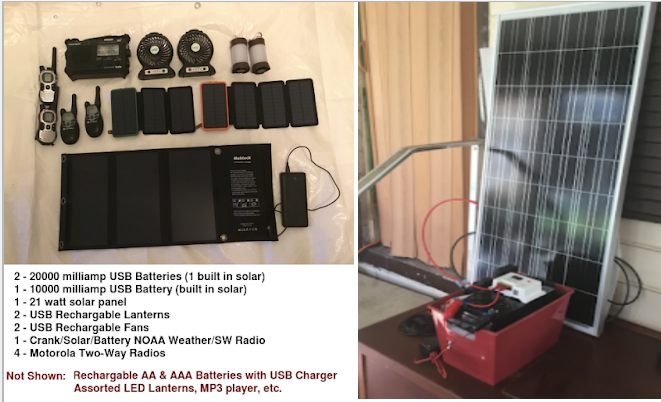
I've also invested (for myself, and some components for friends) in an array of `off-the-shelf' solar items, including fans, LED lanterns, several USB battery packs, and a 21 watt Solar panel (see Some Simple Off-The-Shelf Solar Solutions For Power Outages).

While my primary concern in Florida is staying cool during a summer power outage, in colder climes, staying warm can be a major concern. Even here in Florida it can drop below freezing. Sleeping bagspop-up tents (that can be used indoors or out), and propane or kerosene heaters can be lifesaving.


Often forgotten, but safety goggles, a box or two of vinyl or nitrile gloves, and a box of surgical face masks (or preferably N95 masks) should be in everyone’s emergency kit as well - whether you're dealing with a nasty flu season, COVID-19, or smoke from wildfires.   


And while not necessarily lifesaving, having a way to occupy your mind (or your kids) during an extended grid down situation can help maintain your sanity. 

Books, board games, and having good old-fashioned conversations are undoubtedly the best, but when they run dry having a low-drain-battery-powered MP3 player, or a battery run DVD player, can seem like a lifesaver.


As an aside - I've collected (public domain) OTR (Old Time Radio) shows since the early 1990s, and have literally thousands of hours stored on CDs in MP3 format. The Internet Archive has a huge repository where you can download them for free, along with thousands of audio books.

I keep a couple of MP3 players filled with these shows and with audio books in my bug-out bag. When the power and internet were down, they provided me with hours of entertainment.  

Over the years I've bought several cheap MP3 players ($20-$30) and filled them with thousands of hours of these shows (mostly from the 1940s and 1950s), giving them as gifts.  And the nice thing is, you don't have to wait for an emergency to enjoy them. 

Admittedly, some of the items listed above are useful more for comfort and convenience, than for survival.

But the physical and psychological impacts stemming from the hardships following a disaster are quite real (see Post-Disaster Sequelae), and a modicum of creature comforts can go a long ways towards mitigating their effects.

FEMA, Ready.gov and a myriad of other state and national entities know the risks we face, and would like to see Americans adopt and embrace a culture of preparedness.

And we can do that for ourselves, our families, and our friends.

One gift at a time.

Tuesday, October 08, 2024

MMWR: Interim Effectiveness Estimates of 2024 Southern Hemisphere Influenza Vaccines


#18,344

Although Florida is now less than 48 hours from the expected arrival of Hurricane Milton, one of my pre-evacuation preps yesterday was to get my seasonal flu shot.  Two weeks ago, in preparation for our close encounter with Helene, I got my fall COVID vaccine.  

Last year, I also updated my Tetanus shot (Tdap).  

As I've explained previously (see #NatlPrep: Giving Your Preparedness Plan A Shot In The Arm), the last thing you want to have to deal with during an emergency is being sick.  And when you are stressed, and fatigued - and maybe cooped up with a lot of other people - your chances of catching something go up. 

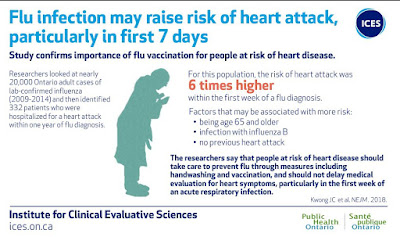
Admittedly, Flu and COVID vaccines only provide modest protection against infection, but they usually do a better job at reducing severe illness and hospitalization. And since severe influenza infection is linked to strokes and heart attacks, even a modest amount protection can be lifesaving. 


Yesterday the CDC's MMWR published the results of a study of this year's flu vaccine effectiveness (VE) in 5 South American countries (Argentina, Brazil, Chile, Paraguay, and Uruguay) - which has the same components as the Northern Hemisphere's fall vaccine - and reports that it reduced the risk of hospitalization in high-risk patients by 35%.

While far from a stellar result, it is a significant reduction of risk. One that I'm more than happy to have on board, given the challenges ahead. 

I've only reproduced the Abstract and summary.  Follow the link to read the report in its entirety.  I

Interim Effectiveness Estimates of 2024 Southern Hemisphere Influenza Vaccines in Preventing Influenza-Associated Hospitalization — REVELAC-i Network, Five South American Countries, March–July 2024


Weekly / October 3, 2024 / 73(39);861–868

Erica E. Zeno, PhD1,2,*; Francisco Nogareda, MPH3,*; Annette Regan, PhD3,4; Paula Couto, MD3; Marc Rondy, PhD3; Jorge Jara, MD3; Carla Voto, MD5; Maria Paz Rojas Mena, MD5; Nathalia Katz, MD6; Maria del Valle Juarez, MPH6; EstefanĂ­a Benedetti, MPH7; Francisco JosĂ© de Paula JĂºnior, MD8; Walquiria Aparecida Ferreira da Almeida, PhD8; Carlos Edson Hott, MBA8; Paula RodrĂ­guez Ferrari, MSN9; Natalia Vergara Mallegas, MPH9; Marcela Avendaño Vigueras9; Chavely DomĂ­nguez, MD10; Marta von Horoch, MD11; Cynthia Vazquez, Phd12; Eduardo Silvera13; Hector Chiparelli, MD14; Natalia Goni, PhD14; Laura Castro, DrPH1; Perrine Marcenac, PhD1; Rebecca J. Kondor, PhD1; Juliana Leite, PhD3; Martha Velandia, MD3; Eduardo Azziz-Baumgartner1; Ashley L. Fowlkes, ScD1; Daniel Salas, MD3; REVELAC-i Network 

Summary

What is already known about this topic?

Influenza vaccine effectiveness (VE) varies by season.

What is added by this report?

In five South American countries (Argentina, Brazil, Chile, Paraguay, and Uruguay) the 2024 Southern Hemisphere seasonal influenza vaccine reduced the risk for influenza-associated hospitalization among high-risk groups by 35%. VE might be similar in the Northern Hemisphere if similar A(H3N2) viruses predominate during the 2024–25 influenza season.

What are the implications for public health practice?

CDC recommends that all eligible persons aged ≥6 months receive seasonal influenza vaccine. Early antiviral treatment can complement vaccination to protect against severe influenza-related morbidity.

Full Issue PDF

Abstract

To reduce influenza-associated morbidity and mortality, countries in South America recommend annual influenza vaccination for persons at high risk for severe influenza illness, including young children, persons with preexisting health conditions, and older adults. Interim estimates of influenza vaccine effectiveness (VE) from Southern Hemisphere countries can provide early information about the protective effects of vaccination and help guide Northern Hemisphere countries in advance of their season.
Using data from a multicountry network, investigators estimated interim VE against influenza-associated severe acute respiratory illness (SARI) hospitalization using a test-negative case-control design. During March 13–July 19, 2024, Argentina, Brazil, Chile, Paraguay, and Uruguay identified 11,751 influenza-associated SARI cases; on average, 21.3% of patients were vaccinated against influenza, and the adjusted VE against hospitalization was 34.5%. The adjusted VE against the predominating subtype A(H3N2) was 36.5% and against A(H1N1)pdm09 was 37.1%.
These interim VE estimates suggest that although the proportion of hospitalized patients who were vaccinated was modest, vaccination with the Southern Hemisphere influenza vaccine significantly lowered the risk for hospitalization. Northern Hemisphere countries should, therefore, anticipate the need for robust influenza vaccination campaigns and early antiviral treatment to achieve optimal protection against influenza-associated complications.

         (Continue . . . )
 

There is still time for Floridians in the path of Milton to get the flu/COVID vaccines, as well as those struggling to deal with the aftermath of Helene. I know it may seem pretty far down your list of things to do.

But during an extended disaster, you need every edge you can get. 


Sunday, October 06, 2024

With Milton, Evacuation Is The Better Part Of Valor


NOTE: As of this posting, there are no Hurricane watches or warnings for Florida, and no evacuation orders.  But both are coming (either later today or early Monday)

#18,342

With the dual caveats that soon-to-be Hurricane Milton is still 80 hours away, and both its forecast track and intensity (CAT 3) at landfall are subject to change, it is difficult as someone born and raised in St. Petersburg not to shudder at the implications of the NHC graphic above.

For Tampa Bay - home to more than 3 million people - this is pretty close to the worst-case scenario, as it would drive a huge storm surge up into the bay.   

A CAT 4 or 5 storm, or a track another 15-20 miles further up the coast would be worse, of course. While a landfall even 30 to 40 miles further south would greatly reduce the storm surge in Tampa bay. 

But that would only shift the disaster to other coastal communities who are still reeling from last week's devastation from Hurricane Helene. 

Even tiny shifts in the track can have huge impacts on storm surge and who needs to evacuate. The flood zones for the Tampa Bay area (below) illustrates just how vulnerable this region is. 

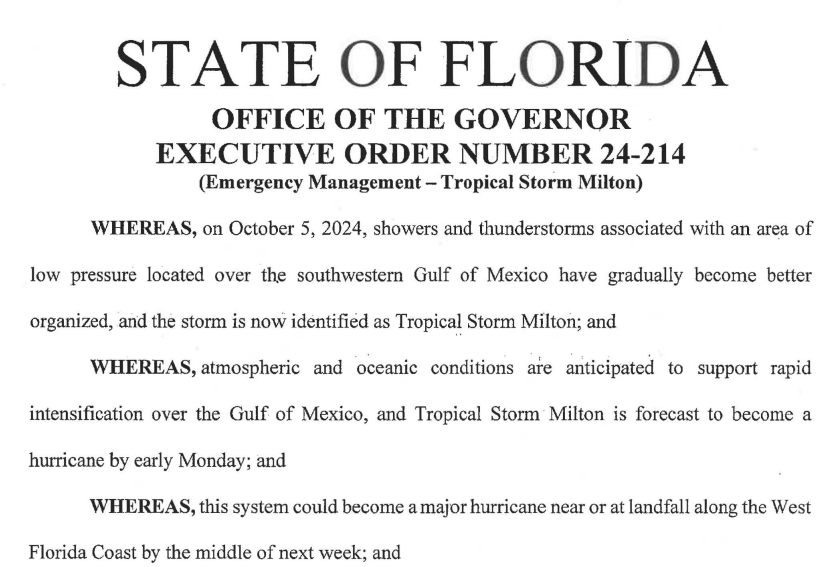
But the broader threat from Milton extends across much of the state.  Because of the enormity of this threat, last night the Governor issued a State of Emergency for 35 counties.  

This will, among other things, allow people to get a 30-day emergency supply of Rx meds. 


Regardless of where Milton makes landfall, power outages are likely to be extensive and prolonged.  Water and sewer services may be offline, roads and bridges may be blocked, flooded, or damaged, and emergency services (EMS, fire, police) may be severely degraded. 

Banks, gas stations, grocery stores, pharmacies, doctors, and other essential services may be shuttered for days or weeks. Stores that are able to reopen may not be able to process Credit or Debit cards. And for thousands of families, there may be no home to return to after the storm.  

Barring some major shift in the path, I'll be among the millions who will be forced to evacuate on Tuesday, taking only what I can fit in my car.  Thankfully, I have a `Disaster Buddy', who will take me and the cat in.  

Not everyone is that lucky, and many may end up in emergency shelters for days. Those who live on the barrier islands may not be able to return for weeks.  

The last time a major hurricane made a direct hit on Tampa Bay (1921), its population was 1/10th what it is today, and practically no one lived on the beaches, or the barrier islands. The damage from Helene just last week is the worst we've taken since then.

We've had close calls, of course.  

Hurricane `Easy' in 1950. Hurricane Donna in 1960Agnes in 1972, and the no name `storm of the century' in March 1993.  In 2004 Cat 4 Hurricane Charley was headed directly for Tampa when it unexpectedly veered east into Ft. Myers. 

While I'm hoping for a reprieve, I'll be spending the next 2 days preparing to bug-out.  I've got my flu shot scheduled for tomorrow morning (they may be hard to get post-Milton), just like I got my COVID shot before Helene.  

I'm going to try to get an emergency 30-day supply of my Rx meds (allowed under the State of Emergency), and I'll be staging what I am able take with me (clothes, Rx meds, important papers, Emergency gear, etc.), so I can quickly pack the car on Tuesday. 

Evacuation could be a nightmare, since millions may be ordered to leave, there are limited roads and bridges out of the affected areas, and the weather is expected to deteriorate on Monday (heavy rains).  I expect it will take hours to drive the 40 miles to my bug-out location. 

I'll take my laptop, but I fully expect to be incommunicado for some time.  I'll try to get word to Sharon at FluTrackers (who is also in the path), after the storm. 

I'll be taking my solar panels, batteries, and accessories (see How Not To Swelter In Place).  The one (minor) consolation is that it isn't August, and excessive heat should be less of a problem.


These preps should give us a few basic creature comforts like lights, radios, fans, MP3 players, and charged cell phones. We've got a camp stove, plenty of canned food, and enough propane for several weeks of cooking. 

In the end, you can only do what you can do, and hope it turns out to be enough. 

So, if you live anywhere near the west coast of Florida, in a flood-prone region, or live (as I do) in a mobile home away from the coast, now is the time to start planning what you will do tomorrow, and Tuesday, as the storm approaches. 

The danger is that too many people will wait too long before deciding whether they will evacuate. Some may be lulled by a forecast track that seems to spare them - but forecasts can change - leaving little time to act.

While I'll be doing usual hurricane preparedness blogs - and I follow (and highly recommendMark Sudduth's Hurricane Track, and Mike's Weather page - your primary source of forecast information should always be the National Hurricane Center in Miami, Florida.

These are the real experts, and the only ones you should rely on to track and forecast the storm.

If you are on Twitter, you should also follow @FEMA, @NHC_Atlantic, @NHC_Pacific and @ReadyGov, and of course take direction from your local Emergency Management Office.

For more Hurricane resources from NOAA, you'll want to follow these links.

HURRICANE SAFETY

ADDITIONAL RESOURCES