Sunday, December 31, 2023

48 Months Later . . .


#17,843

Four years ago, a little before midnight on December 30th 2019, the dedicated newshounds at FluTrackers began posting the first of many reports out of China on an outbreak of an unidentified viral pneumonia in Wuhan; the capital and largest city (pop. 11 million) in Hubei Province.

Sharon Sanders sent me a head's up Skype message a little after midnight (which I did not read until I woke up about 2:30 am), but I had my first blog published before 4 am, which would be the 1st of three I would publish that day (see herehere, and here).

While none of us knew the world was about to change, it `felt' different and important. Reminiscent, in some ways, of the early reports of H7N9 emerging in China on March 31st, 2013 (see China: Two Deaths From H7N9 Avian Flu).

Within hours Crof (who is 3 hours behind on the west coast) had his first blog up (Hong Kong: CHP closely monitors cluster of pneumonia cases on Mainland),  but it would literally be days before the mainstream media took notice. 

It was - very much like today - during that quiet time over the holidays, where news bureaus and health agencies work short-staffed.  People were more interested in ringing in the new year, and college football, than rumors of an epidemic in China. 

Avian flu had gone quiet, and the big stories  we were following that week involved a moderate H1N1 seasonal flu season and an unusual Outbreak Of Brucellosis Reported At Veterinary Research Institute - Gansu Province

The WHO made their first public mention on Twitter 5 days later on January 4th, and two days after that the CDC Issued a Level 1 (Watch) Travel Notice For Unidentified Pneumonia - Wuhan, China.  By then the official number of hospitalized patients had reached 59, and Hong Kong had gone into full alert mode, with PPEs flying off the shelf. 

It would take China another 10 days to admit to the world that the virus was transmitting from human-to-human (see `Evidence of Limited Human-to-Human Transmission' - WHO WPRO) - something they must have known for weeks - but by that time the virus was already spreading silently in Europe and beyond. 

Despite China's denials, the evidence suggested something serious.  On January 7th, in a blog called Hong Kong: Caught With Their Masks Down, I described the run on PPE's in Hong Kong, and urged my readers that if they wanted N95s or Surgical masks, they'd better order them now. 

The world may have felt blindsided by COVID, but this very scenario is one that had been discussed, analyzed, and had been the subject of numerous `tabletop' simulations over the years (see JHCHS Pandemic Table Top Exercise (EVENT 201) Videos Now Available Online).

Dire pre-COVID pandemic predictions by global health agencies include:
WHO/World Bank GPMB Pandemic Report : `A World At Risk'
WHO: On The Inevitability Of The Next Pandemic
World Bank: The World Ill-Prepared For A Pandemic
It was arguably the most anticipated crisis of the 21st century, yet despite plenty of warnings, the world went into it woefully unprepared.  

Four-eight months ago, the world changed abruptly practically overnight. Millions have since died - likely far more than were ever counted - and many more had their lives dramatically altered by illness, disability, or the economic and societal impact of lockdowns. 

The pandemic which was expected to last only 6 to 18 months, continued for 3 full years, despite a record setting vaccine development and deployment effort. The virus remains with us today, albeit significantly subdued, constantly evolving as it spreads.  

Meanwhile, there are more than a few pathogens out there with pandemic potential that we continue to watch closely.  While it might take years before it happens again, we could just as easily wake up tomorrow morning to vague reports of a mysterious disease spreading somewhere in the world. 

You'd think that after being caught flat-footed at the start of COVID we'd have made pandemic preparedness a priority going forward. 

Instead, we appear to have gone in the opposite direction.  We've dismantled our COVID surveillance and reporting (see No News Is . . . Now Commonplace), and reporting of other outbreaks (as required by the IHR) seems to have taken a serious hit as well.  

The WHO, in nearly every surveillance bulletin, reiterates the obligation for all nations to abide by the IHR (see below).

All human infections caused by a new subtype of influenza virus are notifiable under the International Health Regulations (IHR, 2005). State Parties to the IHR (2005) are required to immediately notify WHO of any laboratory-confirmed  case of a recent human infection caused by an influenza A virus with the potential to cause a pandemic. Evidence of illness is not required for this report.  

Yet China often goes 2 months or longer before releasing (very limited) data on human avian flu infections (see here, here, and here).  China holds all infectious disease reports (in humans or in animals) very close to the vest for `national security reasons'. 

In the 2 months following the end of their Zero-COVID policies, China reported roughly 84,000 deaths from COVID.  But last August, an investigative report published by JAMA Open estimated 1.87 million excess deaths while another estimate from the EID Journal calculated 1.41 million deaths over those 60 days.

China isn't alone, of course.  We rarely hear of MERS-CoV cases anymore from the Middle East, despite evidence of the virus still circulating in camels. The WHO has diplomatically cautioned:

The number of MERS-CoV cases reported to WHO has substantially declined since the beginning of the ongoing COVID-19 pandemic. This is likely the result of epidemiological surveillance activities for COVID-19 being prioritized, resulting in reduced testing and detection of MERS-CoV cases.

Harder to pin down are those sentinel events that are simply missed, or are deliberately covered up. There is very little that the WHO can do if a country decides - for economic, societal, or political reasons - to side-step the IHR.

Last April, in Lancet Preprint: National Surveillance for Novel Diseases - A Systematic Analysis of 195 Countries, we looked at an independent analysis which suggests that many nations have substantially overstated their compliance with the 2005 IHR regulations, and that surveillance and reporting are far less robust than advertised.

We like to pretend that there is plenty of time to prepare; that the next pandemic won't come for another ten or twenty years.  But the clock is ticking, and we may have far less time than we hope. 

In 2021's PNAS Research: Intensity and Frequency of Extreme Novel Epidemics, researchers estimated our pandemic risk may increase 3-fold over the next few decades.  

And these are `extreme novel pandemics', which means there will likely be other - lesser - global health crises to deal with along the way.  And we're not even well-prepared to handle those. 

As we plunge headlong into 2024 we have a number of plausible pandemic/epidemic contenders to keep our eyes on.  The `usual suspects' include:
This list could easily also include a hemorrhagic feverNipah, and even the Langya henipavirus (LayV). but the possibility exists that we could be hit by something entirely new, or at least something not on our radar:

Disease X.  One that we don't currently recognize as a threat.

Whether from a new threat or old, another pandemic is inevitable.  The only real questions are the timing, the severity, and the source. 

In September of 2019, three months before the Wuhan outbreak, in a blog called `#NatlPrep: Personal Pandemic Preparedness', I quoted Michael Leavitt,  Former Secretary of HHS:

“Everything you say in advance of a pandemic seems alarmist.  Anything you’ve done after it starts is inadequate." 

Sadly, it remains just as true today as when he said it in 2006. 

Saturday, December 30, 2023

Kyushu University: The Return Of The Fly


#17,842

One of the mysteries surrounding the spread of HPAI is exactly how it manages to thwart farm biosecurity so easily, and make its way into hen houses, mink barns, or occasionally swine herds.  Quite often, when one farm in a region is affected, others in close proximity are struck as well. 

Early on, it was assumed cross-farm contamination - from vehicles, personnel, or products - was to blame.  Farm quarantines, and decontamination stations, became part of the biosecurity  playbook. 

But often, despite their best efforts, we'd still see the virus spread from farm to farm.  Migratory birds - once thought unlikely carriers of the virus (see 2014's Bird Flu Spread: The Flyway Or The Highway?) - became increasingly suspect.

But even flocks kept indoors, and protected by several layers of biosecurity, continue to succumb to the virus. 

Small peridomestic animals, like rats, voles, shrews, and even cats and dogs are suspected of being capable of picking up the virus from the outside environment and bringing it inside (see Taking HPAI To The Bank (Vole) and Experimental Infection of Peridomestic Animals With Avian H7N9). 

And even dust (dried feces, feathers, etc.) from poultry farms and live bird markets have been found to contain viable virus (see EID Journal: HPAI (H5N8) Clade 2.3.4.4b Virus in Dust Samples from Poultry Farms, France, 2021), and some studies have suggested it may be carried for several (perhaps dozens) kilometers by the wind. 
 
During the 2014-15 avian epizootic in the United States, airborne spread between farms miles apart was considered possible, although never conclusively proven see APHIS: Partial Epidemiology Report On HPAI H5 In The US) .

One recurring entry to this rogue's gallery of potential vectors is the common housefly, a pest which is frequently found in abundance in and around poultry farms and live bird markets.

While it wasn't its first mention in this blog, nearly 17 years ago in Cats and Dogs and Flies, Oh My!, we looked at a 2006 study (see Detection and isolation of highly pathogenic H5N1 avian influenza A viruses from blow flies collected in the vicinity of an infected poultry farm in Kyoto, Japan, 2004 by Kyoko Sawabe et al.) that found that at least 2 types of flies could carry the H5N1 virus. 

They wrote:

The H5 influenza A virus genes were detected from the intestinal organs, crop, and gut of the two blow fly species, Calliphora nigribarbis and Aldrichina grahami, by reverse transcription-polymerase chain reaction for the matrix protein (M) and hemagglutinin (HA) genes. The HA gene encoding multiple basic amino acids at the HA cleavage site indicated that this virus is a highly pathogenic strain. . . . . Our results suggest it is possible that blow flies could become a mechanical transmitter of H5N1 influenza virus.

Four years later Dr. Sawabe and his team would publish (Blow Flies Were One of the Possible Candidates for Transmission of Highly Pathogenic H5N1 Avian Influenza Virus during the 2004 Outbreaks in Japan) where they conclude:

We have suggested here that blow flies are likely candidates for mechanical transmission of HPAI because of their ecological and physiological characteristics as reviewed here. In fact, blow flies have already been recognized as important vectors for mechanical transmission of several serious infectious diseases, that is, poxvirus [28], rabbit hemorrhagic disease [29], and paratuberculosis [30]. Recently, it has been reported that the H5N1 viral gene was detected in house flies [31] and engorged mosquitoes [32]. 
We suggest that mechanical transmission by flies may also be involved in the outbreak and pandemic of infectious diseases other than HPAI. However, although there are high densities of a variety of fly species during all seasons in Southeast Asia, their ability to transmit viruses has not been evaluated. The prevalence of H5N1 avian influenza is still a public health problem for birds and humans. Therefore, field and laboratory studies on mechanical transmission of pathogens by flies would be very important for controlling H5N1 avian influenza outbreaks, at least in epidemic Southeast Asian countries.

We're not talking about `infected' flies. but rather contaminated flies.  But it seems likely that they may be a contributor to the spread of the virus.  

All of which brings us to a new study, called Relationship between avian influenza virus and blowfly found in Izumi city, Kagoshima, a presentation of which is summarized on the University's website:

Ryusuke Fujita, Takuji Tate, Kosuke Nagata, Masato Hino, Masahiro Saiki,
Relationship between avian influenza virus and giant blowflies observed in Izumi City, Kagoshima Prefecture,
75th Annual Meeting of the Japanese Society of Hygienic Zoology, 2023.04,

2022–2023 winter season will be nationwide The country experienced the largest outbreak of highly pathogenic avian influenza (HPAI) on record. 
Izumi City, Kagoshima Prefecture, is the world's largest wintering site for cranes, with more than 10,000 cranes arriving each year, and is also a major poultry industry base, with the highest production of chicken eggs in Japan in 2019. The damage caused by HPAI is serious, with more than 10% of chickens dying from HPAI, and HPAI occurring frequently in neighboring poultry farms. 

Regarding HPAI, it has been previously suggested that flies such as the giant blowfly are involved in its spread. 
Therefore, we collected flies that feed in winter, such as the giant blowfly, in the area, and investigated the influenza that was taken into the flies' bodies. Overall, 2% of the 651 flies tested were positive for the virus. Looking at the distribution by region, the virus positivity rate was highest at 14.7% around the crane migration area, and the positive rate was 4.8% and 1.7%, respectively, in the lower reaches of two rivers in the city where waterfowl were seen. showed that. 

On the other hand, no virus was detected in areas several kilometers inland from these areas. 
From these results, it was inferred that the HPAI nuclear power plants in the region are crane colonies and waterfowl habitat rivers, and that poultry farms within 2-3 km of these sites could be a risk area for virus transmission by flies.  

This study is getting a lot of attention in the Japanese press, with
Dr. Ryusuke Fujita quoted as saying,

``Until now, countermeasures have been taken based on the assumption that small animals and people will bring the virus. There was no improvement, and when we suspected it was a fly, a virus was detected. We will conduct a more detailed investigation, take measures to prevent fly intrusion, and verify their effectiveness."

Along with many of the other vectors mentioned above, it seems increasingly likely that flies carry some of the blame for the spread of avian influenza on farms. How much, is anyone's guess.  

Viruses haven't endured for hundreds of millions of years on this planet by being a one-trick-pony. 

While we may not make a huge dent in HPAI by controlling flies, given the damage it does, anything that can help reduce its spread is probably worth pursuing.

Friday, December 29, 2023

WOAH Statement: Avian Influenza Vaccination: Why it Should Not Be a Barrier to Safe Trade


#17,841

As we've discussed often, and most recently in Preprint: Association of Poultry Vaccination with the Interspecies Transmission and Molecular Evolution of H5 Subtype Avian Influenza Virusthe changing impact of avian flu around the world is forcing many countries to reconsider poultry vaccination as a control method to save their flocks.

Until relatively recently, only China, Egypt, Indonesia, Vietnam and Hong Kong routinely used HPAI poultry vaccines, while the rest of the world - who admittedly only saw sporadic outbreaks - have abided by the the long-standing OIE recommendation to `stamp out' HPAI infections by culling infected flocks.

That policy advised that vaccines should only be used as a temporary measure, stating that: `Any vaccination campaign must include an exit strategy” i.e. a return to classic disease control measures. 

But times, and situations, change.  The abrupt global spread of HPAI H5 clade 2.3.4.4b, and its persistence in wild and migratory birds, has severely impacted global poultry production, and has already convinced some countries (e.g. France and Mexico) to begin vaccination. 

But there are trade restrictions that prevent some countries from importing poultry from countries that vaccinate, and concerns over the safety of vaccination (see USDA Bans Import Of French Poultry Over HPAI Vaccine Concerns).

We addressed many of those safety concerns in last week's blog, and most of those appear solvable, assuming countries are willing to regulate the proper application of the vaccine and ensure that only updated, and effective vaccines are used, and maintain robust surveillance systems.

But in the past, countries that have adopted the use of poultry vaccines have rarely been so diligent. We've seen many instances (see here, here, here, and here) where substandard practices or olderineffective vaccines have been used, which may have accelerated the evolution and spread of avian influenza viruses.  

Yesterday WOAH (formerly OIE) released a lengthy statement on the rapidly changing avian flu landscape, and their rationale for now recommending previously shunned poultry vaccination as a `complementary approach' to AI control. 

The prime focus of this document is to remove existing barriers to international trade for countries that choose to vaccinate some or all of their poultry, stating that vaccination does not change a country's  HPAI-free status.

They do provide some caveats; countries opting for poultry vaccination must require the use of high-quality and updated vaccines, set up robust surveillance systems, require poultry producers to adhere to the control strategy, and ensure the traceability of the entire process.

Due to its length, I've only posted some excerpts.  Follow the link to read it in its entirety.  I'll have a postscript after you return. 

Avian influenza vaccination: why it should not be a barrier to safe trade

Published on 28 December 2023

Since 2005, avian influenza has had a staggering toll, with over 500 million birds lost to the disease worldwide [1]. Its devastating impact extends beyond domestic and wild birds, threatening livelihoods, food security and public health.

The recent shift in the disease’s ecology and epidemiology has heightened global concern as it has spread to new geographical regions. It has also caused unusual die-offs in wild birds and led to an alarming increase in mammalian cases. The rapidly evolving nature of avian influenza and changes in its patterns of spread [2] require a review of existing prevention and control strategies. To effectively contain the disease, protect the economic sustainability of the poultry sector and reduce potential pandemic risks, all available tools must be reconsidered including vaccination.

The current spread of avian influenza is a major concern for the poultry industry, public health and biodiversity. Given recent developments in its epidemiology, and the increasing circulation of high pathogenicity avian influenza (HPAI) in wild animals, stricter biosecurity measures and mass culling of poultry may no longer be sufficient to control the disease. With the seasonal north-south migration of wild birds, countries must be prepared for an increase in outbreaks and should consider complementary approaches, such as vaccination, in line with existing international animal health and welfar
e standards [3].
(SNIP)
Unjustified trade restrictions on poultry and poultry products from vaccinated flocks have a huge impact on a sector that contributes significantly to global food security and the economy. In fact, poultry meat exports account for 11% of total production, while egg exports account for 3% of production [9]. Imports of commercial genetic stocks of poultry are also essential to support meat and egg production systems of all countries. In addition, poultry meat and eggs are a low-cost, high-quality, low-fat protein food source, providing commodity redistribution and economic benefits and supportinspend the time, and resourcesg the livelihoods of small-scale farmers. It is vital to maintain their international trade while ensuring the safety of these exchanges.
This can be guaranteed in two ways:
  • Countries that vaccinate will need to provide appropriate certification to their trading partners to ensure that their measures comply with WOAH science-based international standards. They must also demonstrate their plans to carry out necessary surveillance of circulating strains once vaccination is in place, and their capacity to prove the absence of virus circulation.
  • Importing countries should make risk-based decisions and implement science-informed measures that allow for safe trade while preventing the spread of avian influenza. This is critical to avoid the closure of trade borders and the subsequent economic consequences for the poultry industry, farmers and consumers.
In accordance with WOAH international standards, the use of vaccination does not affect the status of a country or zone as being HPAI-free if surveillance supports the absence of infection. Trade in poultry and poultry products can be conducted safely alongside vaccination.

          (Continue . . . .)


Poultry vaccination against avian influenza is neither inherently good or bad, and as avian flu continues to exact a heavy toll, I expect it to be embraced by more and more countries.  

But it is a double-edged sword, with the potential - if mishandled - to make matters worse (see Vaccines: Vaccination and Antiviral Treatment against Avian Influenza H5Nx Viruses (Review Article).

The $64 question is whether we'll learn from the mistakes of the past, or simply go on repeating them.

Thursday, December 28, 2023

iScience: Predicted Risk of Heart failure Pandemic Due to Persistent SARS-CoV-2 Infection Using a Three-dimensional Cardiac Model


#17,840

In the opening weeks and months of the COVID pandemic we saw reports of a steep rise in sudden heart attacks around the country, which prompted JAMA to publish an original investigation which found a substantial increase in out-of-hospital cardiac arrests in New York City during the peak of their first COVID-19 wave, finding:

From March 1 to April 25, 2020, New York City, New York (NYC), reported 17 118 COVID-19–related deaths. On April 6, 2020, out-of-hospital cardiac arrests peaked at 305 cases, nearly a 10-fold increase from the prior year.

Also in the summer of 2020 (see JAMA: Two Studies Linking SARS-CoV-2 Infection To Cardiac Injury), we examined the results of 39 autopsies on COVID cases, that showed even when pneumonia is the presumed cause of death - and even without overt histopathic evidence of acute myocarditis - the heart often shows a high viral load of SARS-COV-2

A second, and arguably even more worrisome study, found a remarkable incidence of cardiac injury and myocardial inflammation among a relatively young cohort (avg. age 49 & without pre-existing cardiac hx) of COVID patients who mainly recovered at home but continued to experience a variety of symptoms following their illness. 

An accompanying editorial (see Coronavirus Disease 2019 (COVID-19) and the Heart—Is Heart Failure the Next Chapter? by Clyde W. Yancy, MD, MSc1,2; Gregg C. Fonarow, MD3,4) raised serious concerns over the long-term impact of COVID on public health.

Despite attempts to paint COVID as a relatively mild `flu-like' illness for most people, we continue to see evidence that it can cause significant extrapulmonary impacts, including :

AHA: COVID-19 May Trigger New-Onset High Blood Pressure

JAMA: Additional Evidence Of A Post-COVID/Diabetes Link

The Lancet: Neurological and Psychiatric Risk Trajectories After SARS-CoV-2 Infection

MMWR: Post–COVID-19 Symptoms and Conditions Among Children and Adolescents

Nature: Long-term Effects of SARS-CoV-2 Infection on Human Brain and Memory

Repeated COVID infections have been linked to worse outcomes (see Nature: Acute and Postacute Sequelae Associated with SARS-CoV-2 Reinfection), leaving many researchers concerned that our increasingly laissez faire towards the virus may be steering us towards a future with increased early deaths and disability from these infections. 

Although the question was first seriously asked in the summer of 2020 (see Coronavirus Disease 2019 (COVID-19) and the Heart—Is Heart Failure the Next Chapter?), this week we have new research into the potential for COVID to spark a `Heart Failure Pandemic' in the years ahead. 

Prior research has shown that the SARS-CoV-2 virus can infect the heart (see Cardiovascular Tropism and Sequelae of SARS-CoV-2 Infection), and infection has been linked to myocarditis, pericarditis, blood clots, and arrhythmia. 

Researchers from Kyoto University (Japan) created a SARS-CoV-2 persistent infection model using human iPS cell-derived cardiac microtissues (CMTs) and found that mild infections could persist without serious impact for a month or more. 

However, when stressed by hypoxia (mimicking ischemic heart disease), cardiac function deteriorated and the virus showed reactivation in cardiomyocytes (heart muscle cells).

While it is worth repeating that their findings are based on an in vitro model, but their findings align with others we've seen over the past 4 years, giving their conclusions additional weight.  Due to its length, I've only posted the Abstract and some excerpts, so follow the link to read it in its entirety. 

I'll return with a postscript after the break.  

Predicted risk of heart failure pandemic due to persistent SARS-CoV-2 infection using a three-dimensional cardiac model
Kozue Murata 1 3, Akiko Makino 2, Keizo Tomonaga 2, Hidetoshi Masumoto 1 3 4Show more

https://doi.org/10.1016/j.isci.2023.108641 Get rights and content

Highlights

• Persistent SARS-CoV-2 infection model of human cardiac tissue was established
• Hypoxic stress to the persistent infection model led to cardiac dysfunction
• ACE2 and SARS-CoV-2 S protein expression were elevated after the hypoxic stress
• This research may predict a “heart failure pandemic” in the post COVID-19 era

Summary

 Patients with chronic cardiomyopathy may have persistent viral infections in their hearts, particularly with SARS-CoV-2, which targets the ACE2 receptor highly expressed in human hearts. This raises concerns about a potential global heart failure pandemic stemming from COVID-19, an SARS-CoV-2 pandemic in near future. Although faced with this healthcare caveat, there is limited research on persistent viral heart infections, and no models have been established. 

In this study, we created an SARS-CoV-2 persistent infection model using human iPS cell-derived cardiac microtissues (CMTs). Mild infections sustained viral presence without significant dysfunction for a month, indicating persistent infection.

However, when exposed to hypoxic conditions mimicking ischemic heart diseases, cardiac function deteriorated alongside intracellular SARS-CoV-2 reactivation in cardiomyocytes and disrupted vascular network formation. This study demonstrates that SARS-CoV-2 persistently infects the heart opportunistically causing cardiac dysfunction triggered by detrimental stimuli such as ischemia, potentially predicting a post COVID-19 era heart failure pandemic.

          (SNIP)
Discussion

The human iPS cell-based cardiac tissue model established in the present study is the first report to experimentally demonstrate SARS-CoV-2 persistent infection of the human heart exhibiting functional deterioration caused by the opportunistic intracellular reactivation of viral infection.

We experimentally demonstrated that cardiac tissues under persistent infections with SARS-CoV-2 are at high risk of cardiac dysfunction with additional hypoxic stress (Figure 2B). In other words, the explosive increase in the number of virus-infected patients due to the COVID-19 pandemic may have led to an enormous increase in the number of patients at potential risk for future heart failure.

These patients would be predicted to maintain cardiac function superficially despite being at marginal risk. In clinical practices, such high-risk patients should be identified by detecting the virus itself or the viral genome in endocardial biopsy tissue or by monitoring blood troponin levels. According to our study, cardiac dysfunction associated with persistent infection was the result of increased ACE2 expression in cardiomyocytes in response to additional stress (Figure 2D), reactivation of SARS-CoV-2 in cardiomyocyte (Figure 2C), and disruption of the vascular network-like structure (Figure 2E). Hence, apart from viral clearance from the heart, strategies that can inhibit these processes are being considered as potential therapeutic approaches.

         (SNIP)

In conclusion, this report may serve as a warning for the possibility of a heart failure pandemic in the post COVID-19 era. As a countermeasure against this global healthcare risk, this model would serve as a useful tool to investigate the mechanism of the onset and the progression of SARS-CoV-2 cardiomyopathy and to develop therapeutic options.           

          (Continue . . . )

While the real-world impact of COVID infection on the incidence of heart failure has yet to be  established, this research provides a plausible mechanism for its occurrence. Like concerns over increases in Parkinson's due to COVID, it may take years before we have firm data. 

Despite the preponderance of evidence suggesting that repeated COVID infections increase the risk for developing a wide range of chronic health problems, as a society we seem to be assuming the best case scenario. 

Very few people bother to wear face masks in public anymore, fewer appear willing to stay home if they have `cold or flu-like' symptoms, and uptake of the last two COVID vaccines for the past two years has been very disappointing.


Vaccination Trends Update:
  • The percent of the population reporting receipt of the updated 2023-24 COVID-19 vaccine is 7.6% (95% confidence interval: 6.7-8.4) for children and 18.5% (17.8-19.2) for adults 18+, including 37.3% (35.2-39.5) among adults 65+.
Reported on Friday, December 22nd, 2023.
While most people will recover from COVID without long-term damage, some percentage won't be as lucky. And that will not only present individual health challenges, but societal challenges as well.

Wednesday, December 27, 2023

Mainland China Reports 2 Human LPAI H9N2 Infections (Sichuan Province)


#17,839

Yesterday's CHP weekly Avian Influenza Report Vol 19, #51 included the notification of 2 H9N2 cases (both from November) in Sichuan Province (see above chart), with the only other information being the gender and age of the patients. 

The most recent ECDC/EFSA report (Dec 14th) showed 7 such cases reported in China in 2024, and China leading the world with 115 cases overall. 


Today's cases follow 3 others reported from Sichuan Province in 2023, although it is likely that a lot of cases go unreported (see FluTrackers List). H9N2 infection is generally mild, and in most cases, patients are never tested for the virus.

Seroprevalence studies, however, suggest people with exposure to infected poultry often develop H9 antibodies.

While admittedly not at the very top of our list of pandemic concerns, the CDC has 2 different lineages (A(H9N2) G1 and A(H9N2) Y280) on their short list of influenza viruses with zoonotic potential (see CDC IRAT SCORE), and several candidate vaccines have been developed.

As an LPAI (low path avian influenza), H9N2 is not considered a `reportable' disease by WOAH (formerly the OIE), even though it is zoonotic.

But H9N2's biggest threat may come from its unique ability to reassort with other, potentially more dangerous, avian viruses.  Its internal genes have often been found inside many HPAI viruses (including H5N1, H5N6, H7N9, and most recently zoonotic H3N8) - (see The Lancet's Poultry carrying H9N2 act as incubators for novel human avian influenza viruses).  


Control of H9N2 has proved difficult, as the virus continues to mutate, and many countries continue to employ outdated and ineffectual vaccines (see J. Virus Erad.: Ineffective Control Of LPAI H9N2 By Inactivated Poultry Vaccines - China), some of which may be driving its evolution.

Although most reported H9N2 infections are mild or moderate, in November of 2021 China reported a rare fatal outcome in a 39-year-old man from Qiandongnan Autonomous Prefecture, Guizhou Prefecture.

While H9N2 doesn't have the fearsome reputation of H5N6 or H7N9, it reassorts readily with other viruses and has shown an increasing ability to infect humans (and other mammals), making it very much worthy of our attention. 


That Was The Disaster Year That Was


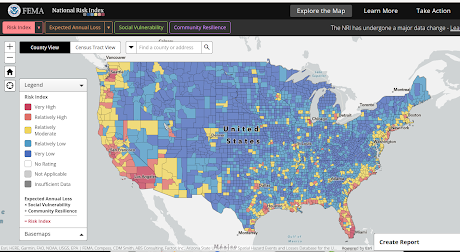
FEMA National Risk Index For Natural Disasters
 
#17,838

As the FEMA map at the top of this blog indicates, I live in a `disaster prone' region of the United States (West-Central Florida). When it comes to natural disasters California and Florida lead the nation.  

But increasingly, fires, floods, tornadoes, earthquakes and other major disruptions have severely impacted just about everywhere in the nation. 

While it doesn't take a billion dollar disaster to put you, or your loved ones at risk, they do speak to the frequency of large-scale weather and climate disasters Americans face each year. In 2023, there were at least 25 such events.


Add in thousand of house fires, hundreds of tornadoes, lesser floods and wild fires, and tens of thousands of other smaller emergencies, and there are plenty of reasons to be prepared for the unexpected.  

Having grown up in Hurricane country, spending 15 of those years living aboard (3) different boats, and having worked as paramedic/EMT in 3 different coastal counties, I'm probably a bit more sensitized to the need for preparedness than most.  

I take it seriously, and over the years, my penchant for being prepared has been invaluable more than once.  Even though I'm probably better prepared than 90% of the population, I continue to improve my ability to deal with the unexpected each year.  

This year, I made several upgrades to my solar power preps (see My Upgraded Solar Power System (2023 Edition) I've substantially increased my water storage (now 90 gals), and have added USB battery powered water pumps and have upgraded my propane storage for emergency heat/cooking.

Although I've prepared primarily for hurricanes, many governments view a prolonged grid-down scenario as the 2nd most likely high severity disaster - after a pandemic - that they worry about. 

Five years ago, in NIAC: Surviving A Catastrophic Power Outage, we looked at a NIAC (National Infrastructure Advisory Council) 94-page report that examines the United State's ability to respond to and recover from a widespread catastrophic power outage.

Between our ageing infrastructure (see ASCE report card on America’s infrastructure), natural disasters like earthquakes and hurricanes, disruptions caused by solar flares (see NASA: The Solar Super Storm Of 2012), and even cyber attacks (see DHS: NIAC Cyber Threat Report - August 2017), the odds are that some kind of prolonged power outage is in your future.

Each year FEMA conducts a nationwide poll on preparedness, and they released their 2023 survey earlier this month.  Even though these are self-reported assessments, and `being prepared' means different things to different people, they report some small progress over the past 12 months. 


It is a mixed bag, however.  More people have assembled supplies, but fewer people report practicing emergency drills or habits.  More have learned their evacuation routes, but fewer have made a plan.  And while more have tested a family communication plan, fewer report having signed up for alerts or warnings. 


While everyone's needs and circumstances are different, and there is no way to know (with certainty) what challenges lie ahead in 2024, there are some basic goals one should strive for.

So . . . if a disaster struck your region today, and the power went outstores closed their doors, and water stopped flowing from your kitchen tap for the next 7 to 14 days . . . you are you ready with:

  • A battery operated NWS Emergency Radio to find out what was going on, and to get vital instructions from emergency officials
  • A decent first-aid kit, so that you can treat injuries
  • Enough non-perishable food and water on hand to feed and hydrate your family (including pets) for the duration
  • A way to provide light when the grid is down.
  • A way to cook safely without electricity
  • A way to purify or filter water
  • A way to handle basic sanitation and waste disposal. 
  • A way to stay cool (fans) or warm when the power is out.
  • A small supply of cash to use in case credit/debit machines are not working
  • An emergency plan, including meeting places, emergency out-of-state contact numbers, a disaster buddy, and in case you must evacuate, a bug-out bag
  • Spare supply of essential prescription medicines that you or your family may need
  • A way to entertain yourself, or your kids, during a prolonged blackout
If not, you've got some important work to do. A good place to get started is by visiting Ready.gov.

WOAH: Japan Reports 1st HPAI H5N6 (in a wild bird) Since 2018

#17,837


A week ago, in WOAH: South Korea Reports 8 Poultry & Wild Bird Outbreaks With HPAI H5N6, we saw the first report of HPAI H5N6 in South Korea in nearly 6 years. While the H5N1 and H5N8 have dominated the HPAI H5 scene for more more than a decade, we do occasionally see other subtypes (e.g. H5N5, H5N6, H5N3, etc.) emerge via reassortment. 

Briefly, in 2018-2019, we saw a relatively small spate of HPAI H5N6 outbreaks (not related to China's deadlier HPAI H5N6 virus) reported across Europe and Asia.  Most occurrences have been sporadic at best. 

Today Japan is reporting their first detection of HPAI H5N6 since March of 2018; in a wild peregrine falcon recovered earlier this month in Saga Prefecture, located on the island of Kyushu, Japan (roughly 200 miles from the South Korean reports last week). 


The only other country to report H5N6 in 2023 was the Philippines last January.  Right now we don't have much information about this H5N6 virus, but it is likely the result of a recent reassortment between HPAI H5N1 virus and an avian HxN6 virus. 

For now, while details remain scant, we've no reason to believe that this H5N6 virus poses any additional risks over and above HPAI H5N1. It is too soon to know if this is a blip, or a trend. 

But, influenza's super power it its ability to continually reinvent itself via reassortment, so we'll continue to monitor H5N6's progress. 

Tuesday, December 26, 2023

USGS Update: The Continued Spread Of CWD In North America


#17,836

In the summer of 2019 we looked at the worrisome spread of Chronic Wasting Disease (CWD) in Deer and Elk (see mBio: Chronic Wasting Disease in Cervids: Implications For Prion Transmission To Humans & Other Animalsboth in the United States and Canada. 

That mBio article noted the spread of CWD (in 2000, only 5 States reported the disease), and its zoonotic potential.  While human cases have not been identified, it may take years for the disease to manifest in humans, and even then diagnosing it could be challenging.  

The authors (including Michael T. Osterholm) wrote:

Available data indicate that the incidence of CWD in cervids is increasing and that the potential exists for transmission to humans and subsequent human disease. Given the long incubation period of prion-associated conditions, improving public health measures now to prevent human exposure to CWD prions and to further understand the potential risk to humans may reduce the likelihood of a BSE-like event in the years to come.

There is precedence, as other prior diseases have (very rarely) been transmitted from animals to humans, including vCJD (Variant Creutzfeldt-Jakob disease), which the CDC describes as:

Variant Creutzfeldt-Jakob disease (vCJD) is a prion disease that was first described in 1996 in the United Kingdom. There is now strong scientific evidence that the agent responsible for the outbreak of prion disease in cows, bovine spongiform encephalopathy (BSE or ‘mad cow’ disease), is the same agent responsible for the outbreak of vCJD in humans.

Despite the lack of confirmed CWD human infections, some key points from the CDC include:

  • If CWD could spread to people, it would most likely be through eating of infected deer and elk. 
  • To date, there is no strong evidence for the occurrence of CWD in people, and it is not known if people can get infected with CWD prions.
  • Hunters must consider many factors when determining whether to eat meat from deer and elk harvested from areas with CWD, including the level of risk they are willing to accept.
  • In areas where CWD is known to be present, CDC recommends that hunters strongly consider having those animals tested before eating the meat.

This month the USGS has updated their CWD Map (see below), which should be of interest to anyone who hunts deer or elk, or consumes their meat, from these regions. 


Chronic wasting disease (CWD) has been detected in 32 US states and four Canadian provinces in free-ranging cervids and/or commercial captive cervid facilities. CWD has been detected in free-ranging cervids in 32 states and three provinces and in captive cervid facilities in 18 states and three provinces.

Also in 2019, in the CDC: The 8 Zoonotic Diseases Of Most Concern In The United States, we looked at a newly published 68-page One Health Zoonotic Disease Prioritization report, that identified the top 56 threats to the United States.

https://www.cdc.gov/onehealth/pdfs/us-ohzdp-report-508.pdf
CWD placed #10 on their list, coming in well ahead of Ebola, Nipah, Monkeypox and MERS-CoV. 

While the risk is uncertain, the CDC offers the following advice to hunters:
To be as safe as possible and decrease their potential risk of exposure to CWD, hunters should take the following steps when hunting in areas with CWD:
  • Do not shoot, handle or eat meat from deer and elk that look sick or are acting strangely or are found dead (road-kill).
  • When field-dressing a deer:
    • Wear latex or rubber gloves when dressing the animal or handling the meat.
    • Minimize how much you handle the organs of the animal, particularly the brain or spinal cord tissues.
    • Do not use household knives or other kitchen utensils for field dressing.
  • Check state wildlife and public health guidance to see whether testing of animals is recommended or required. Recommendations vary by state, but information about testing is available from many state wildlife agencies.
  • Strongly consider having the deer or elk tested for CWD before you eat the meat.
  • If you have your deer or elk commercially processed, consider asking that your animal be processed individually to avoid mixing meat from multiple animals.
  • If your animal tests positive for CWD, do not eat meat from that animal.

For more information you may wish to visit the USDA's: Cervids: Chronic Wasting Disease website.