Sunday, October 31, 2010

Haiti: Anxiously Watching Tomas


# 5022


With more than a million earthquake displaced individuals scattered across more than 1300 refugee (mostly tent/tarp shelter) centers, relief workers and residents of Haiti have understandably watched the tropics this year with a good deal of apprehension.


image

Not much shelter from the storm.

Flickr Photo Credit  By digital.democracy 

(CC) License Some rights reserved


There have been a couple of close calls, and one completely unexpected severe summer thunderstorm back on September 24th that killed several, but the island of Hispaniola has - quite remarkably - been spared during this unusually active tropical season.


image


All of that could change by the end of this week, however, when an unprecedented late season hurricane is forecast to pass very close to – if not over – the island shared by Haiti and the Dominican Republic.


The storm is Hurricane Tomas – already at CATEGORY 2 – and forecast to possibly intensify a bit in the near term.


This morning’s forecast track map from the NHC, showing a late week northerly turn.  


The timing of this turn, and the storm’s forward speed around midweek are still a bit `iffy’, and so confidence in the day 4 & day 5 positions are somewhat less than normal.


image


All of this comes, of course, on top of the Cholera epidemic which has sickened thousands and killed hundreds over the past couple of weeks.


image

The latest map of communities affected by the Cholera Outbreak (OCHA) 10-29-10.


While it is too early to know for sure if, or how badly,  Haiti will be badly affected by this storm -yesterday the nation’s Centre national de météorologie (CNM) issued a second advisory on Tomas, upgrading their alert from YELLOW to ORANGE.    


A concern enhanced, no doubt, by Haiti’s long and tragic history with hurricanes.  A few more recent examples include:


  • In 2004 Tropical Storm Jeanne passed just north of the island and dumped 13 inches of rain, which caused massive flooding and landslides that claimed 3,000 lives.

  • Before that, in 1994  Hurricane Gordon killed in excess of 1,100 people, mostly from flooding.

  • In 1963 it was a CAT 4  Hurricane Flora that clipped the southwestern tip of Haiti, and killed more than 8,000.

  • Before striking the Carolinas in 1954, Hurricane Hazel swept across Haiti killing more than 1,000.


Mountainous terrain, combined with rampant and indiscriminant deforestation over the years, have often produced devastating landslides and floods which greatly exacerbate the losses from these storms.


While the eventual track of Tomas is still very much in doubt, there is very little that authorities can do to protect the hundreds of thousands of people still living in tent and tarp cities should a major storm impact the island.


Even more substantial structures, still standing but weakened by the earthquake, may not be safe.


And even a glancing blow would likely make ongoing attempts to contain the growing cholera epidemic far more complicated.


First an earthquake, then an epidemic, and now . . potentially, anyway . . . a hurricane.


A not-so-gentle reminder that disasters don’t happen in a vacuum.   And that one crisis can quickly compound and escalate into another . . . and then another.


Good enough reasons to work towards better preparedness for your family, your neighborhood, and your greater community.

Because it can happen here.


A good place to learn how is Ready.gov.

image

Other good places to get started include:

FEMA http://www.fema.gov/index.shtm

READY.GOV http://www.ready.gov/

AMERICAN RED CROSS http://www.redcross.org/


Obviously, if you can find a way to help support the relief efforts in Haiti through a donation to one of the NGOs working on the ground there (ie. Red Cross, CARE.ORG, SAVE THE CHILDREN, and others), I’m certain they and the people of Haiti will be grateful for your generosity.

Saturday, October 30, 2010

NDM-1 Updates From India


# 5021


A couple of stories this morning on NDM-1.


In what unfortunately may end up being a case of closing the barn door after the horse got out, India yesterday announced stricter regulations on the over-the-counter sale of antibiotics to the public. 


This move comes in response to recent reports of a new form of antibiotic resistance (see NDM-1 Surveillance) strongly associated with medical tourism out of India and Pakistan.


Actually, the first response from Indian officials was outrage that this emerging pathogen was named after New Delhi, along with a few ham-handed attempts to `spin’ the news.   


This move to restrict the sale of antibiotics comes more than two months later.


image


NDM-1 or New Delhi metallo-ß-lactamase-1 made headlines in the wake of the release of a Lancet study back in August called:


Emergence of a new antibiotic resistance mechanism in India, Pakistan, and the UK: a molecular, biological, and epidemiological study


Since then, sporadic NDM-1 cases have been identified in countries around the world, with the vast majority of them having had some medical procedure or treatment in India or Pakistan.


But I digress . . . here is the first report, from DNA (Daily News & Analysis).

Superbug fallout: Antibiotics ‘on counter sale’ ceased

Published: Saturday, Oct 30, 2010, 9:00 IST
By Akanksha Bafna | Place: Mumbai | Agency: DNA

The drug controller general of India (DCGI) on Friday introduced new rules to buy antibiotics. According to the revised rules, a patient will need two copies of a prescription - one which will be in the chemist's custody.


(Continue . . .)


Admittedly, India required prescriptions for the purchase of antibiotics before yesterday, but a lack of enforcement meant that this was regarded more as a suggestion than a rule.


Indian and Pakistani pharmacies are also prominently featured in online ads hawking the sale of a variety of meds – including antibiotics – without the need for prescriptions. 


While these new regulations supposedly add `teeth’ to the law, the unregulated sale of antibiotics has been a lucrative business in India for some time.


It remains to be seen how successfully these new rules will be enforced and how effective they will be in curbing the unregulated sale and use of antibiotics.


From The Hindu, we get a report on a recent independent investigation conducted by Channel 4 News in the UK, where science correspondent Tom Clarke – with the aid of NDM-1 researcher Professor Timothy Walsh – tested sewage in more than 120 locations across Delhi for the NDM-1 resistant bacteria.


The resistant gene was detected in nearly 10% of the samples.


“It suggests NDM is spread all over Delhi and people are carrying (these bacteria) as part of their normal flora,” Professor Walsh was quoted as saying.


First the article in the Hindu, followed by a link to the Channel 4 News investigative report.


News channel claims superbug could be widespread in India

Aarti Dhar

A British television channel has claimed that the New Delhi metallo-B- lactamese (NDM-1) bacteria could be widespread in Indian cities.

(Continue. . . )


The Channel 4 News story, with more detail, including reports of political interference in the Lancet research:


Drug Resistant Superbug Threatens UK Hospitals

Thursday 28 October 2010

Tom Clarke Science Correspondent

Efforts to contain a new strain of superbug threatening the NHS and other health authorities around the world may almost be unachievable, exclusive research by Channel 4 News reveals.

(Continue . . . )


Unlike a flu pandemic – which can spread very quickly – antibiotic resistance moves at a more glacial pace.  MRSA, after all, was first identified in the early 1960s in the UK, but didn’t really become a huge public health problem for a couple of decades.


Today, with global travel and medical `tourism’ far more common, resistant organisms have more opportunities to spread - and so while it may still take awhile – newly emerging resistant bacteria are likely to spread faster than we’ve seen in the past.


All of which makes NDM-1 an important long-term story to watch.


Like many health bloggers, I’ve written a number of times on this emerging mutated gene. A few of my previous efforts include:


NDM-1: A New Acronym To Memorize
Public Health Agencies On NDM-1

Denialism and NDM-1


Arguably, some of the best coverage has come from our favorite `scary disease girl’ Maryn McKenna editor of the Superbug blog.


And if you’ve not already read Maryn’s 2nd book, Superbug: The Fatal Menace of MRSA, I would invite you to do so.


Superbug (MRSA) Book

Superbug (MRSA) Book


Although published before the identification of the NDM-1 threat, this book remains a chilling and informative look at the growing problem of emerging antimicrobial resistance.


My review of it may be read here.


Highly recommended.

Friday, October 29, 2010

Keeping A Wary Eye To The Southeast


UPDATED:  1500hrs EDT  10/29


The NHC has upped the odds of this system becoming a T.S. to nearly 100% as of the 2pm advisory.

A recon flight is inside the system right now, and I would not be surprised to see proto-Tomas upgraded and possibly named in the next few hours.


Meanwhile, the Centre national de météorologie (CNM) in Haiti has issued an advisory (in French) here.


Translated, it reads in part :


Special Bulletin # 1 Friday, October 29, 2010

A rigorous tropical wave associated with a low pressure center was located about 1,000 km east southeast of the West Indies this morning. 

This system could become a hurricane within the next 48 hours.


The trajectory models do pass near the southern coast of Haiti on Sunday night and Monday. The passage of this disturbance near the southern coast of Haiti could generate gusty winds, scattered showers and thunderstorms especially for regions south of Haiti from Sunday evening.


# 5020


It has been an unusual hurricane season, to say the least. 


While the United States has been spared the brunt of an unusually active Atlantic tropical season, we are currently up to the year’s 18th named storm (SHARY) and on the cusp of seeing number 19 form.


image

Shary poses a minor threat to Bermuda, but it is the large and well defined (for Late October) disturbance in approaching the Leeward Islands that has captured the most attention.


Frankly, this time of year, we don’t expect to see anything form this far east, or south in the tropics. 


September?  Sure.   Late October . . . almost November? 


Not in my memory.


Conditions are generally favorable for development (although it has to get past the coastline of South America), and the models right now take it in the general direction of Haiti early next week.


image


A tropical storm or hurricane is absolutely the last thing that the relief efforts, medical workers fighting a cholera outbreak, and the beleaguered people of Haiti need to deal with right now.


Since model forecasts, particularly before a system becomes well developed, tend to shift considerably over time, everyone in the Caribbean – not just Haiti - and the Southeastern United States needs to keep one eye on this late season proto-storm.


Of course,  you don’t have much to worry about . . .  as long as you are prepared.

You are already prepared . . . aren’t you?

This weekend would be an excellent time to review your family disaster plan, and make any needed improvements to your emergency kit.


Track this budding storm (and any other tropical threats) on the NHC website at:


http://www.nhc.noaa.gov/index.shtml

Also, if you are on Twitter, follow @FEMA and @CraigAtFEMA for timely updates and preparedness advice.

MMWR Dispatch: Cholera Outbreak In Haiti


# 5019


The CDC’s MMWR occasionally will print a dispatch – a report (often from the field) designed to provide news and information about a recent or ongoing public health event.


Last night, a dispatch was released on the Haitian Cholera outbreak.


While it adds very little new to what has previously been reported by PAHO and the World Health Organization, this release warns clinicians to be mindful of the possibility that they might encounter imported cases of Cholera from travelers coming from Haiti.


Thus far, no such cases have been reported in the United States.


Additionally, it clearly and concisely summarizes the situation to date and provides some useful links.


Cholera Outbreak --- Haiti, October 2010

Dispatch

October 28, 2010 / 59(Dispatch);1-1

An outbreak of cholera is ongoing in Haiti. On October 21, 2010, toxigenic Vibrio cholerae O1, serotype Ogawa, biotype El Tor was identified by the National Laboratory of Public Health of the Ministry of Public Health and Population in Haiti. Identification of the isolate was confirmed by CDC. Antimicrobial susceptibility testing of selected V. cholerae O1 isolates conducted at the National Laboratory of Public Health and at CDC demonstrated susceptibility to tetracycline (susceptibility to this drug predicts doxycycline susceptibility), ciprofloxacin, and kanamycin; and resistance to trimethoprim-sulfamethoxazole, furazolidone, nalidixic acid, sulfisoxazole, and streptomycin.


As of October 27, a total of 4,722 cholera cases with onset during October 21--27 and 303 deaths had been reported in Haiti (1). Most cases have been reported from Artibonite Department (1), a rural but densely settled area with several small urban centers. In addition, probable cases have been identified elsewhere in Haiti, including Ouest Department, where the capital city of Port-au-Prince is located.


Cholera is transmitted through fecal contamination of water or food and causes an acute, severe, watery diarrhea that can result in hypovolemic shock and death if not treated with fluid replacement promptly. Epidemic cholera has not been reported previously from Haiti; the population is immunologically naïve and therefore highly susceptible to infection with V. cholerae (2--4). The outbreak appears to have spread from an initial concentration of cases in Artibonite Department. An international public health response, led by the Ministry of Public Health and Population and including technical support from the Pan American Health Organization, CDC, and other governmental and nongovernmental organizations, is under way. The emphasis of the response is on 1) minimizing mortality by using oral rehydration for most cases and intravenous rehydration for severely ill patients and 2) preventing infection by promoting water treatment, adequate sanitation and hygiene, and safe food preparation (5).


No cases of cholera in travelers from Haiti to the United States have been reported to CDC. Cholera is notifiable in all U.S. states and territories. Clinicians should promptly report known or suspected cases of cholera to state or local health departments. Health departments that identify suspected or confirmed cases of cholera in travelers who have arrived recently from Haiti should e-mail CDC at eocreport@cdc.gov. The potential for spread in the United States is low because U.S. water, sanitation, and food systems minimize the risk for fecal contamination of food and water.


CDC has provided prevention and treatment guidance for travelers to and from Haiti online (available at http://wwwnc.cdc.gov/travel/default.aspx). Health departments, especially in areas with large Haitian populations that might be more likely to include recent travelers to Haiti, should consider providing cholera information to clinicians. Clinicians serving Haitian populations should be aware of the recommendations for diagnosis and treatment.


More information on cholera, including recommendations for treatment, laboratory testing, and scientific publications, is available at http://www.cdc.gov/cholera. Further information regarding the outbreak in Haiti is available at http://www.cdc.gov/haiticholera.

Reported by

Ministry of Public Health and Population, Haiti. Pan American Health Organization. CDC.

Eurosurveillance: More On H1N1 Mutations


# 5018


From Eurosurveillance yesterday, another report on mutations in the novel H1N1 virus that may be associated with increased virulence.


The operative word here being `may’.


The main thrust of this report is on the rare, so-called `Norway’ mutation  (D222G), but it also looks at a more common mutation; (D222E).


The D222G mutation involves a single amino acid change in the HA1 gene at position 222 from aspartic acid (D) to glycine (G).


The D222E mutation is the switching to glutamic acid (E) from aspartic acid (D) in the same location.


First the link, then some excerpts and discussion.  The entire report is worth reading.


Molecular surveillance of pandemic influenza A(H1N1) viruses circulating in Italy from May 2009 to February 2010: association between haemagglutinin mutations and clinical outcome

Puzelli S, Facchini M, De Marco MA, Palmieri A, Spagnolo D, Boros S, Corcioli F, Trotta D, Bagnarelli P, Azzi A, Cassone A, Rezza G, Pompa MG, Oleari F, Donatelli I, the Influnet Surveillance Group for Pandemic A(H1N1) 2009 Influenza Virus in Italy.

Euro Surveill. 2010;15(43):pii=19696.


A daunting title to be sure, but once you get past that, it gets a bit easier.  Here then is the Abstract:


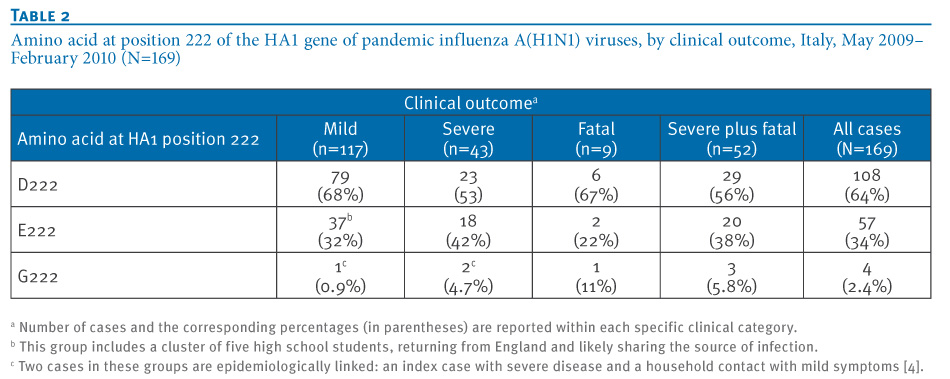
Haemagglutinin sequences of pandemic influenza A(H1N1) viruses circulating in Italy were examined, focusing on amino acid changes at position 222 because of its suggested  pathogenic relevance.


Among 169 patients, the D222G substitution was detected in three of 52 (5.8%) severe cases and in one of 117 (0.9%) mild cases, whereas the D222E mutation was more frequent and evenly distributed in mild (31.6%) and severe cases (38.4%).


A cluster of D222E viruses among school children confirms reported human-to-human transmission of viruses mutated at amino acid position 222.


Influenza viruses are inherently unstable, and are  therefore prone to replication errors.


Amino acids can get substituted somewhere in the virus’s protein, and that can affect virulence, receptor binding, sensitivity to antivirals, and transmission.


Most mutations go nowhere.


They do nothing to enhance the virus, and may actually decrease its ability to replicate, transmit, or compete with other strains.


Quite frankly, mutations happen all the time and are often of little consequence.


Most are evolutionary dead-ends.


But with millions of infected hosts sporting trillions and trillions of (sometimes badly) replicated viruses, this genetic roulette wheel has ample opportunities to test out new and potentially viable amino acid combinations.


Mutations can happen spontaneously in an infected host, and only affect that individual.  Or . . .  if the mutated virus is `biological fit’ and easily transmitted – it may move onto other hosts as well. 


Complicating matters - viruses can have multiple amino acid changes – and the combination of these changes can unpredictably (at least for now) alter the virus’s behavior. 


Thus far, the D222G mutation has only shown up rarely (less than 2% of samples), and serious questions over its ability to transmit easily from human-to-human remain.


Recent studies have suggested that it may be linked to more severe pulmonary infections (see D222G And Deep Lung Infections), and that it may have a binding affinity for α2-3 receptor cells found in the lower respiratory system.


In this most recent study of 169 patients from Italy, the D222G substitution was found  in 3 of 52 (5.8%) of severe cases and in only  1 of 117 (0.9%) of mild cases.


image


While suspiciously more common in severely ill patients, the authors state that these results (and the limited dataset) are too small to conclude that they are statistically significant.


It should be noted that the one mild case with this mutation also had a concurrent G155E mutation.  Whether this was a contributing factor to D222G appearing in a mildly ill patient is unknown.


The D222E mutation was far more common, and fairly evenly divided between severe cases (38.5%) and mild cases (31.6%).   All of which means that the clinical impact (if any) of this mutation remains unknown.


This increased prevalence, along with the detection of a cluster of D222E mutations in a group of mildly ill high school students (described in this paper) suggests some degree of inter-human transmission.


The authors wrap up their report with this:


Finally, our data suggest that the D222G substitution is overall rather infrequent, even among severe cases. However, we confirm that it occurs with a higher frequency in severe cases.


Whether this association is indicative of higher virulence or is the consequence of receptor-specific adaptive mutation needs to be further investigated.


All of which means that while we continue to get more and very useful data - we don’t have a lot of answers yet.


Stay tuned. 


For more on pdmH1N1 mutations, you may wish to revisit:


Eurosurveillance On Recently Isolated H1N1 Mutations
Study: Receptor Binding Changes With H1N1 D222G Mutation
WER Review: D222G Mutation In H1N1

Thursday, October 28, 2010

Referral: Dick Knox On Cholera Vaccine Limitations In Haiti


# 5017


Dick Knox (@DickKnox on Twitter) is the Science and Health correspondent for NPR (National Public Radio), and has a good explanation today as to why deploying either of the two available cholera vaccines is unlikely to have much of an impact on the outbreak in Haiti.


Follow the link below to read:

Cholera Vaccine Isn't The Answer For Haiti

WHO Update On Haiti


# 5016


While reports coming out of Haiti no doubt lag several days, and are likely incomplete as well, the rising death toll (at least for now) seems to be slowing.


The World Health Organization has issued a new update – Dated October 28th – which includes details of the WHO/PAHO response.


Despite the combined resources being mounted against this public health emergency, a good deal of uncertainty remains over the course and resolution of this outbreak.  


The experience of Peruvian cholera epidemic of 1991, when hundreds of thousands were infected, suggests that Cholera can be a difficult foe to overcome.  


Note: Crof at Crofsblog continues to cover the Haitian situation better than anyone in Flublogia.  I’d recommend stopping by his site several times each day for the latest reports.


Cholera in Haiti - update

28 October 2010 -- As of 27 October, the Ministry of Health in Haiti (MSPP) reported 4 722 cholera cases including 303 deaths. The departments reporting confirmed cases are Artibonte (76.5%), Central (22.9%), Nord-Est, and Nord.


Priorities of the Government of Haiti's National Response Strategy to the Cholera Epidemic are to protect families at the community level, to strengthen primary health care centers already operating across the nation, and to establish a network of Cholera Treatment Centers and designated hospitals for treatment of severe cases.


The strains of Vibrio cholerae 01 Ogawa isolated in Haiti and tested by the National Public Health Laboratory (LNSP) and the US Centres for Disease Control and Prevention (CDC) showed resistance to the following antibiotics: trimethoprim-sulfamethoxazole, furazolidone, nalidixic acid, and streptomycin. The strains are sensitive to tetracycline, doxycycline and ciprofloxacin. Full genetic sequencing of the strains is ongoing.


PAHO/WHO Response

Relief efforts continue as the government, MINUSTAH (The UN Stabilization Force in Haiti), UN agencies and NGOs continue to provide assistance in a growing number of locations. PAHO coordinates these efforts with other UN agencies, and with health officials in WHO Member States from the Region and beyond.


WHO continues to mobilize international experts in the areas of epidemiology, risk communication, case management, laboratory, water and sanitation, logistics, and LSS/SUMA (humanitarian supply management system) to Haiti and also to the Dominican Republic.


Additional medical supplies including 50, 000 intravenous fluids (Ringer’s Lactate), and 10 diarrhoeal disease treatment kits sufficient to treat 400-500 severe cholera cases have been purchased with funding from the international corporation, expected to arrive shortly in Haiti.


PAHO and US CDC experts are working together on improved surveillance and reporting of cases, analysis of water samples from rivers and other water sources, and monitoring of antibiotic resistance.


To support the Haitian Ministry of Health's planning efforts and the contingency planning for the Dominican Republic, PAHO is working with the US CDC to develop modelling scenarios to project the dynamics and likely spread of the outbreak . However, even with the best modelling efforts, it will not be possible to accurately predict the course of the epidemic.


WHO does not recommend any restrictions in travel and trade between countries or between different regions of a country experiencing cholera outbreaks. Travellers do not require proof of cholera vaccination, nor is there a need to screen travelers by means of rectal swabbing or faecal analysis. There is no need to establish quarantine measures at the border, a measure that diverts resources and may hamper cooperation between institutions and countries.

FOR MORE INFORMATION
WHO cholera Fact sheet
PAHO Responds to Cholera Outbreak in Haiti
The Pan American Health Organization (PAHO) website

Attack Of The Killer `B’s


Flu Timeline 2010

For now it appears that seasonal H1N1 has been supplanted by novel H1N1, and we are left with four flu strains (novel H1N1, H3N2, and 2 B lineages) in circulation as of the fall of 2010.


# 5015


We don’t discuss Influenza B very often, because among the influenzas, B strains are regarded as less pathogenic and more stable (and less likely to spark a pandemic) than their highly mutable cousins; influenza A. 


And so most scientific research and attention is focused on the more unpredictable and dangerous A strains.


But today, we’ll make an exception because Influenza B has been in the news a little this week, including research on Influenza B and bacterial co-infections.


First, here is how the CDC describes influenza B.


Influenza Type B

Influenza B viruses are usually found only in humans. Unlike influenza A viruses, these viruses are not classified according to subtype. Influenza B viruses can cause morbidity and mortality among humans, but in general are associated with less severe epidemics than influenza A viruses. Although influenza type B viruses can cause human epidemics, they have not caused pandemics.


While considered less dangerous, that doesn’t make Influenza B unworthy of our attention.


Influenza B was first identified - almost simultaneously - by two researchers back in 1940 (Francis and Magill).  Unlike the A strains, Influenza B was discovered to remain relatively stable, usually for years at a time.


It often becomes the predominant strain late in the flu season, after influenza A has peaked.


image

This graphic from the CDC’s  2009 FluView shows Influenza B making up about half of all positive flu samples from week 11 to week 15.


There are two lineages of influenza B that currently circulate around the world (and have since the late 1980s); the Victoria and Yamagata  strain.


And each year scientists must decide . . . six months in advance . . .  which of these strains to include in the next seasonal flu shot.  Their record for guessing which strain will dominate has been less than stellar – missing the mark about half the time in recent years.


Which has sparked calls to formulate a quadrivalent flu vaccine – one that includes two A strains, and both lineages of the B strain each year (see Two Bs Or Not Two Bs?  April 2010).


You can find an earlier but nonetheless illuminating discussion of the advantages and problems of manufacturing a quadrivalent vaccine in this  CIDRAP  report from January of 2009 (Experts consider 4-strain flu vaccine to fight B viruses).


Earlier this week CIDRAP reported on Sanofi’s early testing of a quadrivalent vaccine in Sanofi reports trial results for novel flu vaccines.


While having a diminished pandemic potential, and producing (generally) less severe illness, influenza B is hardly benign.  It can (and does) contribute to the burden of influenza mortality and morbidity each year –  particularly among children and younger adults. 


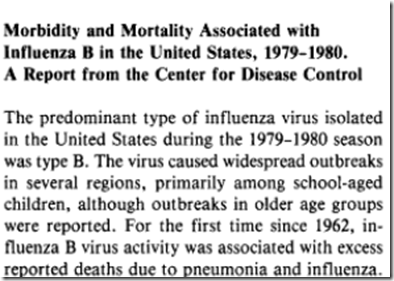
The following is an account from the Journal of Infectious Diseases, Sept 1980, describing the impact of an influenza B dominated flu season.


image


Today we’ve a new example of the pathogenic potential of influenza B  which comes by way of a journal article from BMC Infectious Diseases.


It  looks at 3 previously healthy women (with no apparent high risk factors) who developed serious pneumonia and sepsis as a result of a co-infection with influenza B.


I’ve reproduced the Abstract below.  A provisional PDF of the entire article is available here.  (note the typo in the first sentence: that should read 1918)


Co-infection of Influenza B and Streptococci causing Severe Pneumonia and Septic Shock in Healthy Women

Timothy Aebi , Maja Weisser , Evelyne Bucher , Hans H Hirsch , Stephan Marsch  and Martin Siegemund

BMC Infectious Diseases 2010, 10:308doi:10.1186/1471-2334-10-308

Published:
27 October 2010

Abstract (provisional)
Background

Since the Influenza A pandemic in 1819, the association between the influenza virus and Streptococcus pneumoniae has been well described in literature. While a leading role has been so far attributed solely to Influenza A as the primary infective pathogen, Influenza B is generally considered to be less pathogenic with little impact on morbidity and mortality of otherwise healthy adults. This report documents the severe synergistic pathogenesis of Influenza B infection and bacterial pneumonia in previously healthy persons not belonging to a special risk population and outlines therapeutic options in this clinical setting.

Case presentation

During the seasonal influenza epidemic 2007/2008, three previously healthy women presented to our hospital with influenza-like symptoms and rapid clinical deterioration. Subsequent septic shock due to severe bilateral pneumonia necessitated intensive resuscitative measures including the use of an interventional lung assist device. Microbiological analysis identified severe dual infections of Influenza B with Streptococcus pyogenes in two cases and Streptococcus pneumoniae in one case. The patients presented with no evidence of underlying disease or other known risk factors for dual infection such as age (<one year, >65years), pregnancy or comorbidity.

Conclusion

Influenza B infection can pose a risk for severe secondary infection in previously healthy persons. As patients admitted to hospital due to severe pneumonia are rarely tested for Influenza B, the incidence of admission due to this virus might be greatly underestimated, therefore, a more aggressive search for influenza virus and empirical treatment might be warranted. While the use of an interventional lung assist device offers a potential treatment strategy for refractory respiratory acidosis in addition to protective lung ventilation, the combined empiric use of a neuraminidase-inhibitor and antibiotics in septic patients with pulmonary manifestations during an epidemic season should be considered.


Bacterial pneumonia is a fairly common complication of severe influenza, but up until now has usually been associated with influenza A infections. 


Here, researchers show that influenza B can also open the door for serious (and sometimes fatal) bacterial infections in previously healthy individuals.


The entire report is worth reading, particularly if you are a clinician.  


The authors contend that since testing for influenza B is less common than for influenza A, it may be behind more hospital admissions than we know.


Another example that illustrates that - despite making great strides in recent years in our understanding of influenza - that we’ve still a lot to learn.

Wednesday, October 27, 2010

Lancet: Pediatric Mortality Related To Pandemic H1N1


# 5014


Although its impact has almost been universally under-appreciated by the media and general public – we continue to see compelling evidence that the pandemic of 2009 was unusual in presentation, stressed many health care systems, and caused significant mortality and morbidity around the world.


It is true that in terms of absolute mortality -the pandemic of 2009 was less severe than many other flu outbreaks.  But the World Health Organization is also quick to admit that the `official numbers’ of deaths around the world were badly undercounted.


We will probably never know (with any confidence) the full impact of the pandemic.


Of course, much depends upon how you choose to measure a pandemic’s severity. 


For example.


With seasonal influenza, it is the elderly and frail that make up 90% of the deaths each year. The average age of death from seasonal flu in the US has been estimated to be 76.


Compare that to the mean age of death from the novel H1N1 virus, which has been calculated to be half that of seasonal flu, or 37.4 years (see Study: Years Of Life Lost Due To 2009 Pandemic)


So in terms of years of life lost (YLL), the average 2009 pandemic flu death had a many-fold greater impact than the average seasonal flu fatality.


Another indicator of how the pandemic of 2009 differed from seasonal flu comes from this stark graphic showing a four-fold increase in pediatric deaths from influenza associated illness during the pandemic.


image


As bad as these numbers are, the CDC actually estimates that only about 25% of pediatric influenza deaths were identified – and put the `real’ number at closer to 1300.


CDC Pandemic Est


All of which brings us to a new study which appears in the The Lancet, that finds a significant increase in pediatric mortality from influenza-related causes in the UK during the pandemic of 2009.


First a link to this news report from the The Telegraph, then some excerpts from the Lancet Abstract.


Swine flu killed three times more children than ordinary influenza: research

Three times as many children died from swine flu than from seasonal flu with the younger ones hit the hardest, research has shown.


Here are some excerpts from the Abstract.


The Lancet, Early Online Publication, 27 October 2010

doi:10.1016/S0140-6736(10)61195-6

Paediatric mortality related to pandemic influenza A H1N1 infection in England: an observational population-based study


Nabihah Sachedina MBBS , Prof Liam J Donaldson MD

Summary

Background

Young people (aged 0—18 years) have been disproportionately affected by pandemic influenza A H1N1 infection. We aimed to analyse paediatric mortality to inform clinical and public health policies for future influenza seasons and pandemics.

<SNIP>
Findings

70 paediatric deaths related to pandemic influenza A H1N1 were reported. Childhood mortality rate was 6 per million population.


The rate was highest for children aged less than 1 year. Mortality rates were higher for Bangladeshi children (47 deaths per million population [95% CI 17—103]) and Pakistani children (36 deaths per million population [18—64]) than for white British children (4 deaths per million [3—6]). 15 (21%) children who died were previously healthy; 45 (64%) had severe pre-existing disorders.


The highest age-standardised mortality rate for a pre-existing disorder was for chronic neurological disease (1536 per million population). 19 (27%) deaths occurred before inpatient admission. Children in this subgroup were significantly more likely to have been healthy or had only mild pre-existing disorders than those who died after admission (p=0·0109). Overall, 45 (64%) children had received oseltamivir: seven within 48 h of symptom onset.


While the novel H1N1 virus of 2009 produced essentially a low-mortality-high morbidity event for most of the population, studies continue to show that this flu pandemic differed from an ordinary flu season in a variety of ways.


Considering the years of life lost (YLL), the impact on health care, and increased pediatric mortality  - while never reaching the disaster status that some in the media originally hyped -  I find it difficult to go along with the popular notion that the pandemic of 2009 was a non-event.


For more on how this flu was different from seasonal flu, you might wish to revisit There’s No Flu Like A New Flu.

Indonesia: Suspected Bird Flu Fatality


# 5013


Last night, as I was about to retire for the evening, I spotted a pair of very brief reports on the death of an `alleged’ bird flu patient on Monday at M Djamil hospital in West Sumatera.


These reports were posted by bgw in MT on the Flu Wiki and Treyfish on Flutrackers.


Since details were somewhat scant - I decided to wait until morning to post it - when hopefully more information would become available.


Ida at the Bird Flu Information Corner has obliged, with a translation of a report from Antara-Sumbar.


While her doctors suspect H5N1 - based on her rapid death, symptoms, and X-rays – confirmatory test results have not been received.


I’ve only posted an excerpt from Ida’s translation. Follow the link to read it in it’s entirety.


image


Pasaman Barat, West Sumatera ::: A girl possibly die of bird flu

Posted by Ida on October 27, 2010

Pasaman Barat – A 5-year-old girl, Indri Rahmi Wati, resident of Kampung Sungai Janiah, Jorong Sungai Janiah Nagari Talu, Kecamatan Talamu Kabupaten Pasaman Barat (Pasbar) had died in M Djamil hospital, West Sumatera, on Monday (25/10).


She was suspected of having bird flu H5N1 infection.


Patient had received medical help for four hours at internal medicine isolation unit of M Djamil hospital before the death.


Head of Health Service in Pasbar, Yandra Fery confirmed the existence of bird flu suspect patient in Pasbar.


Indri, had been admitted to Talu public health center and then transferred to Jambak Pasbar regional hospital. Since her condition was deteriorating, the hospital referred her to M Djamil hospital, where she was immediately treated at internal medicine unit.

(Continue . . . )


Currently outbreaks of H5N1 occur primarily in birds, although sporadic,widely scattered human cases are reported around the world as well – most commonly in Egypt and Indonesia.


Most (but not all) have been linked to close contact with infected poultry or birds. The source of infection in a small number of human cases isn’t known.


While the virus has yet to adapt well enough to human hosts to transmit effectively between people, scientists still fear the virus could mutate into a pandemic strain someday.

Tuesday, October 26, 2010

Japan: Detection Of H5N1 In Ducks


# 5012


A hat-tip to Makoto and Dutchy on Flutrackers for this press release from the Japanese Ministry of the Environment, on the detection of H5N1 in the droppings of ducks in Hokkaido.


First from Mokoto, posted in this thread, the following details.


26 Oct. 2010 press release by Ministry of the Environment Government of Japan
http://www.env.go.jp/press/press.php?serial=13069 at Japanese

14 Oct, collect Bard(duck) droppings at a Marsh
26 Oct, detect H5N1 subtype by Hokkaido University
at present, the bird is not dead, limit the entry
spot: "Ônuma" Marsh, Wakkanai city, Hokkaido


http://www.env.go.jp/press/file_view...2&hou_id=13069 

2 detected/183 specimens


My reading of the (admittedly terse) accompanying machine translation is that no bird deaths have been detected (not terribly unusual, since ducks are known to be able to carry the virus asymptomatically), and that just 2 of 183 specimens tested positive for the H5N1 virus.

I confess I’m a little confused over the `collection date’ since we seem to have a date of May 14th cited, as well as October 14th.


Machine translations are always a `challenge’.

With a little luck perhaps we’ll get some clarification on these details over the next few days.

There Once Was A Virus From Norway . . .


There once was a virus from Norway
That spread in a relative poor way
But since influenza can drift
or worse it could shift!
It could always discover one more way


# 5011


The not-unexpected news last week that the 2009 H1N1 virus has `drifted’ slightly (see Eurosurveillance On Recently Isolated H1N1 Mutations), and concerns over the still-rare `Norway’ mutation (see D222G And Deep Lung Infections), remind us that influenza is a moving target and that changes in the virus are not only possible . . . they are inevitable.


Last year, in the opening days of the pandemic, I described (see Pandemic Variables) the process this way.


A pandemic isn’t a static event, and the virus – carried simultaneously by millions of hosts – doesn’t change direction and speed in concert like a school of fish.


Instead, what you have are millions of hosts incubating trillions of virus particles – with mutational changes occurring all of the time.  Most of these changes do not benefit the virus and lead nowhere, but out of trillions of rolls of the dice, some small number do.


It is survival – and propagation – of the biologically fittest.


Evolution in action.


With viruses that are better adapted to humans out-replicating, out-shedding, and out-transmitting lesser versions of the pandemic strain.


And that means that the virus we have in circulation today may not be the same virus we have running around in the fall, next winter, or next year sometime.   We could potentially see changes in virulence or antiviral sensitivity over time.


Prophetic?  


Hardly.  This is a process that happens every year.   Which is why we need a new, and updated, flu vaccine formulation each year.


Most of the time these changes are small, incremental, and have relatively little impact on virulence. 


Rarely, as in the case of a pandemic, we see a major shift in the influenza virus, which can affect its severity or transmissibility (or both).  


But a major shift doesn’t always spark a pandemic. On very rare occasions, the influenza virus can just temporarily go rogue.


Which brings us to one of the great medical mysteries of the last century:  The largely unexplained, but nonetheless fascinating  Liverpool Killer Flu of 1951.

image


This startling graphic comes from the March 16th, 1951 Proceedings of The Royal Society of Medicinepage 19 – and shows in detail the tremendous spike in influenza deaths in early 1951 over the (admittedly, unusually mild) 1948 flu season. 


For most of the world, however, 1951 remained an average flu year.  The dominate strain of influenza that year was the so-called `Scandinavian strain', which produced mild illness in most of its victims.


In fact, if you look at the graph for the United States, running from 1945 to 1956, you'll see nary a blip.


1946-1956


But in December of 1950 a new strain of virulent influenza appeared in Liverpool, England, and by the end of the flu season, had spread across much of England, Wales, Canada and even parts of the US.


The CDC's EID Journal  has a stellar account of this 1951 evemt, and much of what follows I've gleaned from this report:


Viboud C, Tam T, Fleming D, Miller MA, Simonsen L. 1951 influenza epidemic, England and Wales, Canada, and the United States. Emerg Infect Dis [serial on the Internet]. 2006 Apr [date cited].

ABSTRACT

Influenza poses a continuing public health threat in epidemic and pandemic seasons. The 1951 influenza epidemic (A/H1N1) caused an unusually high death toll in England; in particular, weekly deaths in Liverpool even surpassed those of the 1918 pandemic.


We further quantified the death rate of the 1951 epidemic in 3 countries. In England and Canada, we found that excess death rates from pneumonia and influenza and all causes were substantially higher for the 1951 epidemic than for the 1957 and 1968 pandemics (by >50%).


The age-specific pattern of deaths in 1951 was consistent with that of other interpandemic seasons; no age shift to younger age groups, reminiscent of pandemics, occurred in the death rate. In contrast to England and Canada, the 1951 epidemic was not particularly severe in the United States.


Why this epidemic was so severe in some areas but not others remains unknown and highlights major gaps in our understanding of interpandemic influenza.


According to this study, the effects on the city of origin, Liverpool, were horrendous.


In Liverpool, where the epidemic was said to originate, it was "the cause of the highest weekly death toll, apart from aerial bombardment, in the city's vital statistics records, since the great cholera epidemic of 1849" (5). This weekly death toll even surpassed that of the 1918 influenza pandemic (Figure 1)


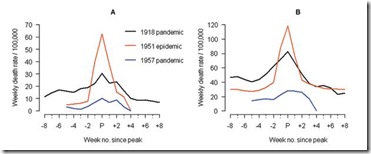
liverpool


This extraordinary graph shows the excess deaths in Liverpool during this outbreak (red line),  while the black line shows the peak deaths during the 1918 pandemic.  This chart shows excess deaths by   A) respiratory causes (pneumonia, influenza and bronchitis) and B) all causes.


For roughly 5 weeks Liverpool saw an incredible spike in deaths due to this new influenza.   And it did not remain localized to Liverpool. 


While it appears not to have spread as easily as the dominant Scandinavian strain, it managed to infect large areas of England, Wales, and Canada over the ensuing months.


The authors of this study describe the spread of this new influenza:


Geographic and Temporal Spread

Influenza activity started to increase in Liverpool, England, in late December 1950 (5,13). The weekly death rate reached a peak in mid-January 1951 that was ≈40% higher than the peak of the 1918–19 pandemic, reflecting a rapid and unprecedented increase in deaths, which lasted for ≈5 weeks [5 ] and Figure 1).


Since the early 20th century, the geographic spread of influenza could be followed across England from the weekly influenza mortality statistics in the country's largest cities, which represented half of the British population (13). During January 1951, the epidemic spread within 2 to 3 weeks from Liverpool throughout the rest of the country.


For Canada, the first report of influenza illness came the third week of January from Grand Falls, Newfoundland (19). Within a week, the epidemic had reached the eastern provinces, and influenza subsequently spread rapidly westward (19).


For the United States, substantial increases in influenza illness and excess deaths were reported in New England from February to April 1951, at a level unprecedented since the severe 1943-44 influenza season. Much milder epidemics occurred later in the spring elsewhere in the country (9).


For reasons we don't understand, this new strain never managed to spread much beyond England, Wales, Canada, and parts of New England.


It dissipated as suddenly as it appeared, failing to return the following year.


Whatever change or mutation sparked this sudden surge in virulence remains a medical mystery.


None of this is offered as a prediction as to what the H1N1 virus will do next. Frankly, I’ve no special insight into what the recently reported swine flu variant, or the `Norway D222G’ mutation will mean over time.


I present this bit of influenza lore simply because I find it intriguing, and it demonstrates that even seasonal flu can be a highly unpredictable, and oft times dangerous pathogen.


Even in a non-pandemic influenza season.

Monday, October 25, 2010

WHO On Cholera/CCHF/Dengue Outbreaks In Pakistan


# 5010


Two updates today from the World Health Organization on the ongoing outbreaks of several infectious diseases in Pakistan.


First, Cholera – which like in Africa and now Haiti, has also been sporadically reported in the flood affected provinces of Sindh, Punjab and Khyber Pakhtunkhwa.


Cholera in Pakistan

25 October 2010 -- On 12 October 2010, the Ministry of Health in Pakistan reported laboratory confirmation of 99 cases of Vibrio cholera 01 in the country. These cases were laboratory-confirmed by the National Institute of Health since the beginning of the flood until 30 September 2010. These cases have been reported sporadically from a wide geographical area in the flood-affected provinces of Sindh, Punjab and Khyber Pakhtunkhwa.


The Ministry of Health in Pakistan supported by the World Health Organization and other local and international partners are collaborating closely to prevent outbreaks of any disease, including cholera, and treat people affected by such illnesses. More than 60 diarrhoeal treatment centres are either operating or are soon to start functioning in the 46 most affected districts of the country.


Diarrhoeal diseases including cholera are among the most reported health conditions in many locations affected by the recent floods disaster in the country.

FOR MORE INFORMATION
WHO cholera Fact sheet
WHO Pakistan web site


Next, since the end of September we’ve been watching reports of heightened transmission of CCHF – normally a tick-borne illness – being reported in several areas of Pakistan. 


As you can see from this WHO map, CCHF is not uncommon in this part of the world.


image


While I’ve been tempted to blog on this outbreak for a couple of weeks, quite frankly the reports I’ve seen have been inconsistent and confusing.


Over the past month we’ve suggestions of nosocomial transmission among health care workers, denials, retractions, and revisions of numbers as these ProMed Mail dispatches demonstrate.


PRO/AH/EDR> Crimean-Congo hem. fever - Pakistan (09): (NW)

PRO/AH/EDR> Crimean-Congo hem. fever - Pakistan (08): (PB), not

PRO/AH/EDR> Crimean-Congo hem. fever - Pakistan (07): revised data, WHO

PRO/AH/EDR> Crimean-Congo hem. fever - Pakistan (06): (PB)

PRO/AH/EDR> Crimean-Congo hem. fever - Pakistan (05): (NW)

PRO/AH/EDR> Crimean-Congo hem. fever - Pakistan (04): (PB)

PRO/AH/EDR> Crimean-Congo hem. fever - Pakistan (03): (PB) nosocomial


Today, a rather generic update from the WHO that suffers from a lack of detail. 


Nothing is said about exactly where these cases occurred, or about the mode of transmission, leaving much uncertainty.


Things are, however, still in a state of flux in the wake of the unprecedented flooding disaster last month in that nation, and so some of this ambiguity may be understandable. 


Crimean-Congo haemorrhagic fever (CCHF) and Dengue in Pakistan

25 October 2010 -- As of 15 October, the IHR National Focal Point, Ministry of Health (MoH), Pakistan, has notified WHO of 26 cases, including 3 deaths, of Crimean-Congo haemorrhagic fever (CCHF). In addition, over 1500 laboratory-confirmed cases of dengue fever including 15 deaths have also been reported from Pakistan so far.


Both CCHF and dengue fever are endemic in Pakistan with seasonal rise in cases. However, recently, the transmission of both CCHF and dengue fever has intensified in the country with increased incidence and geographic expansion. The recent Pakistan floods may have contributed to this upsurge as a result of changes in risk factors for these diseases.

Operational response

The MoH has scaled up response activities to prevent and mitigate CCHF and dengue fever, including awareness-raising campaigns on exposure risks and preventive measures for the general public, strengthening clinical and case management of patients with haemorrhagic fevers, stockpiling appropriate drugs and personal protective equipment, and implementing targeted vector control activities.


Upon request from the MoH in Pakistan, WHO is mobilizing experts in the clinical management of severe dengue fever and in infection control in health care settings through the Global Outbreak Alert and Response Network (GOARN). WHO is also assisting the country with resource mobilization, strengthening disease surveillance, laboratory diagnostics, and training of health care providers.

FOR MORE INFORMATION
WHO dengue website
WHO CCHF website

Healthmap Snapshot of Cholera In Haiti


# 5009


Although Crof at Crofsblog  has been doing the heavy lifting on the Cholera story out of Haiti, a tweet this morning on the  outbreak by @sukitink sent me to the constantly updated Healthmap project , which pinpoints reported cases of infectious disease all over the world.


Frankly, I should have thought of it on my own, since I’ve used this resource in the past.


Healthmap.org describes their free service this way.


About HealthMap

HealthMap brings together disparate data sources to achieve a unified and comprehensive view of the current global state of infectious diseases and their effect on human and animal health.

This freely available Web site integrates outbreak data of varying reliability, ranging from news sources (such as Google News) to curated personal accounts (such as ProMED) to validated official alerts (such as World Health Organization). Through an automated text processing system, the data is aggregated by disease and displayed by location for user-friendly access to the original alert.


I’ve written about Healthmap often in the past, and have a link to it in my sidebar (see Healthmap.org: Charting Dengue’s Progress, Study: Unstructured Event-Based Global Infectious Disease Surveillance Systems and HealthMap On The Web.)


The front page of the Healthmap has a one-click button to bring up the latest reports – including scrolling news items – from Haiti.


 image .

You can see a closer view of the outbreak reports below. On the Healthmap page, each pin is clickable, and will bring up the associated report.  You can also impose filters to show or hide various aspects of the map.


image


Whether you are keeping track of Cholera in Haiti, Bird Flu in Indonesia, or the march of Dengue around the world – Healthmap.org provides a valuable and easy to use tool to analyze each outbreak.